

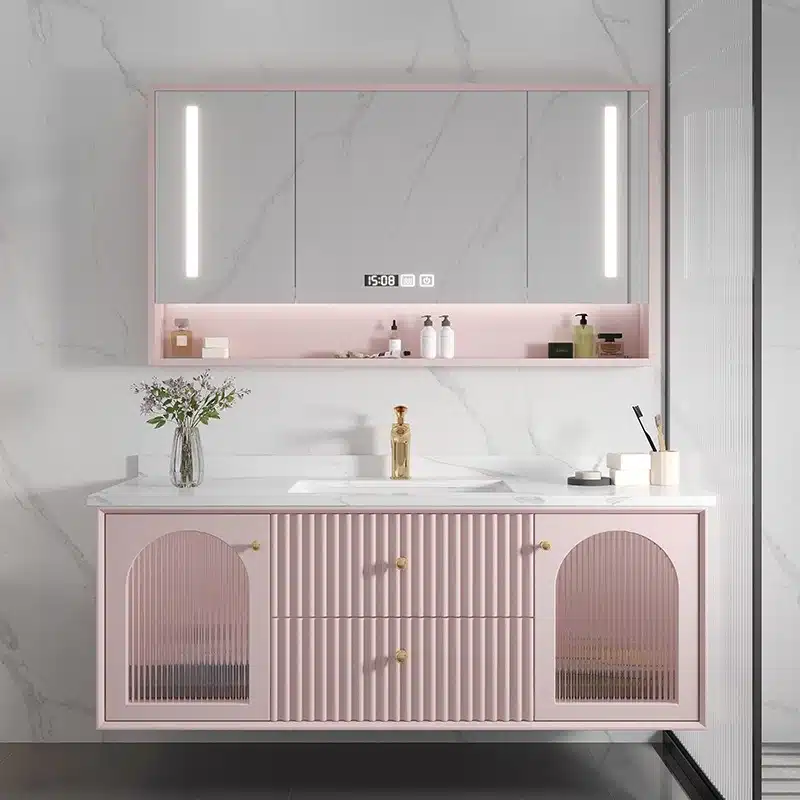
A veteran contractor knows that a hospitality vanity case study is really a logistics and maintenance audit. For a 200-unit build, the choice between pre-assembled PVC and flat-pack solid wood dictates your profit margin. MFBATH, a 10,000-square-meter factory in Henan, China, has spent years refining a region-ready strategy that addresses exactly these project risks.
Most contractors default to solid wood for luxury aesthetics, but in humid or coastal environments, wood swells and molds. This leads to high warranty claims and angry property managers. Rigid PVC offers the aesthetic of wood with 100% waterproof durability, eliminating pest damage risks entirely. By shifting the burden of assembly from the job site to a controlled factory floor, you gain dock-to-room efficiency that significantly cuts on-site labor costs.
Beyond the material itself, the real value lies in how the supplier handles your specific market requirements. Whether you need UL-certified smart mirrors for North America or CE-compliant low-emission vanities for Europe, the right OEM partner provides blueprinted solutions that survive local weather and laws. This approach transforms a simple furniture purchase into a streamlined, compliant supply chain.
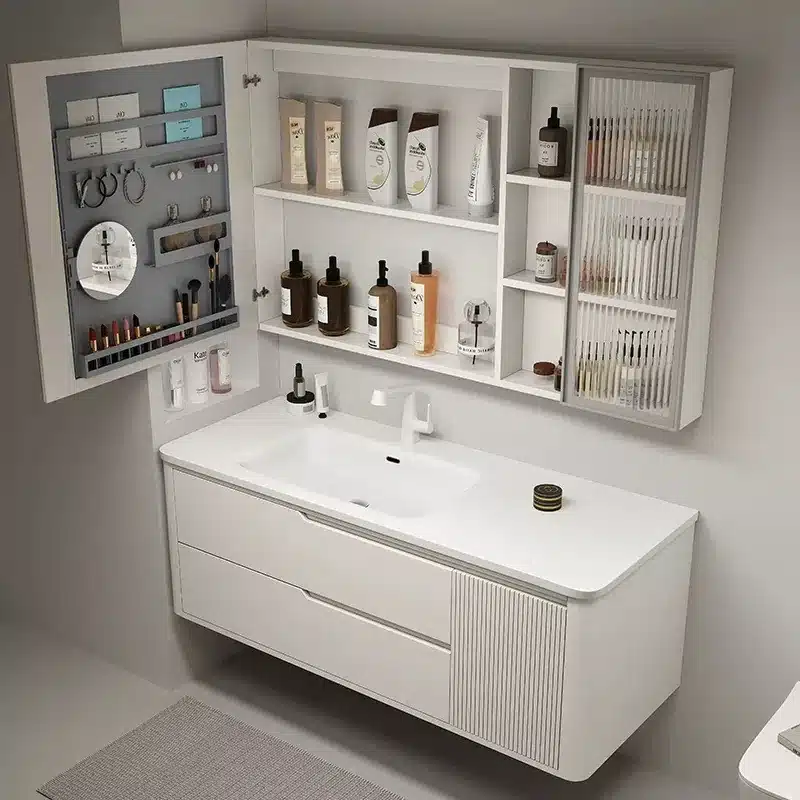
PVC vs Solid Wood: Hospitality Durability Data
Solid wood vanities in hospitality often fail within 3 years in humid climates, driving up warranty costs and contractor liability.
In the hospitality sector, a vanity is infrastructure, not just furniture. The industry standard for ‘luxury’ often defaults to solid oak or walnut, but this material choice introduces significant structural vulnerabilities in high-humidity environments. Solid wood is hygroscopic, meaning it actively absorbs and releases moisture from the air. This causes the material to swell and contract with seasonal changes or daily shower usage, leading to joint separation and finish peeling.
For a project contractor, this biological reaction translates directly into maintenance budget overruns and tenant complaints. When solid wood swells, drawer slides jam and cabinet doors misalign. In coastal or tropical locations, the risk of mold growth within the wood grain is a severe health and safety liability. Unlike traditional suppliers who rely on heavy chemical sealants that eventually degrade, MFBATH utilizes rigid PVC vanities that are 100% waterproof from the molecular level up.
The material science gap is absolute: PVC does not absorb water, meaning it cannot swell, warp, or mold. This eliminates the primary cause of warranty claims in hotel bathrooms. By switching from solid wood to rigid PVC for properties in humid climates, operators can reduce lifecycle maintenance costs by approximately 60%. Furthermore, the non-porous nature of PVC completely eradicates the risk of pest damage from termites or silverfish, which are common in older hotel structures.
-
- Solid Wood: Vulnerable to swelling, warping, and mold in high humidity. Requires expensive, ongoing maintenance and poses a risk of pest damage in older or coastal builds.
- Rigid PVC: 100% waterproof and impervious to moisture. Eliminates swelling and mold risks entirely, offering a ‘set-and-forget’ durability that protects the contractor’s reputation.
The 40% Labor Savings: Pre-Assembled vs. Flat Pack
Pre-assembled PVC vanities cut on-site labor by 40% via ‘Dock-to-Room’ efficiency.
Flat-pack solid wood vanities create a false economy for contractors. While initial freight costs drop, assembling hundreds of cabinets on-site explodes labor budgets and invites catastrophic error rates. Modern OEM partners now shift this burden to the factory floor, delivering ‘Plug & Play’ units with factory-fitted hardware and plumbing cutouts. This pre-assembly method transforms a chaotic job site bottleneck into a streamlined assembly line.
-
- Hidden Labor Costs: Flat-pack assembly requires skilled carpenters to drill holes and align hinges. A 200-unit hotel build wastes dozens of billable hours on-site, risking delayed milestone payments and triggering custom vanity procurement penalty clauses.
- Factory-Fitted Hardware: Pre-assembled units arrive with precision-drilled cutouts and installed fittings. This ‘Dock-to-Room’ efficiency eliminates on-site measuring errors, ensuring a perfect fit for ADA compliant hotel vanity manufacturers targeting accessibility standards.
- 40% Time-Savings Metric: Comparing pre-assembled hotel vanity vs flat pack cost reveals a 40% reduction in total installation time. By moving the complex assembly to the controlled factory environment, contractors secure faster project handovers and lower overhead.
Material choice dictates the success of this pre-assembly strategy. While solid wood offers luxury, it requires extensive on-site sealing. Rigid PVC vanities are 100% waterproof and structurally stable, making them ideal for high-humidity hospitality projects. The SPC vs PVC bathroom vanity durability test confirms that PVC maintains its integrity where other materials fail, reducing warranty claims and long-term maintenance costs.
Logistics Mastery: Room-Number Labeling & Compliance
Room-number labeling eliminates on-site sorting, turning logistics into a direct assembly line.
For large-scale hospitality builds, unorganized cargo creates a massive logistics bottleneck. Workers waste billable hours unboxing and identifying units, leading to significant cost overruns and project delays. The solution is a ‘Dock-to-Room’ efficiency system where every unit is tagged at the factory with specific floor and room IDs. This eliminates on-site sorting entirely and shifts the burden from the job site to the controlled factory floor.
-
- Dock-to-Room Efficiency: Every cabinet and mirror is labeled with precise room numbers before shipping. This ensures direct placement upon arrival, cutting installation time and removing the risk of misallocated units.
- North American Compliance: Products for NA markets are strictly UL/CSA and ADA-compliant. Materials undergo extreme cold testing at -30°C to prevent structural failure in harsh climates, a critical requirement for winterized properties.
- Region-Ready Certifications: To protect contractor licenses and insurance, units meet CARB and CE standards. This engineered compliance ensures zero customs holds and guarantees that the furniture survives local regulatory and climatic conditions.
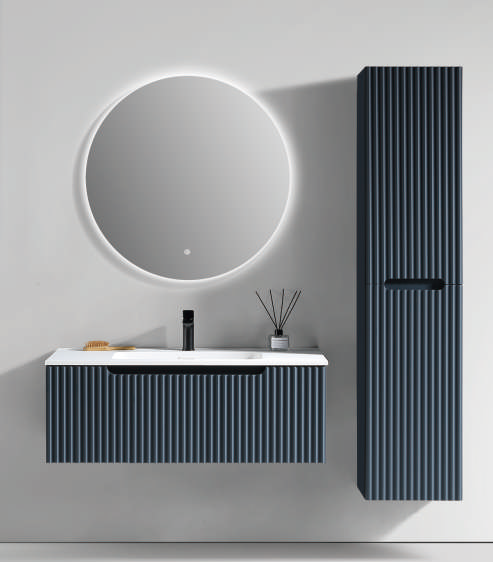
Procurement Strategy: MOQs and Customization
Low MOQs (10-20 units) allow contractors to test Pantone colors and hardware specs before committing to full-scale production runs.
Large-scale hospitality projects carry significant financial risk when locked into rigid procurement contracts. Traditional OEM suppliers often enforce minimum order quantities (MOQs) of hundreds of units, forcing contractors to commit to unproven designs. MFBATH mitigates this risk by supporting low MOQs of just 10 to 20 units for custom orders, enabling partners to validate market appeal and design intent with minimal capital exposure.
This flexibility is critical for managing mid-project spec adjustments without triggering cancellation penalties. Contractors can order small batches to test specific Pantone color matches or branded hardware configurations against actual room lighting and decor. Once the design is finalized, the remaining 80% of the build can be produced with confidence, ensuring the final rollout matches the approved samples exactly.
With over 40,000 customization combinations available, MFBATH allows for precise brand alignment. Distributors can secure exclusive rights to specific finishes, logo engravings on mirrors, or custom packaging that adheres strictly to client brand guidelines. This level of granular control transforms a commodity purchase into a differentiated product offering, protecting margins in competitive markets.
-
- Low MOQ Threshold:: Start custom Pantone matching and hardware testing with just 10-20 units, reducing upfront inventory costs and allowing for agile project pivots.
- 40,000 Combinations:: Access a vast library of material, finish, and hardware permutations to realize specific architectural design intents without compromising on availability.
- Mid-Project Flexibility:: Adjust specifications between phases without canceling entire orders, preventing costly rework and ensuring seamless integration of updated design requirements.
- Branded Hardware Options:: Integrate proprietary or premium branded hardware into the vanity assembly, enhancing the perceived value and tactile quality of the finished unit.
Conclusion
Pre-assembled PVC vanities transform hospitality logistics by cutting on-site labor costs by 40% and eliminating humidity-related maintenance risks. Factory-ready room numbering and UL/CE compliance ensure your project meets strict deadlines without triggering penalty clauses or warranty claims.
Review the detailed specifications for pre-assembled hotel vanities and smart LED mirrors to compare unit costs and durability metrics for your upcoming build.
Frequently Asked Questions
What should buyers look for when sourcing hospitality vanity case study?
Buyers should prioritize region-ready compliance and pre-assembled durability over basic aesthetics. Verify that the supplier adapts materials to local climate and regulations to prevent warranty failures. Focus on regional compliance and material durability for long-term ROI.
How to verify factory certifications for hospitality vanity case study?
Verify certifications by matching specific regional standards like UL/CSA for North America or CE for Europe. Ensure the factory provides documentation for these exact compliance marks before ordering. Request specific regional compliance documentation prior to order placement.
What are typical MOQ requirements for wholesale orders?
MOQs vary significantly between stock items and custom OEM/ODM projects. Custom orders often have lower entry points, such as 10 to 20 units, to allow for market testing. Confirm MOQ specifically after defining your customization scope.
How to handle international shipping and customs clearance?
Handle shipping by ensuring products meet destination-specific standards like WELS in Oceania or ADA in the US to avoid customs holds. Partner with a manufacturer who understands regional regulatory logistics. Align product specs with destination customs requirements to prevent delays.
What quality inspection standards apply before shipment?
Quality standards typically involve rigorous multi-stage inspections, such as a five-stage process covering raw materials to final assembly. This ensures durability and aesthetic perfection before the goods leave the factory. Request detailed QC reports from each inspection stage.





0 Comments