
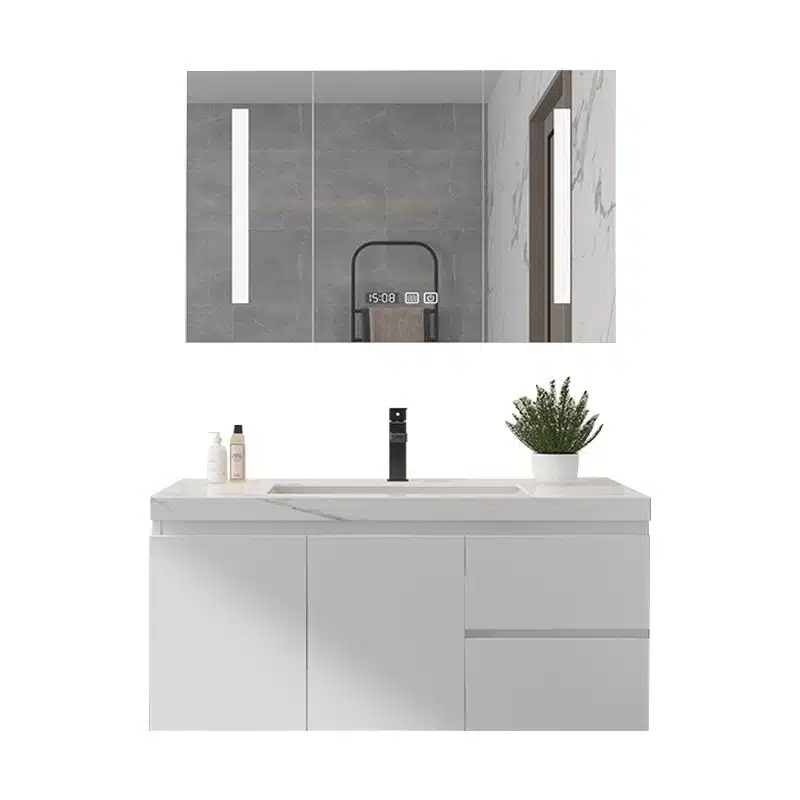
Lock the hotel bathroom vanity material spec down before you approve a supplier, set a budget, or reserve a production slot. Residential-grade cabinetry fails under daily guest turnover. MFBATH builds commercial-grade vanities that meet regional compliance requirements and hold their durability through years of heavy use.
Material choice in a hotel bathroom is risk management, not decoration. While other manufacturers chase looks, MFBATH locks hardware ratings and moisture resistance to stop the warranty claims that usually surface after handover. Contractors who understand the gap between standard MDF, marine-grade plywood, and 100% waterproof PVC protect their project margins and their reputation.100% waterproof PVCproject margins
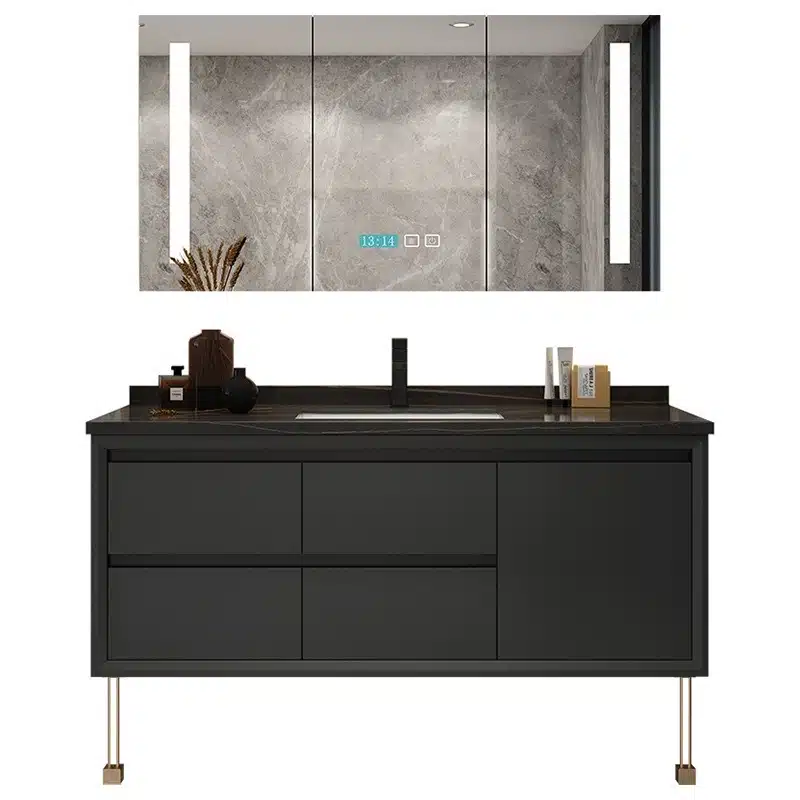
Why Material Choice Drives Hotel Profit
Material selection dictates hotel OPEX.
Material quality hits the bottom line twice: more housekeeping labor and premature replacement. Swollen cabinet bodies and stained countertops push properties into mid-lifecycle renovations, draining budgets and dragging down guest satisfaction scores. Choose materials that tolerate daily chemical cleaning and high humidity, and the fixture keeps working well past the standard 3-year warranty. That is the cost-effectiveness most buyers overlook.
The swollen base is the industry blind spot. Competitors use standard MDF to save on upfront costs. Our warranty data shows that 40% of early claims in mid-tier hotels trace back to MDF cabinet bottoms absorbing steam. MFBATH specs 18mm moisture-resistant plywood or 100% waterproof PVC foam board instead. That removes the failure mode completely, and the cabinet structure survives decades of steam exposure.
- Contractors focus on the stone countertop and ignore the hinges. MFBATH specifies commercial-grade hinges rated for 100,000 open/close cycles, versus the industry standard of 30,000. That stops drawer sagging in the first two years, a common complaint in five-star hotels that ends in expensive on-site repairs. On the countertop side, solid surface material is molded as an integrated sink with no caulk seams. No silicone lines means no bacteria traps, and housekeeping saves about 15% of cleaning time per room turn. In a high-turnover property, that saving compounds across the year.
- Quartz is the right call for mid-to-upscale hotels. The surface is non-porous, needs zero sealing, and takes 10,000+ aggressive cleaning cycles without degrading. Natural stone stains easily and demands expensive periodic sealing. Quartz gives you a durable, low-maintenance surface that protects the asset.
Thickness decides how long the countertop survives. Commercial standard is 20mm. In luxury rooms where heavy luggage or impact is a given, spec 30mm (1.2 inches) to prevent chipping. Confirm any integrated LED mirror carries UL/CSA electrical certification, and verify floating vanities meet ADA accessibility clearance requirements before you approve the spec.
| Feature | Specification | Advantage |
|---|---|---|
| Cabinet Core Material | 18mm MR Plywood or 100% Waterproof PVC | Eliminates ‘swollen base’ failures; 85% lower replacement risk over 5 years compared to standard MDF. |
| Countertop Surface | 20mm-30mm Quartz or Solid Surface | Withstands 10,000+ cleaning cycles; non-porous and stain-resistant without requiring periodic sealing. |
| Hardware Durability | Commercial Hinges Rated for 100,000 Cycles | Prevents drawer sagging in the first 2 years; 3x the industry standard (30,000 cycles). |
| Regulatory Compliance | UL/CSA Electrical & ADA Clearance Specs | Ensures insurance acceptance in North America and accessibility for all guests; mitigates legal liability. |
| Operational Efficiency | Seamless Integrated Sink Design (Solid Surface) | Removes caulk lines to reduce housekeeping cleaning time by 15% per room turn. |
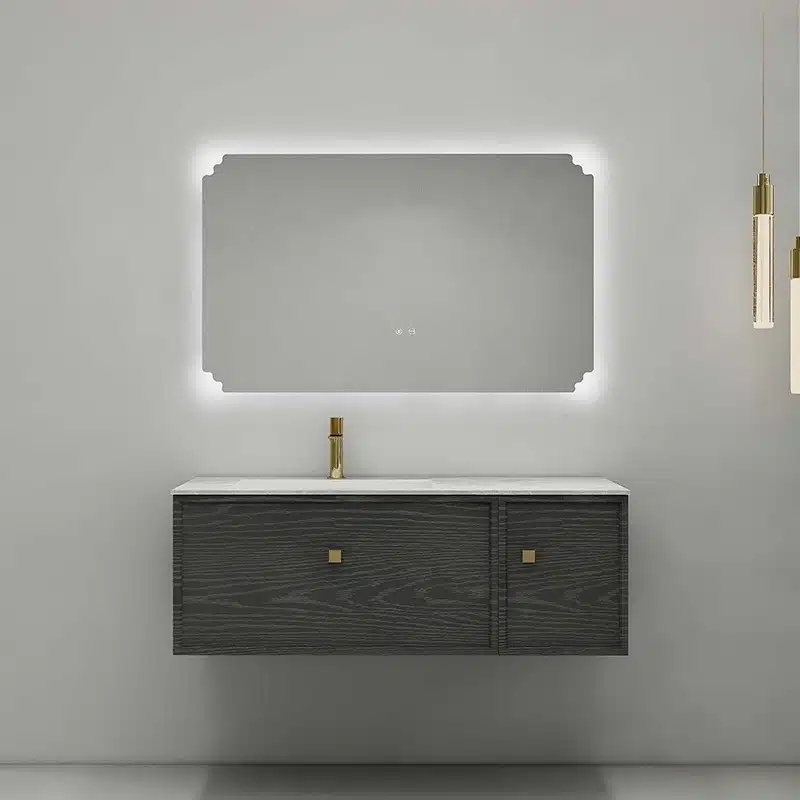
Countertop Showdown: Quartz vs. Solid Surface
Quartz eliminates sealing costs; Solid Surface minimizes housekeeping labor via seamless sinks.
For high-turnover hotel projects, countertop selection dictates long-term operating cost. The cost-effective answer is quartz: its non-porous surface resists acid staining from perfumes and cosmetics with no periodic sealing. Solid surface is the technical choice for integrated sink designs because it removes bacteria-prone caulk lines. That seamless construction cuts housekeeping time by about 15% per room turn.
- Quartz Performance: withstands 10,000+ aggressive cleaning cycles without degradation. Available in 20mm standard or 30mm thickness to resist impact from heavy luggage. Solid Surface Integration: molds the sink as one monolithic piece with the countertop. No grout lines at all, which cuts bacterial growth and cleaning labor. Sintered Stone: strong luxury appeal, but the final quality depends on an experienced fabricator. Chipping during transport or a bad install is a real risk when the contractor lacks proper handling protocols.Sintered Stone
- Marble and granite look premium on paper, but both stay porous in real bathroom conditions. Without a strict and expensive sealing protocol, staining happens fast and maintenance costs keep climbing. Owners who need real durability without constant upkeep will normally pass on natural stone.
Countertop thickness must match the wear the room will see. The standard commercial spec is 20mm, while 30mm (1.2 inches) is the right call for luxury suites because the thicker stone resists chipping under hard impact. In high-traffic guest rooms, 12mm tops stay structurally vulnerable, and an integrated sink adds weight the thin slab was never meant to carry. Quality here is measured in millimeters.
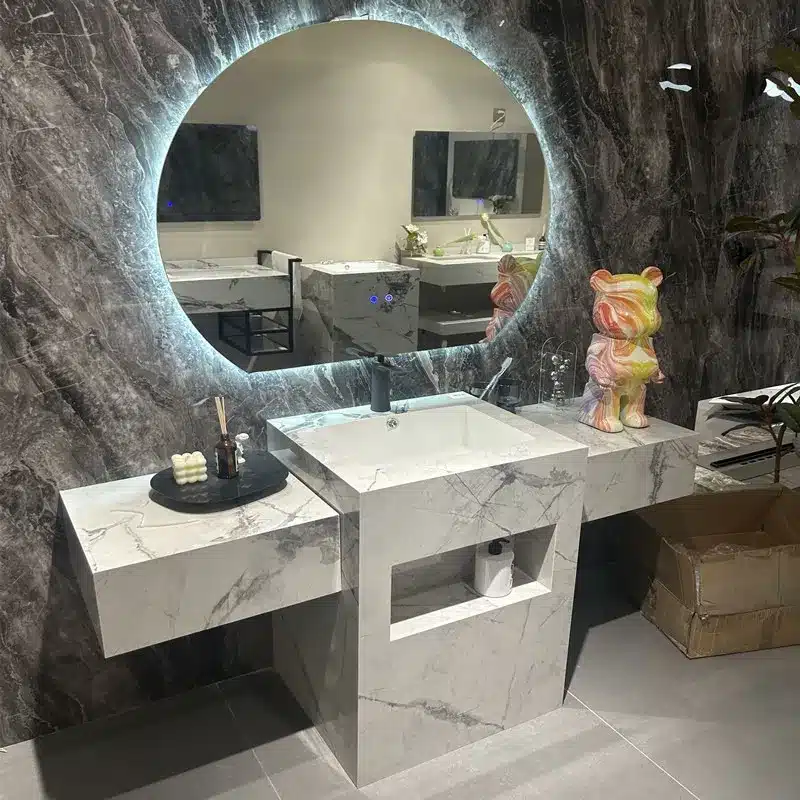
Cabinet Body: Plywood vs. PVC vs. MDF
MDF absorbs steam and swells; 18mm MR Plywood or PVC eliminates the #1 cause of hotel vanity warranty claims.
Contractors pour their attention into the countertop and overlook the cabinet body underneath. That is a critical error. The cabinet carries the full weight of the stone and sits in constant humidity, so standard MDF is the first real failure point in mid-tier hotels. Bottom swelling alone accounts for 40% of early warranty claims.early warranty claims
Preventing the swollen base starts with specifying materials that actively resist moisture absorption. MDF might save a few dollars upfront, but replacing sagging drawers and warped frames costs far more over the building’s life. Commercial durability depends on structural integrity, not just a pretty surface.specify materials
- Moisture-Resistant Plywood: The industry standard for upscale hotels. At 18mm, MR plywood grips screws far better than MDF, so drawers keep their alignment under heavy loads. The tactile quality matches what 5-star properties expect. PVC Foam Board: 100% waterproof and completely impervious to humidity. That makes it the right pick for coastal resorts or tropical climates where wood still degrades. Swelling risk is gone entirely, though under a heavy countertop it can feel less rigid than plywood. MDF (With Caveats): Only viable when strictly sealed with High-Pressure Laminate (HPL). Standard painted MDF swells in environments above 80% humidity. Avoid it for any project where humidity control is inconsistent.18mm MR Plywood
- Commercial Hardware: Pair your cabinet choice with 100,000-cycle hinges. Standard 30,000-cycle hinges fail within two years, and drawer sagging becomes the top complaint in luxury hotels. That 100,000-cycle rating is the durability benchmark that keeps joinery trouble off your maintenance list.

Sourcing Checklist for Commercial Projects
Verify hinge cycles, countertop thickness, and container loading plans before signing to prevent costly rework.
Commercial vanities take significantly more stress than residential units. Contractors usually focus on stone aesthetics and ignore hardware ratings entirely, then wonder why drawers sag within two years. We specify 100,000-cycle hinges to prevent the early failures common in 5-star hotels. That avoids premature replacement and protects your project’s reputation. Over the full lifecycle, it is the cost-effective decision.
- Start with the hinge and slide ratings. That is where quality shows up first in a finished vanity. 30,000 cycles is the absolute floor, but demand 100,000 cycles to get real commercial durability. Residential-grade hardware cannot hold up under hotel traffic, and the result is drawer misalignment and cabinet damage. Countertop thickness is equally non-negotiable: 20mm is the commercial baseline, 30mm for luxury suites where heavy luggage gets dropped onto the surface. Skinny tops crack under the load of an integrated sink. Container loading plan: get a detailed loading plan from the factory before shipping. Better space utilization means lower per-unit freight costs, and for most projects this is the most cost-effective margin lever you have left.
- Pre-production samples are the cheapest quality control you will ever buy. Require a physical sample that matches the final finish before mass production starts. Color and material mismatches tend to look smaller in photos than they do on site. Catching them early keeps the installation on schedule and saves you from mid-project rejections.
Conclusion
Pair 18mm moisture-resistant plywood or PVC cabinets with a 20mm-30mm quartz or solid surface top, and you take out the main causes of mid-lifecycle warranty claims. Add 100,000-cycle hinges and proper integrated sink seals, and the unit survives high-turnover hotels without sagging or mold. That combination is what keeps warranty claims off your desk.
Frequently Asked Questions
What is the best material for hotel bathroom vanity tops?
Quartz and solid surface countertops offer the highest ROI for high-traffic hotel projects due to their non-porous nature and resistance to aggressive cleaning chemicals. Sintered stone is a viable. Select quartz or solid surface for optimal balance of durability and maintenance ease.
Are PVC vanity cabinets better than wood for hotels?
PVC cabinets are superior for humid climates because they are 100% waterproof and eliminate the risk of swelling or mold growth. Plywood is a cost-effective alternative for drier environments but requires. Choose PVC for maximum humidity resistance and reduced long-term replacement risks.
How thick should hotel vanity countertops be?
Standard commercial vanity tops typically range from 20mm to 30mm to ensure structural integrity and a premium feel. Thicker slabs provide better durability against impact but significantly increase shipping costs and. Verify thickness requirements with your fabricator to balance durability and logistics.
What ADA compliance applies to bathroom vanities?
ADA compliance requires specific clearances under the sink, appropriate knee space depth, and accessible faucet operation heights. Products must also meet UL/CSA safety standards for electrical components if integrated with. Ensure all dimensions and electrical specs meet local ADA and UL/CSA codes.
How do I maintain quartz countertops in a hotel?
Quartz requires no sealing and can be cleaned with standard mild detergents and soft cloths to remove stains and bacteria. Avoid abrasive pads or harsh acidic cleaners that could dull. Use mild cleaners and soft tools to preserve the surface finish effectively.




0 Comments