

PVC versus solid wood: that single choice locks in your supplier, budget, and production slot. A 36-inch PVC vanity with a solid surface top runs $380 to $450 for a 50-unit order, while solid wood demands far heavier upfront capital and freight. The real gut punch comes later. Solid wood eats over $500 per unit per year in commercial settings just to keep swelling and finish damage in check. PVC gives you 5 to 8 years with zero maintenance. Veteran contractors fixate on one number: total cost of ownership. Choosing PVC wipes out hidden service costs and lets you cram more units into every container.pvc vs solid wood vanity decision
High‑density PVC in premium OEM lines kills the hollow feel of cheap alternatives. It delivers a solid, heavy hand‑feel that mimics wood but stays 100% waterproof. MFBATH builds on that manufacturing reality to help distributors clear regional compliance hurdles and handle tough climates without the logistics pain of heavy, moisture‑sensitive wood. Switch to PVC and you load 10 to 15 percent more units into a 40HQ container, slashing per‑unit freight and hitting delivery windows for large‑scale developments.
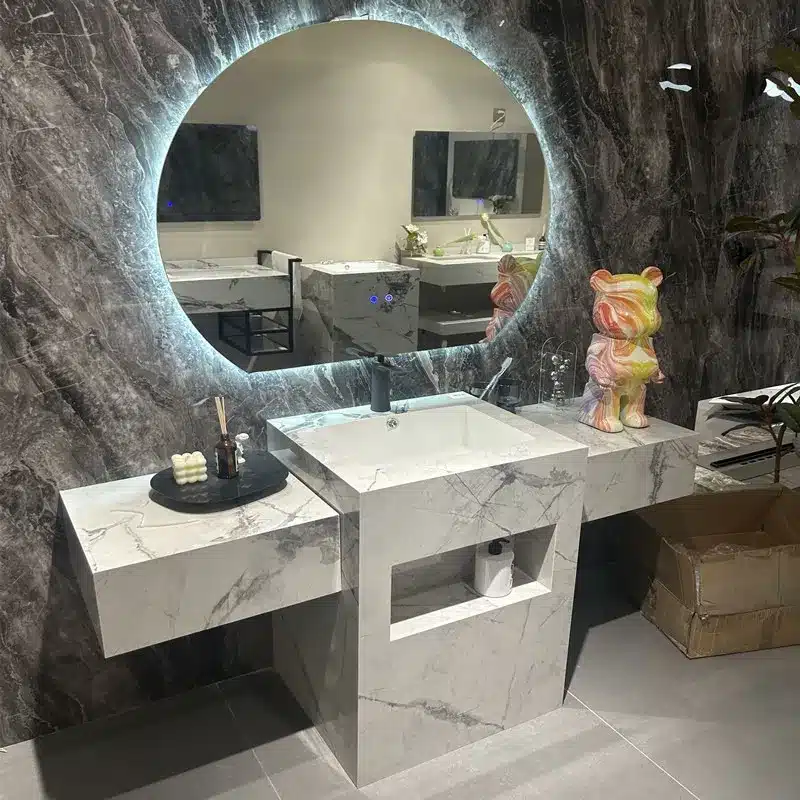
PVC vs Solid Wood: Core Material Risks
Solid wood swells when the finish breaches; PVC remains dimensionally stable in 100% humidity.
For commercial projects, solid wood is a liability, not an asset. In high‑traffic hospitality and coastal builds, the finish inevitably chips or scratches. Once the seal is breached, the wood absorbs moisture, causing irreversible swelling and warping. This leads to drawer misalignment and jammed doors, triggering costly post‑handover service calls that destroy your profit margin.
- Solid wood expands and contracts with humidity shifts. In poorly ventilated bathrooms, that movement snaps hardware mounts and jams drawers within the first 12 months. PVC is monolithic and intrinsically waterproof. It absorbs zero moisture, so warping never happens, even in unventilated, high‑humidity coastal resorts.
- Maintenance liability doesn’t show up on the purchase order. Solid wood needs professional polishing and a fresh coat of sealant every year. Count on at least $500 per unit. PVC only asks for basic cleaning. That eliminates a recurring cost most project budgets never planned for.
The hollow PVC stereotype stops making sense the moment you handle a high-density foam panel. Quality OEM lines use PVC foam with density above 0.6 g/cm³. The result feels solid and heavy, looks like solid wood, and shrugs off moisture. In a bulk order that consistency means every vanity lines up the same way. No warped doors, no widening gaps, none of the installation surprises that natural wood variation throws at you.
| Feature | Specification | Advantage |
|---|---|---|
| Moisture Resistance | 100% Waterproof (PVC) vs. Swells if breached (Solid Wood) | Eliminates warping/mold risks in high-humidity commercial zones |
| Unit Cost (50+ Qty) | $380–$450 (PVC) vs. Higher Premium (Solid Wood) | 20-30% lower CapEx with zero hidden maintenance costs |
| Logistics Weight | 20-30% Lighter (PVC) vs. Heavy (Solid Wood) | 10-15% higher container loading density reduces freight costs |
| Maintenance TCO | Zero Maintenance (PVC) vs. $500+/year (Solid Wood) | Prevents post-handover service calls and budget overruns |
| Compliance & Safety | UL/CSA & CE Certified (PVC) vs. Formaldehyde Risks (Wood) | Meets strict North American/European building codes effortlessly |
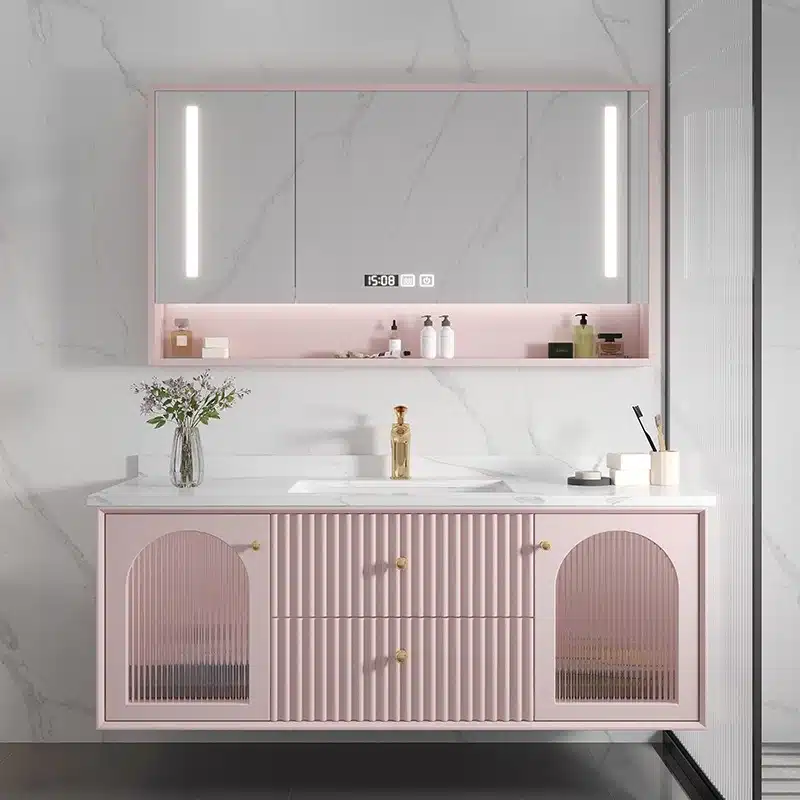
True Cost Breakdown: CapEx vs Maintenance
PVC vanities eliminate $10,000+ annual maintenance on 200-unit projects by removing wood refinishing needs.
Contractors look at the unit price and call it a day. Solid wood vanities run $400 to $600 each, pull heavy freight charges, and lock you into yearly professional maintenance. PVC vanities land between $350 and $450. They weigh 20 to 30 percent less, so you get 10 to 15 percent more inside a 40HQ container. The per-unit shipping drop alone can flip the budget.
- Freight side: PVC units are 20-30 percent lighter than solid wood. You load more vanities per 40HQ container and watch the per-unit freight cost fall. Maintenance side: In a commercial facility, solid wood demands sealant reapplication and polishing every year at $500-plus per unit. PVC stays clean with just a wipe-down. On a 200-unit hotel project, that difference adds up to more than $10,000 saved each year.
- Compliance cost savings: PVC’s stability removes the need for chemical anti-fungal treatments that wood demands in humid climates. It is a hidden saving most contractors never calculate.
Specifiers still repeat the hollow PVC myth. High-density PVC, the grade used in premium OEM lines, has a solid, heavy feel that matches solid wood aesthetics. Monolithic extrusion eliminates the moisture-swelling risk entirely.
| Feature | Specification | Advantage |
|---|---|---|
| Upfront Unit Cost | $380–$450 (PVC) vs. $400–$600+ (Solid Wood) | Lower CapEx entry; PVC offers 20-30% savings on bulk orders. |
| Annual Maintenance Cost | $0 (PVC) vs. $500+/unit (Solid Wood) | Eliminates hidden TCO; no refinishing or sealant re-application needed. |
| Moisture & Climate Risk | 100% Waterproof (PVC) vs. Swelling/Warping (Wood) | Zero liability for humidity damage; ideal for coastal/hospitality projects. |
| Logistics & Freight | 20-30% Lighter (PVC) | 10-15% higher container loading density; reduces per-unit shipping costs. |
| Compliance & Treatment | Inherent Stability (PVC) vs. Chemical Treatments (Wood) | No need for expensive anti-fungal sprays; simplifies UL/CE certification. |
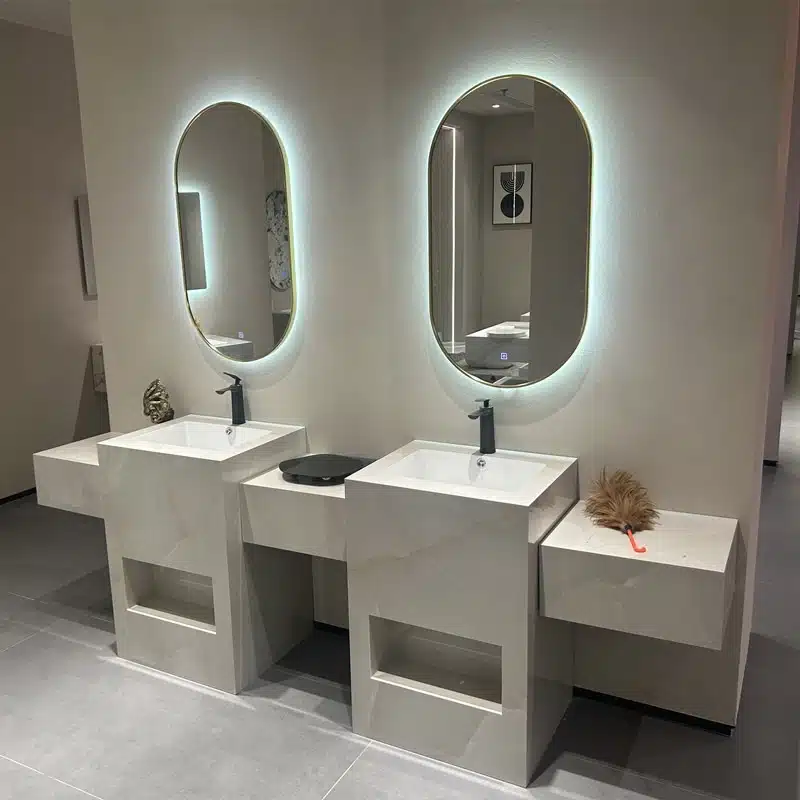
Moisture Resistance: Coastal vs Inland Specs
Coastal humidity destroys wood finishes; PVC’s monolithic structure eliminates mold and liability risks.
Solid wood is porous by nature. High humidity brings mold, rot, and finish breach. In coastal Oceania or the humid zones of North America, wood vanities demand constant maintenance. One break in the sealant lets moisture in. Swelling and warping come next, then structural failure.
PVC is 100% waterproof and immune to mold, mildew, and termites. Monolithic extrusion leaves no seam for moisture to work through. For coastal construction, that combination delivers long-term durability without the hidden cost of chemical anti-fungal treatment or refinishing.
- Moisture resistance: PVC is 100% waterproof and dimensionally stable. Once a wood finish is breached, the panel swells and cracks. Expensive annual maintenance comes with the territory. Regional compliance: PVC easily meets strict standards like WELS in Oceania and UL/CSA in North America without the heavy chemical treatments wood needs.WELS in Oceania
- In humid environments, wood vanity failures trigger water damage claims and post-handover service calls. PVC doesn’t swell or warp, so contractors avoid that liability from the start.
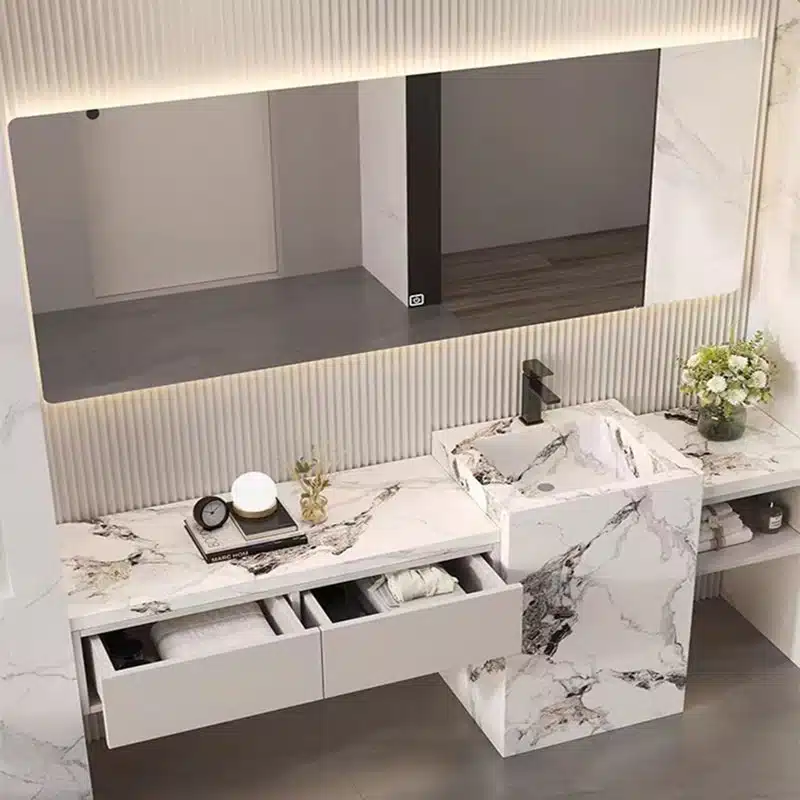
Sourcing & Logistics: Container Optimization
PVC’s 20-30% weight reduction enables 10-15% higher container density, cutting per-unit freight costs significantly.
On large commercial orders, freight often outruns the vanity unit cost. The material you pick sets your container count and labor demand. PVC units weigh 20-30% less than solid wood. That shifts the shipping math for the entire project.solid wood alternatives
That weight savings lets you load 10-15% more units into every 40HQ container. Per-unit ocean freight drops about 15%. On a 200-unit hotel project, the ocean savings alone run into thousands of dollars.
Installation crews notice the difference right away. Lightweight PVC reduces strain and drop damage during handling. Solid wood needs heavy, costly packaging just to survive transit, and it still arrives fragile.
- Packing 10-15% more units per container cuts your landed cost per vanity. Lighter PVC also speeds up installation and keeps breakage claims off your desk.
- Solid wood demands heavy-duty crating to survive transit. That extra packaging consumes cargo weight and drives up both material and freight costs on the same container.
How to Specify Vanities: The 5-Point Checklist
Verify material density, hardware grade, and surface hardness before signing off on custom vanity orders.
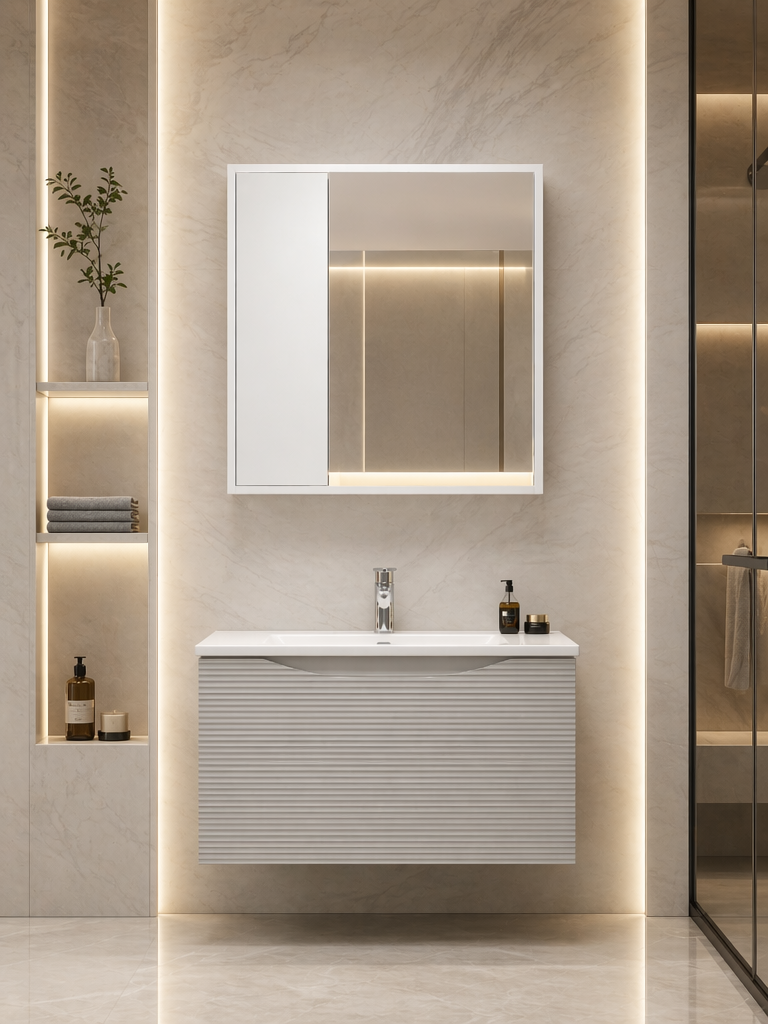
Commercial vanity specs live or die on physical tolerances, not mood boards. Custom finish orders shrink the margin for error to almost zero. Miss one spec during sourcing and you either eat the cost of on-site repairs or refuse the shipment at the dock.Specifying vanities
- Material Density Verification: Demand PVC foam density above 0.6g/cm³. Lower density produces hollow, lightweight bodies that lack the backbone for heavy solid-surface tops. This single number separates a premium OEM build from a budget import. Hardware Grade Standards: Walk away from generic zinc alloy fittings. Specify 304-grade stainless steel for hinges and drawer slides. In high-traffic hotels, standard hardware corrodes or mechanically fails inside 18 months. 304-grade steel holds up against regional humidity and punishing usage cycles. Surface Scratch Resistance: Set a Mohs hardness floor of 5 on vanity tops. Hotel guests use abrasive cleaners and drop heavy objects daily. Softer surfaces collect micro-scratches within weeks, which guests read as poor quality, triggering bad reviews and a flood of maintenance tickets. Low MOQ Prototyping: Push for a low minimum order, 10 to 20 units, on custom finishing runs. Never greenlight a full production batch based on digital renders or uncut material swatches. Physical prototypes reveal how a color reads under the local lighting and whether the custom hardware actually mates to the cabinet structure.Minimum Order Quantity
- Include a pre-production sample stage for Pantone color matching. Factories tend to drift off-color in large runs. Approving a physical sample before the main batch eliminates the risk of receiving 50 units in a shade that clashes with your tile or flooring.
Conclusion
Choosing PVC over solid wood for hotel vanities removes two hidden costs: maintenance and freight weight. High-density PVC is fully waterproof, so no swelling or rot. It also lets you pack 10–15% more units into a container, reducing per-piece shipping cost and keeping delivery on schedule. That’s direct margin protection.
Frequently Asked Questions
Is PVC good for a bathroom vanity?
Yes, PVC is an excellent choice for high-humidity environments because it is 100% waterproof and dimensionally stable. It eliminates the warping risks associated with organic materials in coastal or poorly ventilated spaces. Choose PVC for maximum moisture resistance in humid climates.
What is the most durable material for a bathroom vanity?
PVC and Sintered Stone offer the highest durability due to their complete resistance to water, mold, and physical wear. Unlike wood, these materials do not require protective sealants to maintain their structural. Select PVC or Sintered Stone for long-term durability without maintenance.
What are the disadvantages of PVC furniture?
PVC generally lacks the premium tactile feel and natural grain aesthetics of solid wood or stone. It may also have a lower perceived value in ultra-luxury residential markets compared to high-end timber options. Consider PVC primarily for performance rather than luxury aesthetics.
Is solid wood better for a bathroom vanity?
Solid wood is better only for dry, low-traffic luxury residential settings where natural aesthetics are prioritized. It requires significant maintenance and is prone to swelling or warping in consistently humid or wet environments. Reserve solid wood for dry, high-end residential applications.
Who makes the highest quality bathroom vanities?
Top-tier manufacturers like MFBATH produce high-quality vanities by combining advanced CNC machining with rigorous five-stage quality control. They ensure consistency through region-specific adaptations and strict compliance with international safety standards. Verify manufacturer certifications and quality control processes before ordering.





0 Comments