

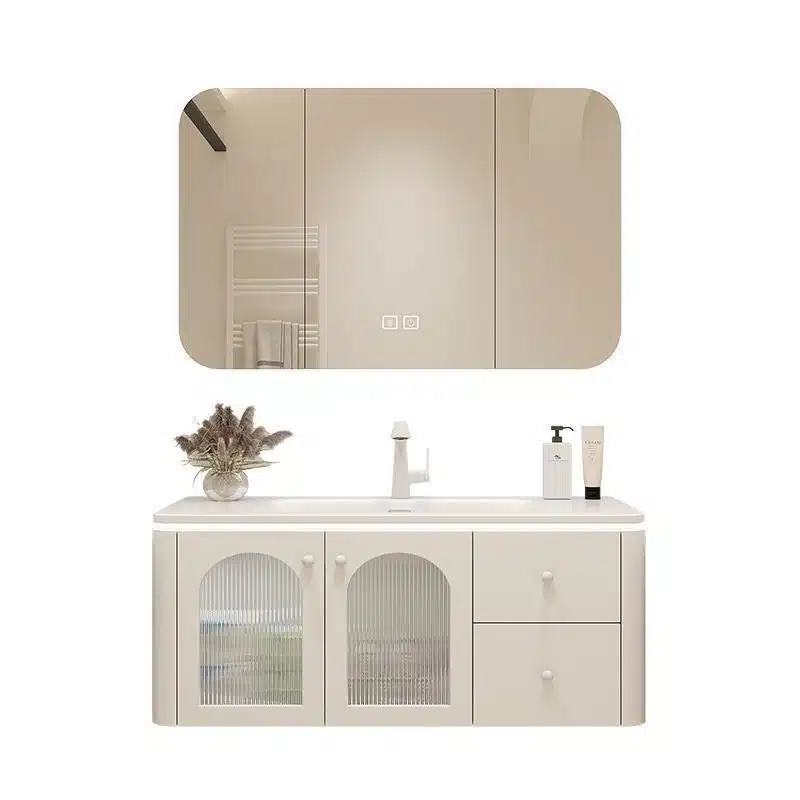
Specifying a bathroom vanity high humidity environment requires moving past the assumption that wood equals luxury. MFBATH operates as a global manufacturer serving over 1,000 distributors, and their production strategy proves that high-density PVC foams often outperform solid wood in coastal or steam-rich zones. The material choice dictates the project’s longevity, not just its initial aesthetic appeal.
Standard MDF vanities can swell by up to 10% when humidity exceeds 70%, leading to structural failure within a year. Marine-grade plywood or premium PVC offers a lifespan of 15+ years in these conditions. Edge banding is the true failure point; even with moisture-resistant cores, poor sealing causes 80% of vanity failures. Automated CNC precision ensures the edge sealing remains intact, protecting the investment against moisture ingress.
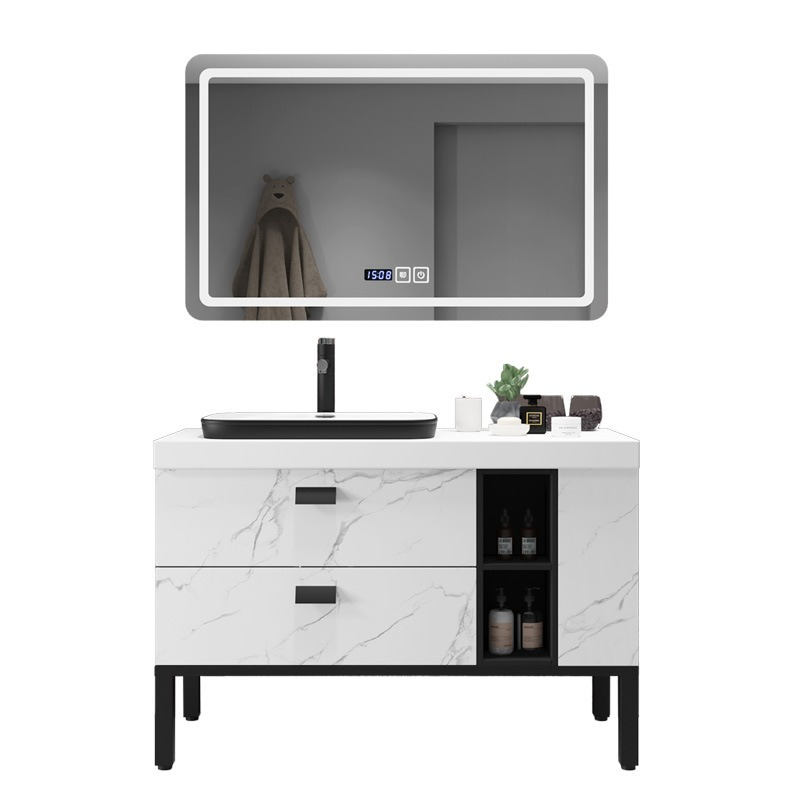
High Humidity Bathroom Vanities: The Real Risks
Standard MDF swells 10% above 70% humidity; premium PVC and marine-grade plywood prevent structural failure.
High-humidity environments pose a technical threat that goes beyond surface moisture. Continuous exposure to moisture vapor and rapid temperature swings causes standard materials like MDF and untreated solid wood to absorb water. This absorption leads to irreversible swelling, core delamination, and rapid mold growth within the cabinet structure.
For specifiers, the real danger lies in the hidden failure points. Even with moisture-resistant cores, poor edge sealing causes 80% of vanity failures. Standard factories often skip precision edge banding, allowing moisture to penetrate the core and destroy the unit from the inside out. This results in callback repairs, client dissatisfaction, and severe reputational damage for the architect.
Marine-grade plywood and high-density PVC foams offer the dimensional stability required for coastal or steam-rich bathrooms. While solid wood requires specialized sealing to prevent warping, PVC remains 100% waterproof and non-porous. Testing shows that premium PVC vanities maintain structural integrity where solid wood typically fails within 5 to 8 years in high-humidity zones.
-
- Material Failure: Standard MDF swells up to 10% in humidity above 70%, leading to immediate structural collapse and mold.
- Edge Banding Risk: Inadequate edge sealing is the primary cause of delamination; automated precision sealing reduces moisture ingress by 90%.
- Lifespan Comparison: Marine-grade plywood and PVC offer a 15+ year lifespan in humid zones, compared to 5-8 years for standard solid wood.
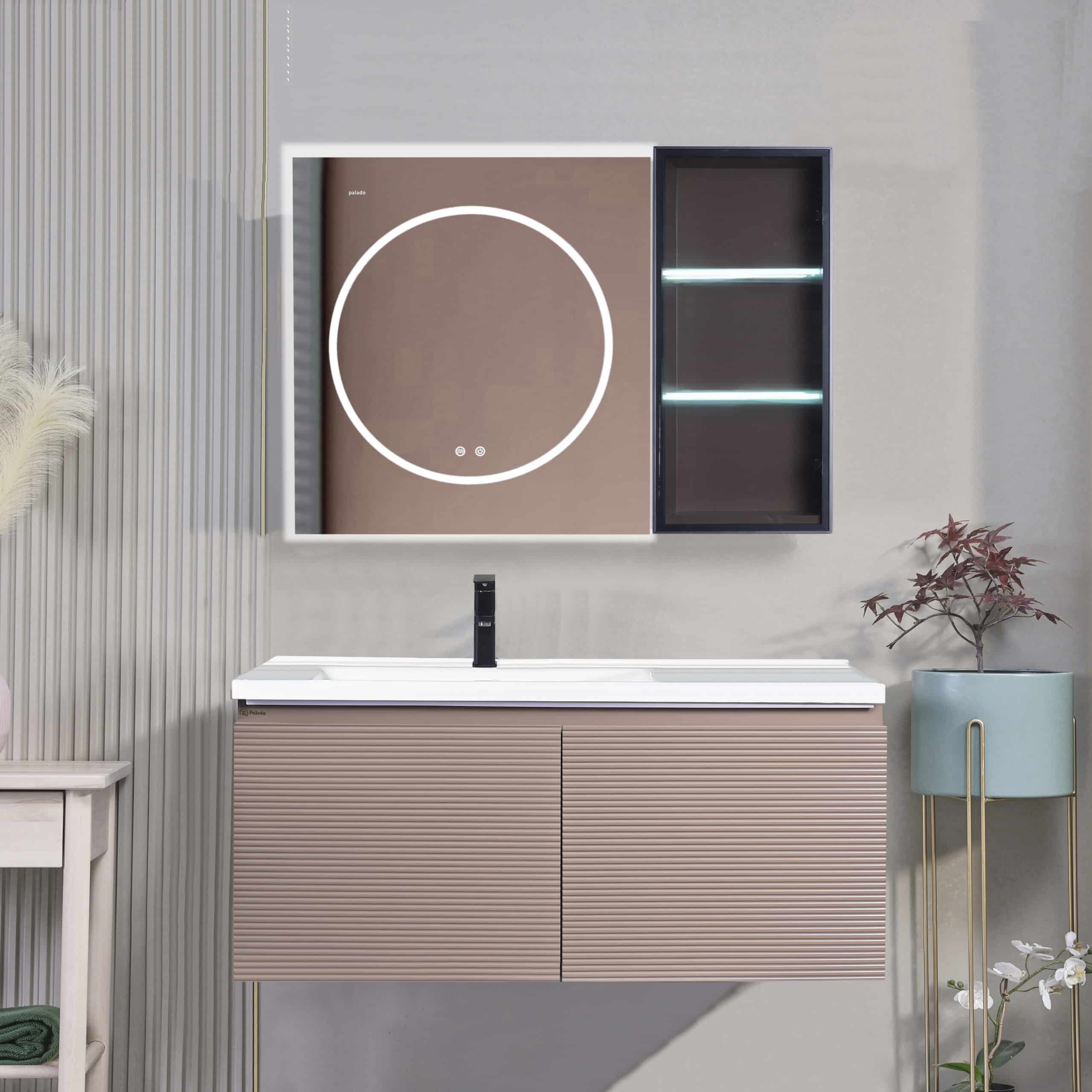
PVC vs Solid Wood: Material Performance in Steam
PVC offers superior dimensional stability in steam rooms compared to solid wood, eliminating warping risks while maintaining luxury aesthetics.
Specifying solid wood for high-humidity environments introduces significant structural risks. Wood is hygroscopic, meaning it absorbs moisture vapor from the air. In bathrooms with humidity levels exceeding 70%, standard solid wood vanities can swell by up to 10%, leading to joint separation, door misalignment, and eventual structural failure.
Even with kiln-drying and high-performance lacquer sealing, solid wood remains vulnerable to thermal expansion and contraction. Temperature swings in steam rooms cause the material to expand and contract, compromising the seal over time. Once moisture breaches the finish, mold growth and delamination become inevitable, damaging the specifier’s reputation.
PVC (Polyvinyl Chloride) is often misunderstood as a budget alternative, but high-density PVC foams provide 100% waterproof integrity. Unlike wood, PVC is non-porous and impervious to moisture vapor. This ensures complete dimensional stability, preventing warping or swelling regardless of humidity levels or temperature fluctuations.
-
- Moisture Resistance: PVC is 100% waterproof, eliminating mold and rot risks. Solid wood requires constant maintenance and is prone to swelling in >70% humidity.
- Dimensional Stability: PVC maintains shape under extreme temperature and humidity changes. Solid wood expands and contracts, risking joint failure and door misalignment.
- Aesthetic Capability: Modern PVC offers realistic wood-grain textures via over 40,000 customization combinations. It matches luxury aesthetics without the maintenance burden of natural wood.
- Edge Banding Integrity: Poor edge sealing causes 80% of vanity failures. Automated CNC edge banding on PVC ensures precision sealing, reducing moisture ingress risks by 90% compared to manual factories.
For coastal or high-humidity projects, PVC is the superior choice for longevity. Marine-grade plywood is a viable alternative but still requires rigorous sealing. PVC eliminates the variability of natural materials, offering consistent performance and a lifespan of 15+ years in harsh environments, compared to 5-8 years for standard solid wood.
| Feature | Specification | Advantage |
|---|---|---|
| Waterproof Integrity | PVC: 100% Non-porous | Solid Wood: Porous (Requires Sealing) | PVC eliminates mold/warping risks in >70% humidity; Wood requires maintenance |
| Dimensional Stability | PVC: Zero Swelling | Solid Wood: Up to 10% Swell in Steam | PVC ensures long-term fit; Wood risks structural failure and gaps |
| Lifespan in Humid Zones | PVC/Marine Ply: 15+ Years | Standard Solid Wood: 5-8 Years | PVC offers 2-3x longer service life, reducing warranty claims |
| Aesthetic Customization | PVC: 40,000+ Combos (Realistic Wood Grain) | Wood: Natural Variance | PVC delivers luxury wood aesthetics with consistent, waterproof performance |
| Edge Banding Quality | Automated CNC Precision | Manual/Low-Cost: Prone to Delamination | Precision sealing reduces moisture ingress risk by 90% |

The Hidden Cost of Material Failure in Humid Zones
Material failure in humid zones costs specifiers more than the initial vanity price tag.
Specifying a vanity for a high-humidity environment is not just an aesthetic choice; it is a risk management decision. When a standard MDF or low-grade solid wood cabinet fails, the cost extends far beyond the unit price. The financial impact includes callback repairs, structural damage to surrounding walls, and significant client dissatisfaction that damages professional reputation.
The core issue is moisture vapor transmission. Standard MDF vanities can swell by up to 10% in humidity levels above 70% if not perfectly sealed, leading to rapid structural failure. Even premium solid wood, if not kiln-dried and sealed with high-performance finishes, risks warping and cracking. This is where the ‘cheaper’ option becomes the most expensive over the project lifecycle.
-
- Callback Repairs: Replacing a failed vanity in a high-end residential project involves labor, logistics, and potential damage to finished surfaces, often costing 3-5x the original unit price.
- Structural Damage: Persistent moisture from a failing cabinet can rot wall studs and damage flooring, leading to extensive remediation costs that far exceed the cost of a waterproof alternative.
- Client Dissatisfaction: Mold or warping within the first year of occupancy is a primary driver of negative reviews and loss of referral business for architects and designers.
- Long-Term Durability: Marine-grade plywood or PVC offers a lifespan of 15+ years in coastal/high-humidity zones, compared to just 5-8 years for standard solid wood, significantly reducing total cost of ownership.
The failure point is often not the core material, but the edge banding. Even with moisture-resistant cores, poor edge sealing causes 80% of vanity failures. MFBATH’s automated CNC lines ensure precision edge sealing that manual factories often skip, reducing moisture ingress risks by 90% compared to low-cost suppliers. This attention to detail is what separates a durable, region-ready product from a temporary fix.
| Material | Specification | Humidity Risk | Lifespan | Total Cost Impact |
|---|---|---|---|---|
| Standard MDF | Particle board core, low-density finish | Swells up to 10% at >70% humidity; high mold risk | < 12 months in steam rooms | High (Frequent callbacks, structural failure) |
| Standard Solid Wood | Kiln-dried oak/maple, basic lacquer seal | Warping and cracking due to moisture vapor transmission | 5-8 years in coastal/high-humidity zones | Medium (Warranty claims, aesthetic degradation) |
| Marine-Grade Plywood | MR core, high-performance polyurethane seal | Low (If edge banding is perfect); moderate risk if sealed poorly | 10-12 years with proper maintenance | Medium (Requires skilled installation to prevent edge failure) |
| High-Density PVC Foam | 100% non-porous, automated precision edge banding | Zero (100% waterproof, dimensionally stable) | 15+ years in extreme humidity/coastal zones | Low (Minimal warranty claims, zero mold remediation costs) |
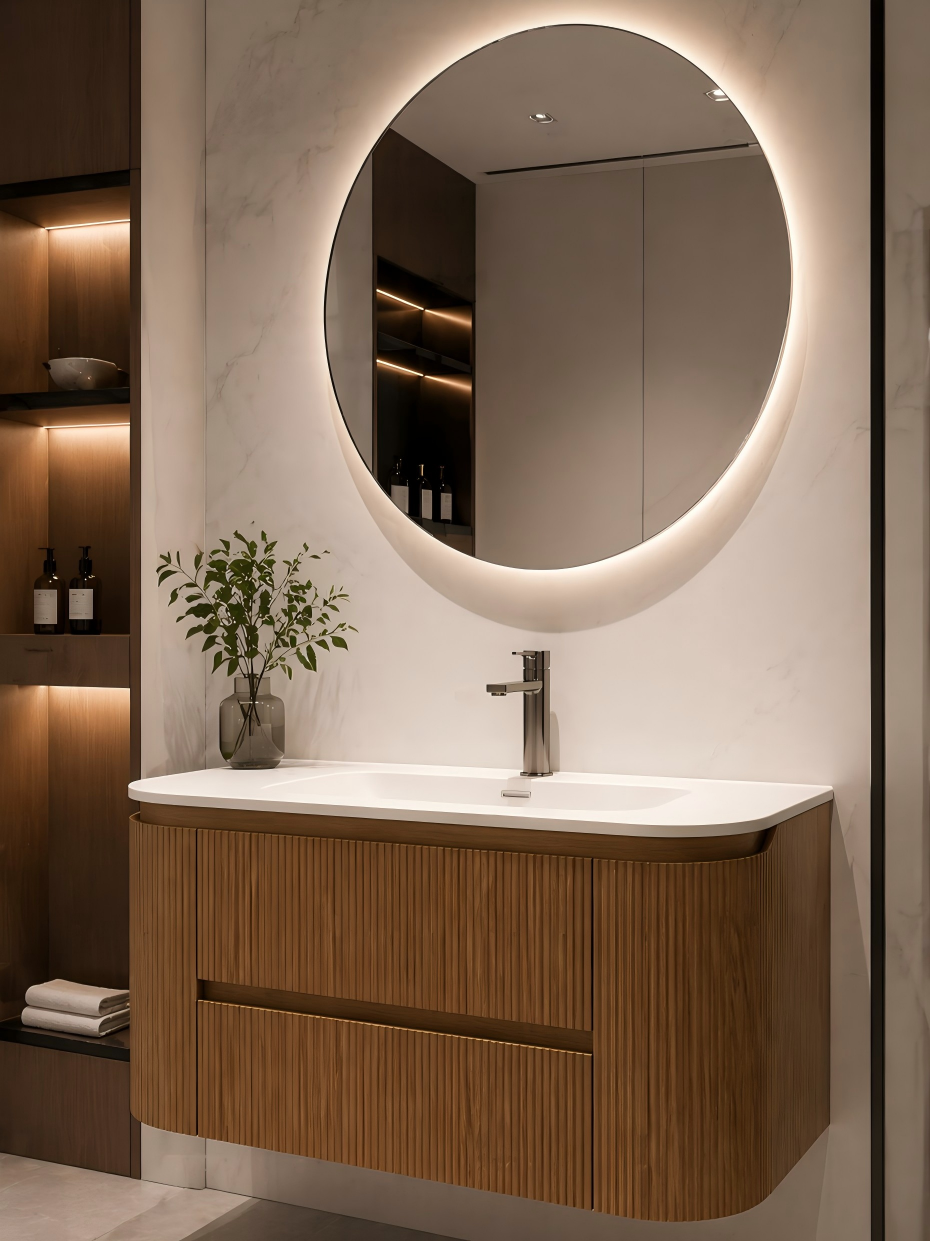
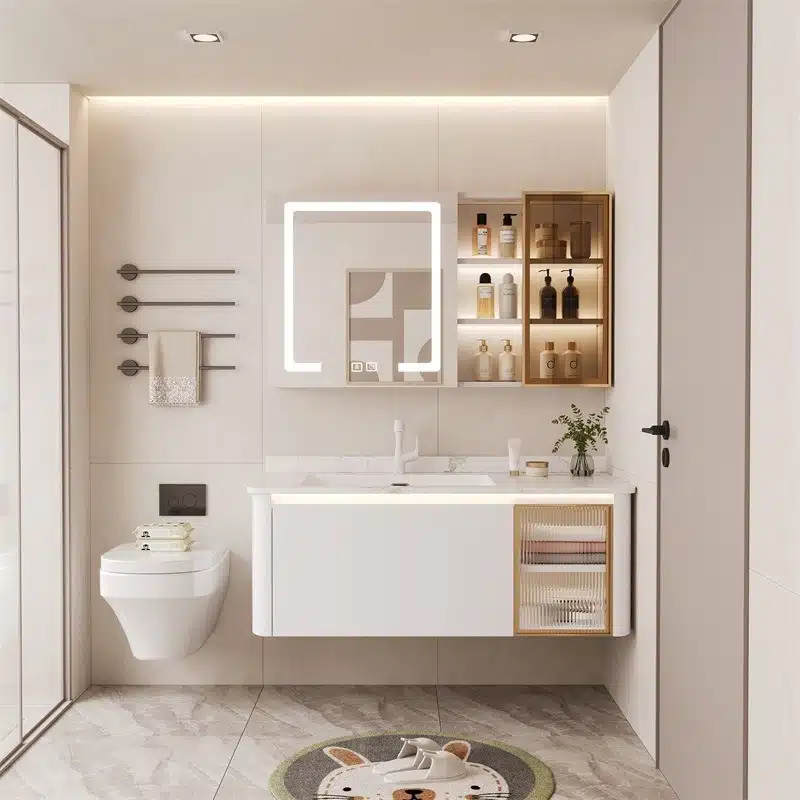
How to Specify Waterproof Vanities Without Compromising Design
High-density PVC offers luxury aesthetics with 100% waterproof integrity, eliminating the warping risks of solid wood in humid zones.
Specifying PVC for luxury projects requires looking past the material’s plastic origins to its modern high-density foam engineering. Premium manufacturing uses dense PVC foams that provide superior dimensional stability and texture realism in high-humidity zones compared to solid wood, effectively challenging the traditional ‘wood equals luxury’ bias. This material choice is not a budget compromise; it is a climate-specific engineering solution that ensures the vanity survives extreme humidity without warping or degrading.
Modern PVC manufacturing has evolved significantly to meet the exacting aesthetic standards of veteran specifiers. High-density PVC foams are now processed with realistic wood-grain textures and sophisticated matte finishes, delivering the visual warmth of oak or walnut without the structural vulnerabilities associated with natural timber. Designers can specify from over 40,000 customization combinations, including Pantone color matching and branded hardware, ensuring the vanity integrates seamlessly into high-end residential or boutique commercial designs.
While PVC provides the core waterproof integrity, the longevity of any vanity in high-humidity environments hinges on proper edge banding requirements. Edge banding is the true failure point; even with moisture-resistant cores, poor edge sealing causes up to 80% of vanity failures due to moisture ingress. Automated production lines ensure precision edge sealing that manual factories often skip, reducing moisture ingress risks by 90% compared to low-cost suppliers and preventing the core swelling that destroys standard MDF or plywood vanities.
-
- Moisture-Resistant Certifications: For non-PVC materials like plywood or MDF, always demand verified E1 grade (low formaldehyde) for Europe and MR (Moisture-Resistant) grade for plywood. These certifications ensure the materials can withstand steam and humidity without off-gassing or delaminating, a critical requirement for health and durability in modern bathrooms.
- Customization for Design Needs: Align customization capabilities with your project’s specific humidity challenges. MFBATH supports a low MOQ of 10 to 20 units for custom PVC designs, enabling designers to test materials and finishes on small projects before full commitment, ensuring the aesthetic and performance match the client’s high-humidity environment perfectly.
- Regional Climate Engineering: Specifying PVC is about climate-specific engineering, not just material choice. For coastal high humidity, look for UV-resistant finishes; for arid regions, prioritize heat-resistant materials. This ‘region-ready’ strategy ensures the vanity maintains its structural integrity and aesthetic appeal regardless of the local weather extremes.
Conclusion
Specifying PVC over solid wood for high-humidity projects eliminates the risk of structural swelling and mold growth that damages professional reputations. High-density PVC foams provide 100% waterproof integrity and dimensional stability that standard timber cannot match in steam-rich or coastal environments. This material choice ensures long-term durability while maintaining the realistic wood-grain aesthetics required for luxury specifications.
Review the current catalog to compare custom PVC and solid wood options for your specific regional compliance needs. The low minimum order quantity allows you to test material performance on small projects before full commitment.
Frequently Asked Questions
What is the best material for a bathroom vanity cabinet?
For high-humidity bathrooms, PVC and marine-grade plywood are the best materials because they resist water damage and mold. PVC offers 100% waterproof integrity, while plywood provides a moisture-resistant alternative at a. Choose PVC for maximum waterproofing or plywood for cost-effective moisture resistance.
Is PVC good for a bathroom vanity?
Yes, PVC is excellent for bathroom vanities, especially in high-humidity or coastal environments, as it is non-porous and prevents mold growth. Its dimensional stability ensures it won’t warp or swell even in. Select PVC for superior durability in wet or coastal climates.
What is the best material for a bathroom vanity unit?
The best material depends on the specific humidity level and budget requirements of the project. In standard bathrooms, solid wood or plywood works well, but high-humidity zones require PVC. Match the material choice to the specific humidity level of the installation site.
What’s the best material for a bathroom vanity top?
For high-humidity environments, sintered stone, quartz, or solid surface materials are best for vanity tops due to their non-porous nature. These materials resist heat, scratches, and cleaning chemicals better. Opt for sintered stone or quartz for maximum resistance to moisture and wear.
Who makes the highest quality vanities?
Highest quality vanities are made by manufacturers who specialize in regional adaptation and rigorous QC, such as MFBATH. They utilize advanced CNC machining and five-stage inspections to ensure durability and compliance with. Partner with manufacturers offering certified quality control and regional compliance.


0 Comments