

Focuscabinet manufactures in Changge, China, supplying 1,000+ distributors in 20+ countries. Their ‘region-ready’ approach adapts materials and compliance to local environments. Coastal buyers need this, not just standard FOB pricing.
Humidity kills vanities through unsealed internal edges, not visible surfaces. Moisture enters, causing delamination and mold. Focuscabinet uses closed-cell PVC here. It doesn’t swell. This stops hidden warranty costs from eating distributor margins.
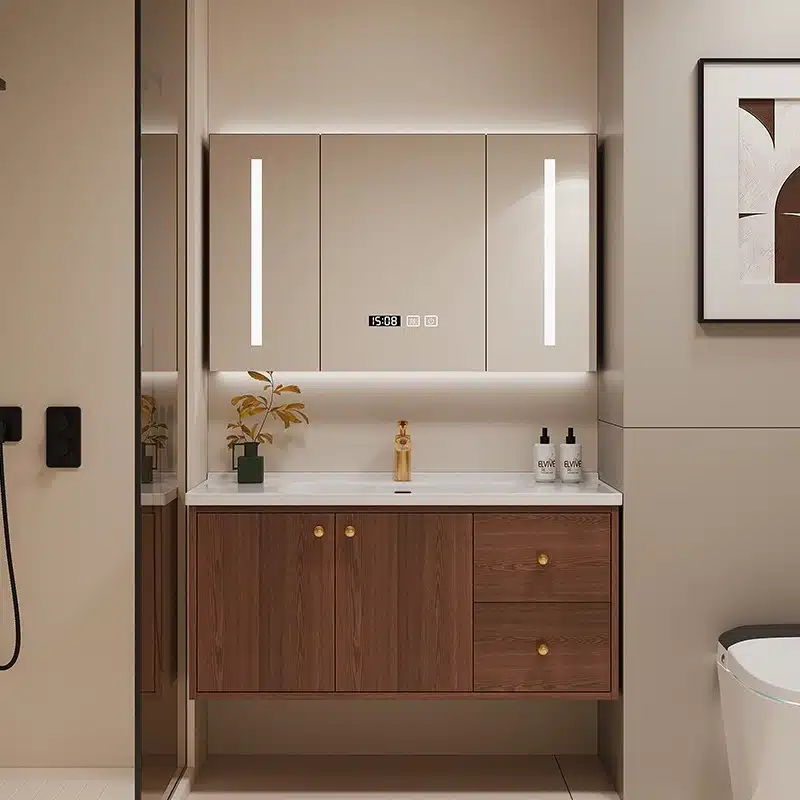
Why Standard Vanities Rot: The Humidity Risk Factor
Standard vanities fail in coastal zones not from water, but from salt-laden air triggering hydrolysis in unsealed edges.
Oceania and the Gulf Coast face salt air and temperature swings. This combination destroys standard furniture. It’s not just humidity. Salt and moisture trigger hydrolysis, chemically breaking wood fibers. Focuscabinet designs specifically to stop this.
Wood fibers absorb moisture, swell, then contract with temperature changes. This cycle warps structures. Standard plywood or MDF vanities fail within 18 months in these conditions, even if water-resistant. Focuscabinet avoids this by using materials that don’t participate in the cycle.
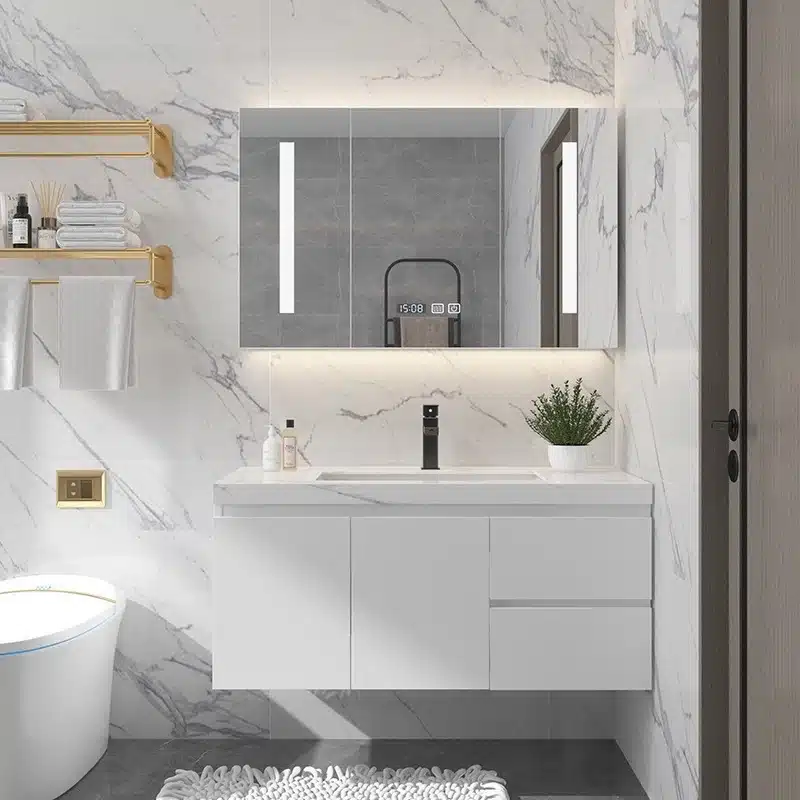
Failures happen at two spots: 2 cm from unsealed plumbing cutouts or the bottom seam. Focuscabinet seals every hidden edge before assembly. They cover more than visible edges. This attention to hidden details keeps products standing in harsh coastal climates.
A rotting vanity costs more than its purchase price. You pay for returns, shipping, and lost trust. Focuscabinet’s focus on quality and durability saves distributors from these hidden costs. It protects reputation and ensures long-term relationships with end customers.
-
- Hydrolysis happens when wood fibers soak up moisture and break down chemically. The result is swelling and delamination. This process accelerates in coastal zones where temperature swings are constant.
- Salt-laden air is corrosive. It attacks standard finishes and materials designed for inland climates. Coastal distributors cannot rely on generic hardware or veneers.
- Edge sealing dictates longevity. 90% of moisture failures start at unsealed edges. Manufacturers must seal hidden joints, not just the visible perimeter.
- Returns destroy margins. Rotting vanities trigger warranty claims that erase the profit from a dozen successful sales. Brand reputation takes years to rebuild.
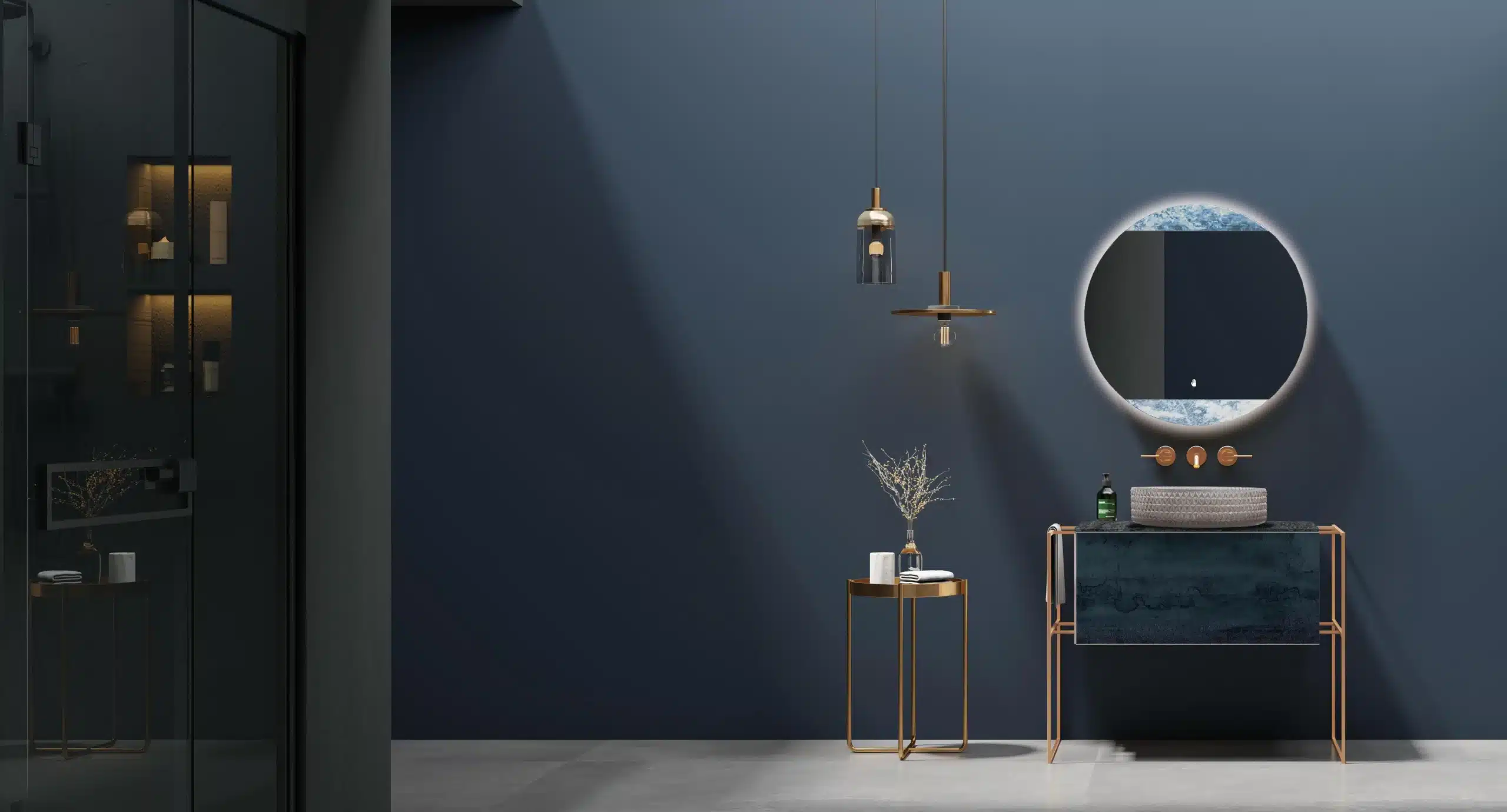
PVC vs HMR Plywood vs Sealed MDF: A Cost Analysis for Bulk Buyers
PVC is the only 100% waterproof cabinet material; plywood and MDF rely entirely on edge-sealing integrity.
Coastal buyers must calculate total cost of ownership, not just the FOB price. Standard plywood saves money upfront but risks delamination. Warranty claims from moisture damage often wipe out initial savings within 18 months. Rigid cellular PVC costs 15-20% more initially but eliminates water absorption risks entirely. That is a durable, cost-effective path for high-humidity markets.total cost of ownership
-
- PVC foam board weighs 0.5-0.7 g/cm³. MDF and HMR plywood are heavier, ranging from 0.7 to 0.8 g/cm³. This lower density reduces freight costs per container, partially offsetting the higher raw material cost of PVC.
- Water absorption splits the material game. PVC absorbs 0%. HMR plywood resists it but still pulls in under 8% moisture under ASTM D570 testing. MDF is the killer. Sealant breaches cause it to swell instantly. In coastal zones, that failure point is why projects fail.
- Hinges don’t lie. HMR plywood holds the line on structural integrity. PVC holds up well, but over-torquing can strip the thread. MDF is a trap. Humidity rots its screw retention, leading to sagging doors and broken hardware within a year.
- Here are the hard numbers for a 48″ PVC vanity cabinet. FOB price runs $180 to $280. HMR plywood hits $150. Sealed MDF drops to $110. But price is only half the story. PVC needs 50-100 units to justify production setup. MDF and plywood let you start with just 10-20 units.higher MOQ
- Most moisture failures happen in the 2 centimeters around an unsealed plumbing cutout. MDF and plywood swell if the factory only seals the visible edges. PVC skips edge sealing entirely. For bulk orders in salt-air climates, PVC is the only risk-free path.
- Sintered stone tops are non-porous and handle heat and scratches like a champ. Pair it with a PVC base, and you have a completely moisture-proof assembly. Pair it with MDF, and you are relying on meticulous silicone sealing at the joint. One fails; the other survives.
| Feature | Specification | Advantage |
|---|---|---|
| Material Composition | Rigid Cellular PVC vs. HMR Plywood vs. Sealed MDF | PVC is 100% waterproof; HMR/MDF rely on edge sealing quality |
| Water Absorption (ASTM D570) | <1% (PVC) vs. <8% (HMR Plywood) | Eliminates swelling and delamination risks in coastal humidity |
| Edge Sealing Protocol | Full 5-Edge Seal + Internal Joint Silicone vs. Visible Edge Only | Prevents 90% of moisture failures at plumbing cutouts |
| Cost Efficiency (48″ Unit) | $180-$280 FOB (PVC) vs. $150 FOB (HMR) | Higher initial PVC cost offset by 3-5X fewer warranty claims |
| Factory QC Standard | ISO 9001:2015 with 5-Stage Inspection | Ensures consistent ‘region-ready’ compliance and durability |
How to Verify Your Factory’s Edge-Sealing Protocol
Visible edgebanding is a marketing lie.
Suppliers show pristine sealed panels during sampling. It is a deliberate visual trap. Waterproof durability lives in the hidden plumbing cutouts and bottom seams where water actually pools. Do not trust the face. Demand verification of the hidden edges, especially for coastal or high-humidity markets.
Confusing manufacturers with trading companies is the easiest way to lose money. Catalogs look identical. Verify production capacity on the floor before you issue the purchase order.
-
- Demand a photo of a raw plumbing cutout from a random production unit. Check the “2cm Rule.” Every exposed edge within 2 centimeters of the hole must be sealed. Raw MDF or plywood fibers are a red flag. Hydrolysis starts there. If you see unsealed wood, reject the shipment immediately.
- Ask about their edge-sealing adhesive. Manual spray is porous. It leaks. A professional manufacturer uses automated UV-cured polyester sealers. This creates a glass-like barrier in seconds. Hotmelt adhesives just don’t match that density. Ask for a test report.
- Photos don’t prove anything about long-term durability. Demand a video of a sample door panel or cabinet side submerged in water for 24 hours. This is the only real test for coastal moisture. If the material swells, bubbles, or separates after one day, it will fail in the buyer’s home. Don’t risk it.
These three checks are non-negotiable. They protect your margin from warranty claims and brand damage. A factory that hesitates to show you this level of transparency is hiding a critical weakness. Don’t negotiate with a supplier who won’t open their production line.warranty claims
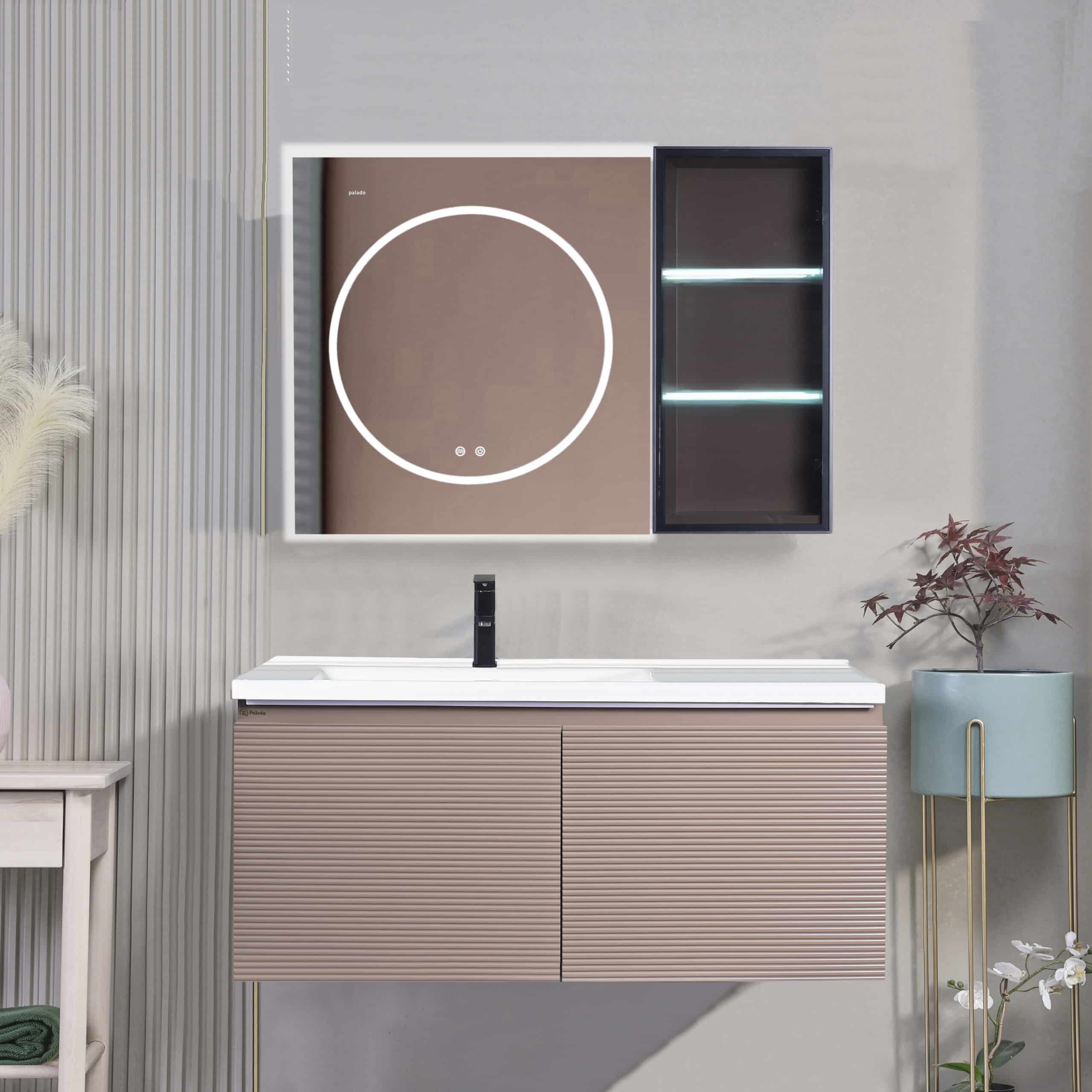
Sourcing Waterproof Vanities: A 5-Point Factory Audit Checklist
Verify your factory’s edge-sealing protocol to eliminate the 90% of moisture failures that happen at unsealed cutouts.
Sourcing for coastal markets requires a rigorous factory audit. The difference between a durable, region-ready product and a delaminated liability is technical detail. Trading companies gloss over this. Direct manufacturers enforce strict protocols to ensure your inventory survives the climate. Quality matters more than low unit cost.factory audit
Demand proof of compliance for every material before signing. That certification is your shield against stock that cracks or warps under humidity stress.
-
-
- ISO 9001:2015 isn’t just a logo on the wall. It forces the factory to keep consistent quality management records. Check if the current certificate actually covers the vanity and mirror lines you’re buying.
- CARB Phase 2 / E1 Grade: This is mandatory for MDF and plywood. It guarantees low formaldehyde emissions, which is the baseline for entering the North American and European markets.
- SGS / CE Compliance: These are third-party reports that validate material safety and structural strength. For Oceania, you must specifically ask for AS/NZS 2080:2022 compliance for their HMR boards.AS/NZS 2080:2022
- ASTM D570 measures water absorption. Make sure your HMR plywood supplier provides test data showing an absorption rate under 8%. Anything higher is a risk.ASTM D570
-
The 2cm Rule is non-negotiable in coastal sourcing. Ninety percent of moisture failures happen within two centimeters of an unsealed plumbing cutout or bottom seam. Audit the factory’s edgebanding tech to ensure they seal hidden joints, not just visible edges.
-
-
- Standard EVA glue fails in bathrooms. Humidity cracks it and voids warranties. The plant switched to PUR adhesive. It handles moisture and seals edges tight. That is how you build real durability.
- Laser edgebanding sets the standard for PVC vanities. It fuses the edge without visible glue lines. Water cannot get in. Salt air cannot eat the seams. You get a monolithic look with serious quality and longevity.
- Check the plumbing cutouts. If the raw board is exposed, walk away. That open edge drinks water and swells the cabinet. Sealed cutouts are the only way to guarantee durability.
-
Bad hardware ruins warranties. Zinc hinges rust in coastal areas. Doors sag and snap in months. Smart buyers pay more for good metal upfront. It is the most cost-effective move you can make.
-
-
- Stainless Steel 304 is the floor for coastal projects. It handles salt air way better than 201 steel or zinc. Pick 304 for quality. It stops the bleeding from premature replacements.
- Demand 72-hour salt spray test reports. This mimics years of sea air in a lab. If a supplier hides these results, they are hiding defects. This test is the only proof of real quality and durability.
- Silicone-treated joints seal the internal gaps. This stops moisture from wicking into the cabinet core.
-
A shipping container to a humid zone is a closed ecosystem. Without proper packaging, condensation turns inventory into mold before it even reaches the warehouse floor.
-
-
- Industrial desiccant packs are mandatory in every container. They absorb ambient moisture, stopping condensation from forming on cabinets during transit.
- Volatile Corrosion Inhibitor (VCI) paper wraps metal hardware. It prevents rust during the shipping process.
- Humidity indicator cards change color if conditions exceed safe thresholds. They provide proof of transit environment.
-
Your contract must address liability for humidity-related damage. A vague warranty clause leaves you covering the cost of returns.
-
- Spell out ‘humidity damage’ in the contract. Don’t leave it vague. If delamination happens within the first year because the material failed, the factory replaces the units. Full stop.
- Don’t seal the container without a third-party inspection. Use SGS or a similar agency to check edge-sealing and packaging compliance yourself. If you skip this, you’re blind to defects until the goods sit in your warehouse.
- Your warranty must cover both structural integrity and finish durability. If the finish peels or the frame warps, it should be on them. A reputable manufacturer will confidently stand behind their five-stage quality control process.
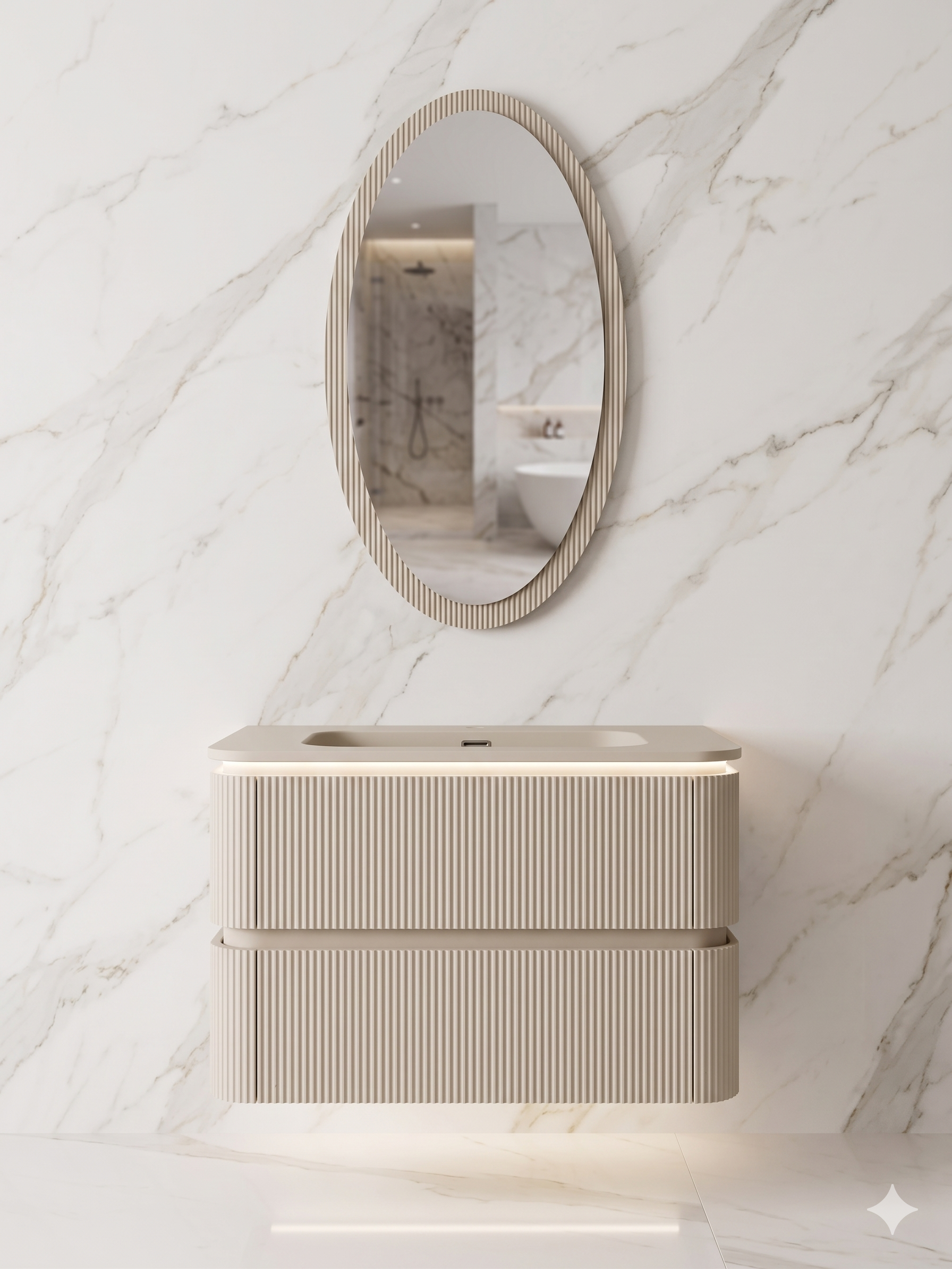
Why Our ‘Region-Ready’ Program Eliminates Moisture Risk
Moisture failures are rarely random; they are predictable engineering gaps in edge sealing and regional material selection.
“Waterproof” is a marketing trap in this industry. For coastal Oceania, the Middle East, or the Caribbean, you need engineered immunity to salt air, extreme heat, and humidity. Focuscabinet’s ‘Region-Ready’ program adapts materials and protocols to these specific environmental stressors. This eliminates the moisture risk that destroys distributor margins.
Salt-laden air and intense UV are the primary threats in Oceania and the Caribbean. They accelerate the degradation of standard finishes and hardware. We use AS/NZS-compliant HMR boards for plywood options and specialized anti-UV sealants to prevent fading and adhesive breakdown. Stainless Steel 304 hardware is mandatory here—no compromises. In the Middle East, the focus shifts to thermal stability. PVC formulations withstand ambient temperatures up to 50°C without warping, and wooden components receive anti-termite treatments for arid, insect-prone environments.
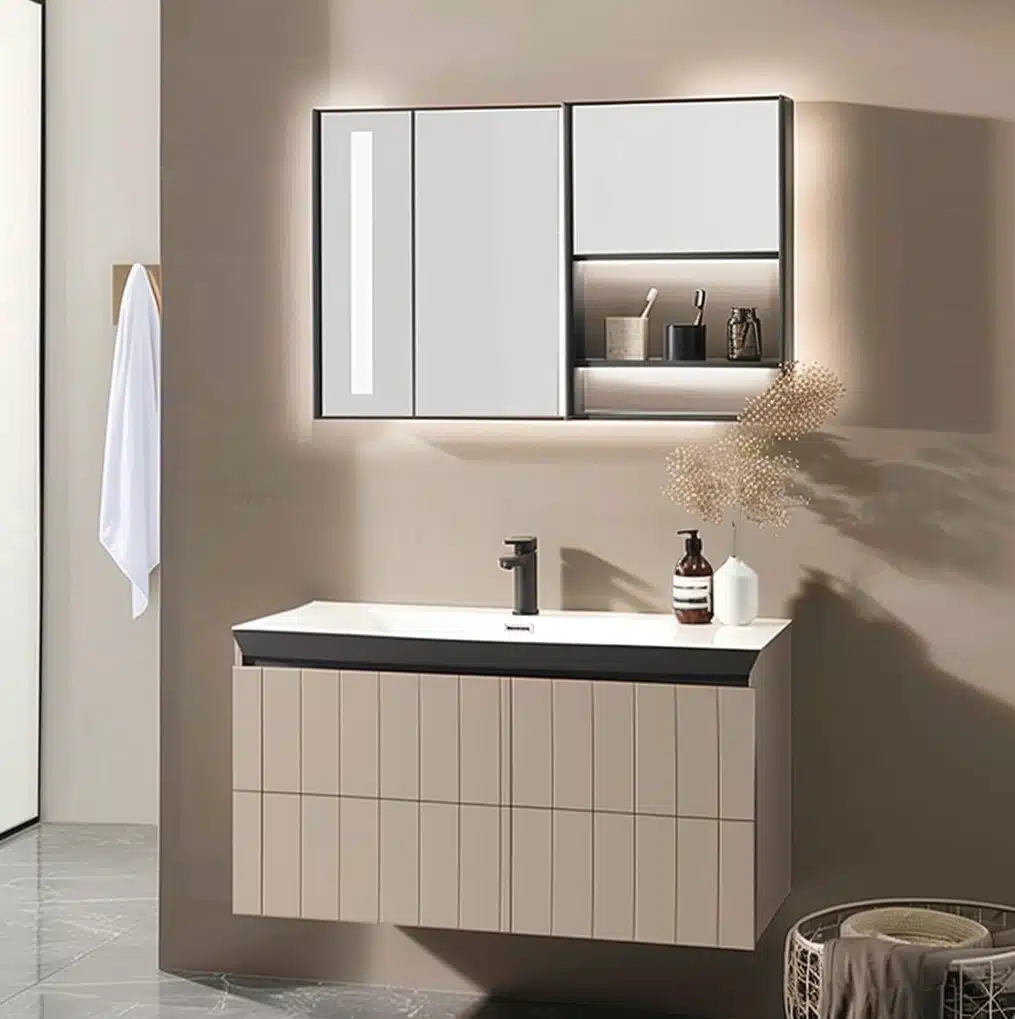
A moisture-proof cabinet is defined by its weakest point: the unsealed edge or bottom seam. The ‘2cm Rule’ applies strictly—90% of moisture failures occur within 2 centimeters of an unsealed plumbing cutout or bottom edge. While competitors seal only the visible exterior, factory sealed edge bathroom cabinets undergo comprehensive sealing on every hidden edge before assembly. This prevents hydrolysis—the chemical breakdown of wood fibers—before it starts.
-
- Raw material inspection isn’t optional. Before any machine runs, we test every batch of HMR plywood and PVC foam for moisture and density. PVC panels need a density of 0.5–0.7 g/cm³ to survive humid climates. Skip this step? You’ll deal with swollen cabinets in the field.
- Most vanity failures happen at the edges. We let PUR hotmelt and laser edgebanding cure fully. This creates a permanent seal that won’t peel in steamy bathrooms. It’s not just about looks; it’s the main defense against rot.
- Moisture hides in the joints. We apply silicone beads inside to block hidden water paths. Every plumbing cutout gets checked to ensure no raw board is left exposed. That’s how you stop water from eating the cabinet body from the inside out.
- Shipping destroys good furniture if you’re careless. We load containers with industrial desiccants and VCI corrosion-inhibiting paper. This stops mold before the goods even leave the port. Clean delivery saves you money on returns and bad reviews.
- We don’t just ship; we document. Detailed photos verify that packaging held up and cargo stayed secure during the voyage. You get proof your order arrived safe. No guesswork, no excuses.
Combine region-specific tweaks with strict 5-stage QC, and your bulk order arrives ready to install. This cuts warranty headaches and protects your brand. It’s the difference between selling a product and selling trust.
Conclusion
Coastal sites destroy cheaper materials. Solid PVC with five-edge sealing beats thermofoil on durability, which cuts warranty headaches. Rigid PVC delivers 100% waterproof performance and unmatched durability in high-humidity zones, making it the cost-effective choice for coastal markets where thermofoil fails under moisture stress.Rigid PVC
Check specs and OEM configs to lock in region-compliant inventory. Verify that PVC vanities meet local humidity standards, smart mirrors comply with CE/UL safety protocols, and sintered stone basins withstand regional temperature swings — because one non-compliant material can trigger costly replacements.
Frequently Asked Questions
How to make a bathroom vanity waterproof?
Use rigid PVC or cellular PVC for the cabinet body, as it is the only material that is 100% waterproof and immune to swelling. Avoid wood-based materials like MDF or plywood, which rely. Select PVC for guaranteed waterproof performance in wet environments.
What is the most durable material for a bathroom vanity?
PVC is the most durable for coastal markets because it is completely impervious to moisture and salt air. Sintered stone is also highly durable for basins due to its non-porous. Choose PVC for cabinets and sintered stone for basins in harsh climates.
Do vanities need to be waterproofed?
Yes, vanities require waterproof construction to prevent rot and delamination in humid environments. Standard wood vanities often fail without specialized sealing, making PVC a safer choice for long-term durability. Ensure the entire cabinet structure is moisture-proof, not just surface-treated.
How to protect bathroom cabinets from humidity in a coastal home?
Use PVC vanities which are 100% waterproof and resistant to coastal humidity and UV exposure. Ensure the factory performs a five-stage QC process to seal all hidden edges and cutouts. Verify factory QC protocols for edge sealing before ordering.
What are the downsides of vessel sinks?
Vessel sinks can be difficult to clean and may require specific faucet heights and counter cutouts. They also pose a higher risk of chipping if made from less durable materials compared to. Consider integrated sintered stone basins for easier maintenance and durability.



0 Comments