


A golden sample alone does not stop substitution. It proves what the factory can make, not what it will make once the line is running. To control substitution, pair the sealed sample with a signed specification and bill of materials, a no-substitution clause, change-control process, incoming and in-process checks, a pre-shipment inspection against the approved reference, and a balance payment tied to acceptance. Watch for “or equivalent” wording, a supplier change, a different board grade or thickness, and a substituted hinge or slide brand. If you find a substitution, stop the line, document the difference, and invoke the contractual remedy rather than accepting an apology.
Key Takeaways
- A sealed sample proves appearance, not hidden construction.
- Control substitution with a signed specification, bill of materials, no-substitution clause, and change-request process.
- Check incoming board and hardware, inspect the production lot, and hold the balance until acceptance.
Why Does a Golden Sample Fail to Control Production?
The sample is usually built by a sample room, with materials selected for the presentation: the best board, the cleanest veneer, the newest hardware, and a careful operator. Mass production moves to the line, where procurement buys to a price and the operator works to a schedule.
That gap is the substitution opportunity. The factory may use a different board grade, a thinner panel, a different adhesive, a different hinge, or a different finish, while the outside looks the same. The sample still matches the approved appearance, but the production unit does not match the approved construction.
A sample also cannot describe what is invisible: the board grade inside a laminated panel, the thickness tolerance, the hardware model, the supplier of the slide, or the adhesive class. If the specification does not name those items, the factory can change them without contradicting the sample.
The fix is to make the approved sample one part of a controlled specification, not the whole standard. The sample shows the appearance; the specification controls the construction.
What Should the Controlled Specification Contain?
Start with the bill of materials. For each component, record the material, the grade, the thickness, the finish, the supplier or brand, and the part number where one exists. For a vanity, the critical items usually include the cabinet substrate, the edge banding, the adhesive, the hinges, the drawer slides, the handles, the mounting hardware, and the top.
For the board, record the type, the grade, the nominal thickness with a tolerance, the moisture resistance class, and the surface finish. “Plywood” is not a specification; “BWR-grade plywood, nominal thickness with tolerance, phenolic adhesive, specified face veneer” is closer to one. Our guide to PVC board grades for vanities explains why the grade and density matter, and the same logic applies to wood-based panels.
For hardware, record the brand, the model, the finish, and the load or cycle rating where the supplier publishes one. If the factory proposes an alternative, it should be named in advance and approved in writing, not introduced at the line.
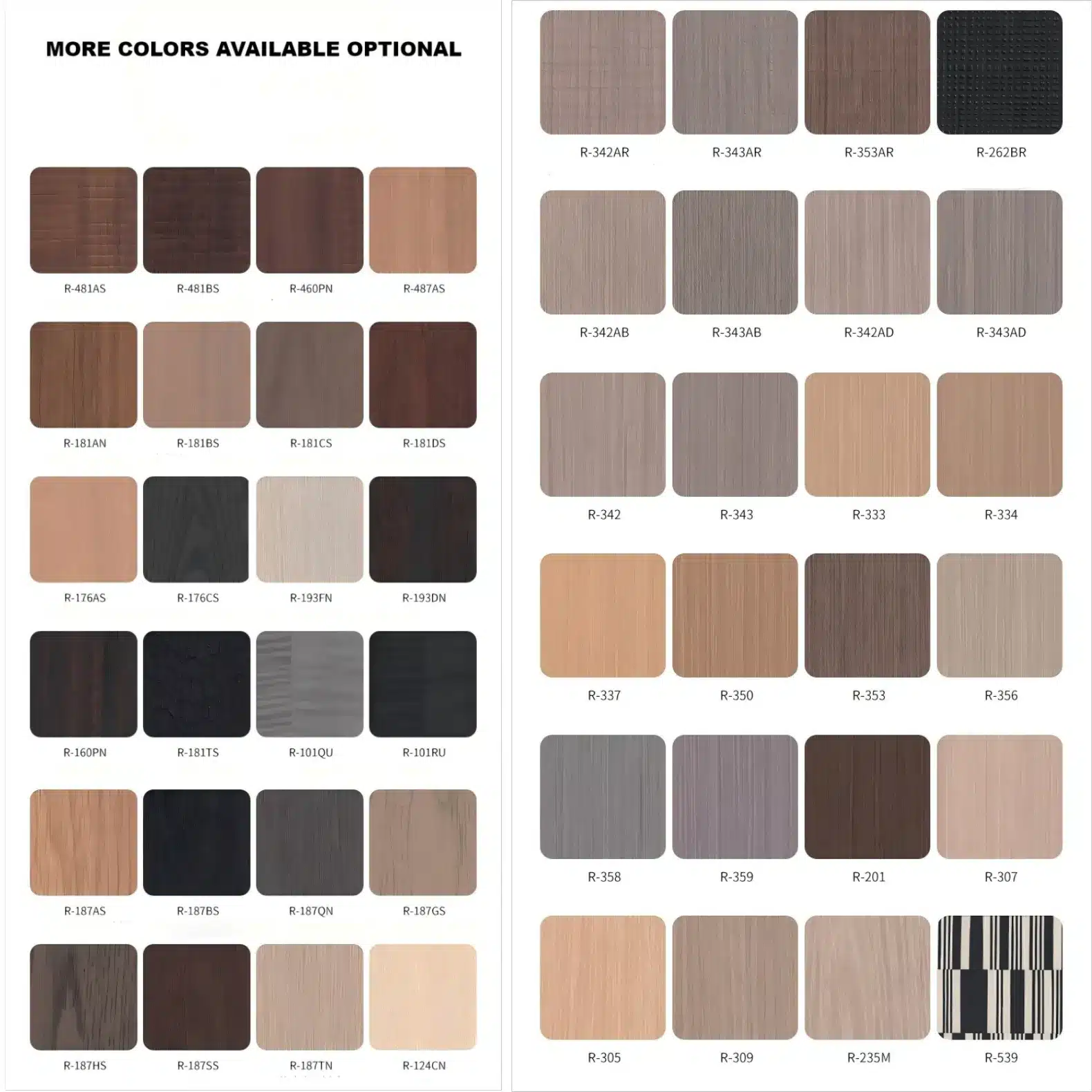
For the finish, record the colour reference, the gloss level, the application method, and the approved sample. Colour alone is not enough; a different gloss or texture reads as a different product under hotel lighting.
Attach the approved drawings and the approved sample record. The sample record should identify the sample by number, date, project, model, and finish, and should state that it is the sealed reference for production. Keep one sealed sample and leave a second sealed sample with the factory.
What Should the Contract Say?
State that the approved sample, the drawings, the bill of materials, and the written specification are all part of the contract, and set the order of precedence if they conflict. A common order is: the purchase order, the specification, the drawings, the approved sample, and then the general terms.
Add a no-substitution clause. It should say that the supplier may not change any material, component, supplier, factory, production process, finish, hardware, packaging, or bill-of-materials item without the buyer’s prior written approval. It should also say that silence, payment, inspection, shipment, or acceptance of a sample does not constitute approval of a change.
Define what counts as a change. A different board grade, a different panel thickness, a different hinge brand, a different slide model, a different adhesive, a different finish supplier, or a different production site are all changes. So is a change in the factory that makes the component, even if the final assembly stays the same.
Add a change-request process. The supplier should submit the proposed change in writing, with the reason, the cost effect, the technical data, the samples, the test results, and the proposed implementation date. The buyer should approve or reject in writing, and the approval should apply only to the specified lot or period.
State the remedy for an unauthorized change. The buyer should be able to reject the affected units, require replacement or rework at the supplier’s cost, obtain a price reduction, cancel the order, and recover inspection and transportation costs. The clause should also preserve the buyer’s rights for latent defects discovered after shipment.
Our guide to vanity hardware sourcing mistakes explains how hardware substitutions show up in service, and why the brand and model belong in the contract rather than in a sales email. The International Chamber of Commerce publishes model contract and dispute-resolution guidance that is useful background when you are structuring the commercial terms.
How Do You Check Incoming Materials?
Ask for the incoming material records for the production lot. The records should show the board grade, the thickness, the supplier, the batch, and the receipt date, and they should match the bill of materials. If the factory cannot show the incoming records, it cannot prove that the approved material was used.
Inspect the board before it is cut. Check the grade stamp, the edge profile, the thickness, and the face. For a laminated panel, check the core through an exposed edge or a cut-off. A different core is difficult to see after assembly, which is why the incoming check matters.
Check the hardware packaging and labels against the approved brand and model. Photograph the labels and the cartons. If the factory buys in bulk and repacks the hardware, the original label may be the only evidence of the brand.
Keep a retained sample of the board and the hardware from the approved lot. If a later dispute arises, the retained sample is the comparison, not a memory of what the sample looked like.
What Should the In-Process and Pre-Shipment Checks Cover?
During production, check the cut panels, the edge banding, the drilling, and the assembly against the drawings. Look for a thinner panel, a different core, a different edge band, or a different hinge cup. A panel that is slightly thinner may pass a visual check and still change the strength and the fit.
At pre-shipment, inspect a sample from the actual production lot, not a unit the factory selected for the inspection. Compare the unit with the sealed sample and the specification. Check the dimensions, the board, the hardware, the finish, the colour, the gloss, and the labelling.
Open a cabinet and look inside. Check the corner joints, the shelf supports, the back panel, and the drawer box. A substitution often shows up in the parts that the customer does not see until the unit is installed.
Check the packaging and the labels. A different carton, a different label, or a different hardware bag can be a sign that the unit came from a different line or a different factory. Our guide to bathroom vanity quality inspection explains how to structure the inspection so the sample is representative.
Use an independent inspector for the pre-shipment check, and give the inspector the sealed sample reference and the bill of materials. Do not rely solely on the factory’s own inspection report, especially when the factory has an incentive to release the shipment.
What Are the Warning Signs of Substitution?
A supplier that resists a sealed sample, a written bill of materials, or an independent inspection is a warning sign. So is a supplier that describes the specification as “same as sample” or “equivalent quality” without naming the material.
Watch for a price that drops after the sample approval without an explanation, or a schedule that shortens unexpectedly. A lower price or a faster schedule can be achieved by using a cheaper board, a thinner panel, or a cheaper hardware set.
Watch for a change in the supplier’s story about the factory, the production line, or the material. If the board supplier changes, the hardware brand changes, or the production site changes, the approved sample may no longer represent the product.
Watch for a shipment that mixes units from different lots, cartons, or labels. A mixed shipment is harder to inspect and easier to disguise. Ask for the lot and batch records, and compare them with the packing list.
What Should You Do When You Find a Substitution?
Stop the line or the shipment, and put the finding in writing. Identify the unit, the carton, the lot, the component, and the difference from the approved specification. Photograph the evidence before anything is moved or repaired.
Ask the factory for a written explanation and a corrective-action plan. Do not accept a verbal assurance that the change is “the same” or “better.” The question is not whether the substitute performs similarly; it is whether the factory had your written approval to change the approved product.
Apply the contractual remedy. That may be rejection, replacement, rework, a price reduction, or cancellation, depending on the clause and the stage of production. Keep the balance payment on hold until the conformity is resolved.
Record the outcome. If the factory replaces the units, inspect the replacements against the same reference. If the factory credits the difference, record the basis so the next order does not repeat the issue.
Protecting a Private-Label Vanity Order?
Send us the approved sample details and the bill of materials. We will help turn them into a specification the factory can be held to, before the first production run.

The Bottom Line
Substitution is a control problem, not a trust problem. Seal the sample, write the specification, name the bill of materials, prohibit changes without written approval, check the incoming material, inspect the production lot, and hold the balance until acceptance. A factory that knows the product cannot change without your signature is a factory that will ask before it substitutes.
If you are preparing a private-label vanity order, send us the approved sample details and the bill of materials, and we will help turn them into a specification the factory can be held to.
Frequently Asked Questions
Is a signed sample enough if it is sealed?
No. A sealed sample controls appearance, not the hidden construction. Pair it with a written specification and a bill of materials.
Can the factory change a supplier if the material is the same grade?
Only with your written approval. The supplier, the factory, and the production site are part of the approved configuration.
What if the approved board is discontinued?
The factory should stop and ask, not substitute. You can approve an alternative in writing after reviewing the technical data and a sample.
How do I check a hidden board grade after assembly?
Use the incoming material records, inspect an exposed edge or cut-off, and retain a sample from the approved lot. If the grade is critical, ask for a laboratory or third-party check.
Should the final payment be tied to the inspection?
Yes. A balance payment that depends on an approved inspection gives you leverage before the goods ship, and it makes the no-substitution clause enforceable.



0 Comments