

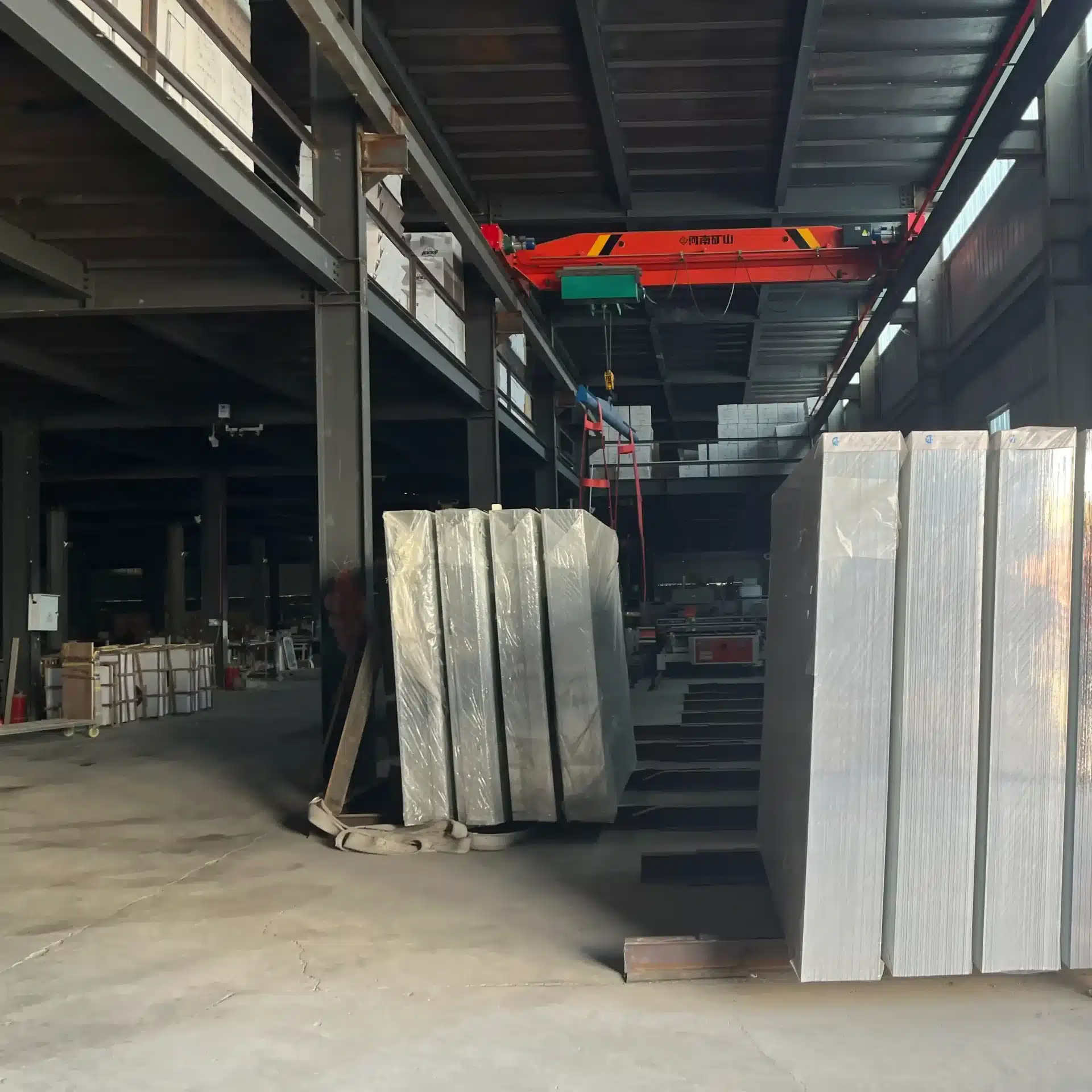
If your incoming containers arrive clean but your own deliveries to dealers and job sites keep arriving scratched, the problem is almost never the road — it is what happens in your warehouse between receiving and dispatch. The fix is an outbound standard with five parts: keep the factory carton sealed until the delivery date is confirmed, repack only to a written rule, stage goods off the floor and out of traffic, load in reverse-drop order with heavy items low, and photograph every unit at three fixed points. Run it and outbound damage complaints fall to a fraction within a few trucks: every unit leaves on a documented condition, not a hope.
Key Takeaways
- Keep the factory carton sealed until the delivery date is confirmed; opened protection is spent protection.
- Repack only to a written rule: original carton, original fitments, labelled as repacked.
- Stage off the floor in reverse-drop order and photograph every unit at staging, loading and delivery.
Why outbound damage is a different animal
Factory packaging is engineered for one journey: a container, two rail legs, a truck, a handful of forklift moves. It is tested for that journey. The moment you open the carton in your warehouse, that engineering is spent. Every subsequent move — across the floor, onto a rack, back down, into a van, up a stairwell — runs on whatever protection you improvise.
The cited guides on vanity packaging describe the factory’s problem well: layered materials, corner protection, drop and vibration tests. None of them describe your problem, because your problem starts after the tests end. That is why outbound damage feels mysterious — the units were perfect on arrival, so the road gets blamed, and the road is rarely at fault.
Where do outbound scratches actually come from? In practice, four places: units unpacked early and handled repeatedly; repacked units with the wrong or missing internal fitments; staging areas where cartons lean, scrape or carry weight from other stock; and loading order that forces crews to move the wrong cartons first. Notice that all four are warehouse decisions, not freight decisions.
Keep the factory carton sealed as long as possible
The simplest rule saves more units than any material you can buy: do not open a factory carton until the unit has a confirmed destination and a delivery date. An unopened carton is a unit inside engineered protection. An opened carton is a unit inside an afternoon of good intentions.
Make the discipline explicit in the warehouse management system. A carton can be opened for three reasons only: a quality check on receipt, a dealer’s showroom display, or a confirmed order. Everything else waits. If your sales team asks for photos of a stock unit, open one display unit per model, photograph it once, and keep those images — do not open a fresh carton per enquiry.
When a carton must be opened for picking, note it. A picked-and-resealed carton is a different animal from a factory-sealed one, and the next handler should know it.
A written repack rule, not a habit
Sometimes repacking is unavoidable: a mixed pallet for a job site, a unit that ships with a mirror in a second carton, a partial delivery where the dealer takes two of five units. Repacking to a rule beats repacking to a habit, and the rule is short.
- Reuse the original carton and every original fitment — corner blocks, end caps, edge boards, the inner bag. They were designed as a set.
- If the original carton is damaged, replace it with a carton of the same board grade or better, and transfer every fitment. A new carton with the old protection missing is worse than the original.
- Protect surfaces that were never meant to be bare: film on high-gloss doors, edge protection on stone tops and mirror edges, a bag or sheet between stacked fronts.
- Tape to the carton, never to the product or the film directly on the finish.
- Label the repacked carton with the same data as the original, plus the word “repacked” and the date, so the next handler knows its history.
The discipline mirrors what a good factory does on its packing line, and our article on vanity packaging drop tests explains why the internal fitments matter as much as the outer box. In your warehouse the test is informal — a corner caught on a rack upright — but the physics are identical.
Staging: off the floor, out of traffic
Most outbound scratches are staged, not shipped. A carton leaning against a rack leg, a mirror carton under a stone-top carton, a unit left overnight in the forklift lane — each is a scratch waiting for its shift.
Give outbound staging its own marked area, sized to the day’s dispatch list, and three rules:
- Everything on pallets or dollies, nothing on the bare floor, even for an hour.
- Weight rules respected: mirror and glass cartons never under cabinet or stone cartons, whatever the stack looks like at 5 pm.
- Nothing staged in aisles, doorways or the forklift’s turning circle. Occupational safety guidance on warehousing makes the same point for different reasons — aisles and staging areas are where struck-by incidents and product damage share a cause.
Stage in reverse-drop order. The last stop loads first, the first stop loads last. This single habit removes most of the “we had to dig the truck out” handling that actually causes damage, and it lets the driver’s first drop be the easiest unit to inspect.
Loading and the delivery handover
By the time a unit is in the van, its fate is mostly decided. Loading rules exist to preserve what the warehouse did right:
- Heavy, robust cartons low; glass and mirror cartons on top or in dedicated slots, never stacked under anything.
- Straps or load bars on every trip. A carton that slides is a carton that arrives scratched, whatever the road did.
- Blanket-wrap or film-face any unit that leaves its carton for site access reasons, and carry it padded-side against the crew, not against the door frame.
- At handover, unpack with the customer or their site contact, inspect against the dispatch photos, and note any exception on the delivery note before the crew leaves.
The receiving checklist most distributors use for inbound containers — our article on receiving a vanity container — works just as well in reverse. The same three evidence points apply: the unit before it left, the unit as it arrived, and the unit as it was inspected.

The three-point photo discipline
Photographs settle outbound claims in minutes instead of weeks, and the discipline costs one minute per unit:
- At staging: one photo of each unit in its carton, label visible, in the staging bay. This is the “it left us clean” record.
- At loading: one photo of the loaded load, strapped, and one of any unit loaded bare or blanket-wrapped.
- At delivery: unpack-and-inspect photos with the site contact, or the signed clean delivery note.
With those three points, a scratch reported by a dealer can be triaged the same day: clean at staging, clean at loading, damaged at delivery means handling in transit or at the site; damaged at staging means a warehouse process to fix. Without them, the argument has no floor.
Measuring the standard, not just writing it
An outbound standard earns its keep in two numbers: outbound damage claims per hundred deliveries, and the share of those claims where the warehouse cannot prove the unit left clean. Both numbers should be on the monthly report next to inbound damage, because they measure different processes.
Review the failures monthly against the five parts of the standard. Almost always, one part explains most of the month’s claims — a repack rule nobody follows on Saturdays, a staging bay that shrank when a new container landed, a driver skipping the strap. The standard is short on purpose: five parts, each auditable by walking the floor with a clipboard.
| Standard part | What it prevents | How to audit |
|---|---|---|
| Factory carton stays sealed until dispatch date confirmed | Repeated handling of unprotected units | Count opened cartons against confirmed orders |
| Repack to written rule, original fitments transferred | Repacked units failing like bare ones | Inspect three repacked cartons per week |
| Staged off floor, weight rules, out of traffic | Staging scratches, crushed mirror cartons | Walk the staging bay at shift end |
| Reverse-drop loading, strapped, heavy low | In-transit shifts and digging out | Ride one delivery per week; check load photos |
| Three-point photo discipline | Unprovable claims and slow disputes | Sample five dispatches for the full photo set |
What to give your dealers
Your dealers have the same problem one layer downstream, and a distributor who fixes only their own leg still wears the complaints. Two pages solve it: a one-page receiving guide — inspect at handover, note exceptions on the delivery note, keep the packaging until inspected — and the three-photo discipline adapted to their handover to the end customer. A dealer who photographs at handover protects both of you, and the guide costs nothing to attach to the first order.
Outbound Deliveries Arriving Scratched?
Send us your delivery volumes and current damage claims. We will help you set the repack rule, the staging discipline and the photo points that cut outbound damage.

The Bottom Line
Outbound damage is a warehouse process wearing a freight costume. Keep factory cartons sealed until dispatch is confirmed, repack to a written rule, stage off the floor in reverse-drop order, load heavy-low and strapped, and photograph every unit at staging, loading and delivery. The units were engineered to survive an ocean; your job is to not spend that protection in the parking lot.
Frequently Asked Questions
Should we keep original factory cartons for stock we may resell later?
Yes — a factory-sealed carton is the best storage condition you have. Open only for showroom display or a confirmed order, and record every opening.
We deliver assembled units. Does the same standard apply?
More strictly. Assembled units lose the carton entirely, so blanket-wrap rules, edge protection, two-person carries and the photo discipline carry the whole load.
Who pays when a dealer reports a scratch on a unit our photos show clean at staging and loading?
The evidence points to transit or site handling, which the delivery terms should allocate — usually the carrier on a signed-for delivery that noted the exception, or the site crew if it was signed clean and damaged after. Your three-point record is what makes that conversation short.
Do we need special cartons for repacking, or can we use generic boxes?
Reuse original cartons and fitments first. Generic boxes are the last resort and must be at least the same board grade, with the original fitments transferred.
How long should we keep the three-point photos?
Long enough to cover the longest warranty conversation you have with a dealer — the delivery and its photos belong in the order file, not on a phone.
Our inbound containers are fine. Why change anything?
Because the two processes are different legs. The factory engineered the ocean leg; nobody engineered your van leg, and the scratches your dealers report are coming from that gap.





0 Comments