

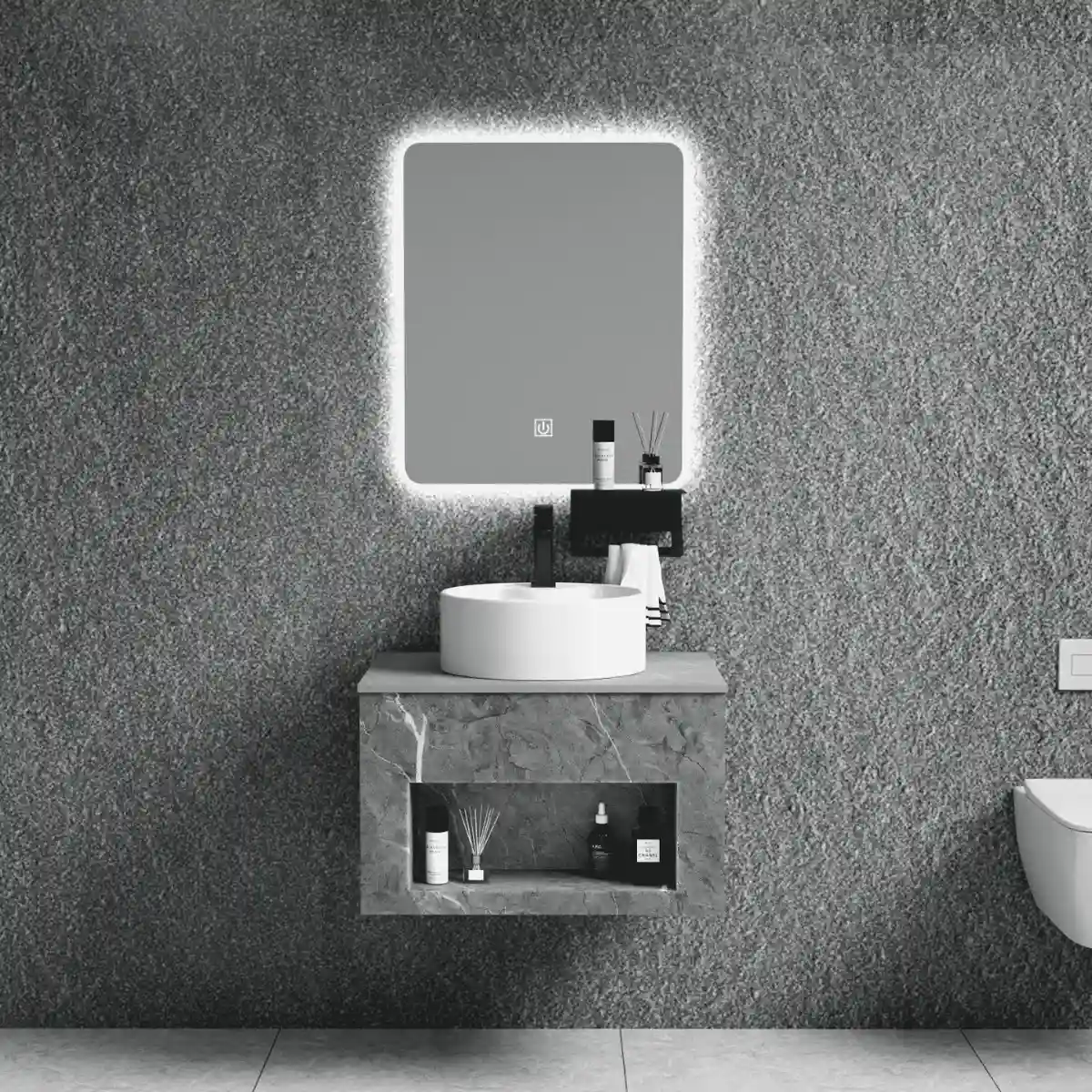
Run an occupied-hotel vanity replacement as a rolling programme, not a floor shutdown. Start with one pilot room to establish the real cycle time and the real scope, then release small blocks of rooms that the crew can finish and hand back within the promised window. Package each room as a complete, labelled kit, isolate water at the fixture or the branch, contain dust at the room, and release a room only after plumbing, finish, and housekeeping sign-off. The measure of success is not how many rooms are open at once; it is how many complete, sellable rooms are returned to inventory each day without disturbing guests or creating rework.
Key Takeaways
- Run an occupied-hotel replacement as a rolling programme, starting with a pilot room.
- Size each block to the crew’s completion rate and kit each room completely before demolition.
- Isolate water locally, contain dust, and release a room only after plumbing, finish, and housekeeping sign-off.
Why Start With a Pilot Room?
The pilot room tests the product, the installation sequence, the tools, the crew, and the hotel’s constraints at the same time. It reveals whether the existing rough-in matches the new vanity, whether the top fits the wall, whether the mirror and light align, and how long each step actually takes.
Use a typical room, not the best room. If the hotel has several room types, pilot the most common type first, then a second type if the layout differs. A pilot on a suite with unusual plumbing will not predict the standard rooms.
Document the pilot. Record the existing conditions, the demolition time, the installation time, the inspection time, the housekeeping time, and every surprise. That record becomes the basis for the block size and the schedule.
Get the hotel’s sign-off on the pilot before scaling. The sign-off should cover the product, the finish, the installation details, and the guest-facing result. Our guide to hotel renovation vanity sourcing explains how renovation scope differs from a new build, and the pilot is where that difference becomes visible.
How Large Should Each Block Be?
Size the block to the crew’s real completion rate, not to the number of rooms the hotel can empty. If a crew can complete and release two rooms per day, opening ten rooms creates eight partially finished rooms, a storage problem, and a guest-impact zone.
Start with the smallest block that gives the crew efficient production, then increase only after the pilot and the first block consistently meet the promised turnaround. A block that is too small is inefficient; a block that is too large is a disruption.
Group rooms by floor, wing, or stack where that reduces travel and setup. Avoid scattering work across the property, because the dust, noise, and material movement spread with it.
Coordinate with the hotel’s occupancy forecast. Schedule the heaviest work in low-demand periods, and avoid opening rooms that the hotel can sell at a premium. The revenue cost of an out-of-service room is part of the project cost, even if it does not appear on the contractor’s invoice.
How Should Each Room Be Kitted?
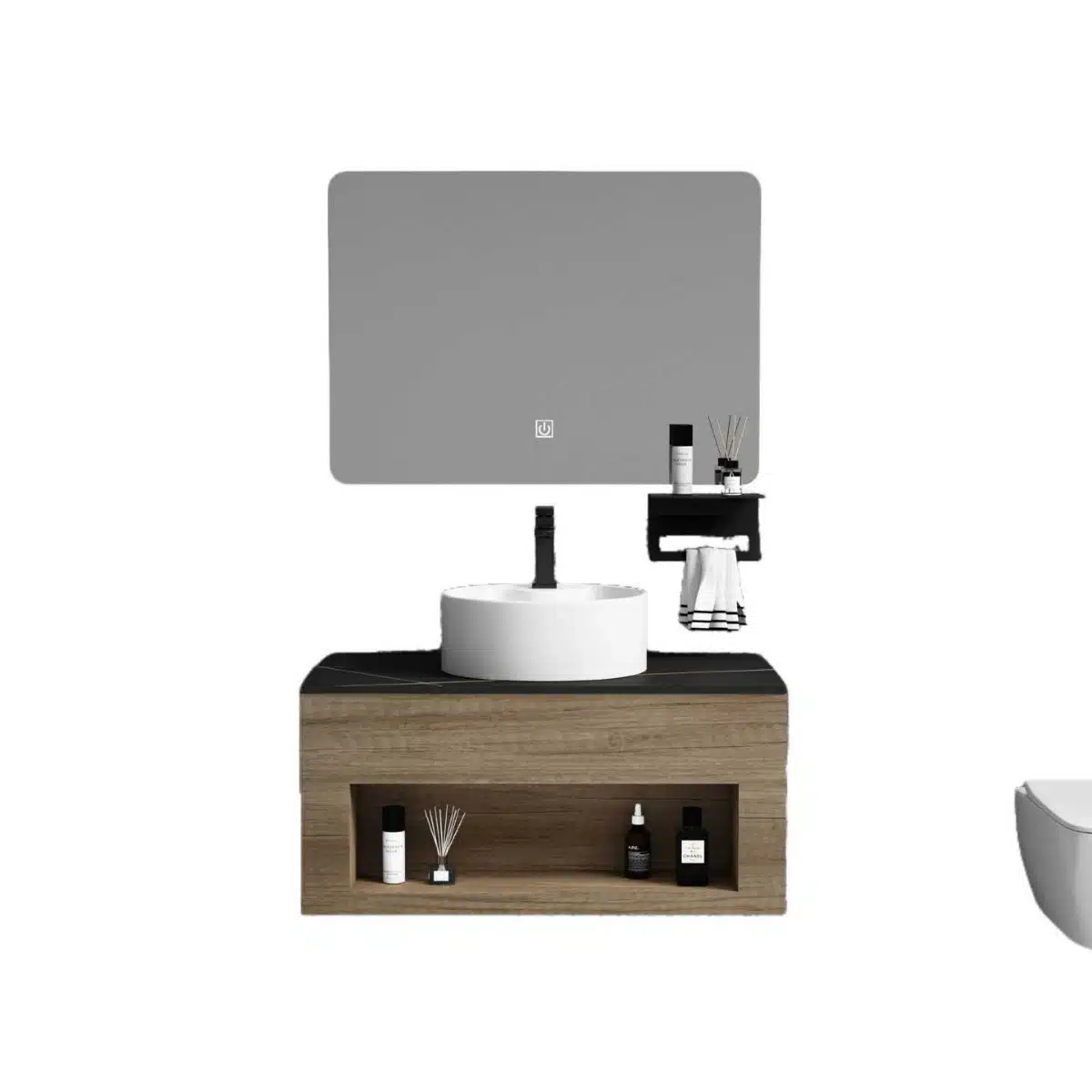
Package each room as a complete kit: vanity, top, basin, faucet, drain, mirror, light, hardware, sealant, and the installation documents. Label the kit with the property, phase, floor, room number, kit type, and carton count.
Keep the hardware with the kit. A missing hinge or a misplaced handle can turn a one-day installation into a two-day outage. Use a sealed hardware bag with a packing list, and attach it to the vanity or place it in the top carton.
Protect the fragile components. Tops and mirrors need edge protection and separate packing; they should not share a carton with loose hardware or tools. Our guide to export packaging for bathroom vanities explains the transit protection, and the same discipline applies to the room kit on site.
Include a packing list in a waterproof pouch and a duplicate inside the kit. The crew should be able to verify completeness before demolition, not after the old vanity is removed.
Photograph the loaded container and the kit labels before dispatch. Our guide to container loading photo documentation explains what to record, and the same photo record helps resolve a missing-kit dispute at the hotel.
How Should Water Be Isolated?
Isolate at the fixture or the branch, not at the building main. A single vanity replacement should not interrupt water to rooms on other floors.
Confirm the isolation point before demolition. If the room has no local valve, the crew needs to know which branch valve serves it and who is authorized to operate it. A shutdown that requires the chief engineer and a building-wide notice is a different project.
Schedule the shutdown as a bounded event. The water should be off for the shortest time that allows the disconnection and the reconnection, and the restoration should be tested before the room is released. A leak test is part of the release checklist, not an afterthought.
Have the replacement parts ready before the water is turned off. A missing supply line or a wrong trap can leave the room without water for hours while the crew searches for a part.
Document the shutdown and the restoration. Record the time, the affected rooms, the person who operated the valve, and the leak test result. If a guest reports a water issue later, the record shows whether the work is a possible cause.
How Should Dust Be Controlled?
Contain the work at the room. Seal the bathroom doorway with a zippered barrier, cover the floor and the adjacent finishes, and use negative air or HEPA filtration where cutting or demolition creates dust.
Protect the corridor. Use walk-off mats, a protected travel path, and daily cleaning. Dust travels on shoes and carts, and the corridor is the first place a guest notices it.
Cut outside the room where possible. Pre-cut the top, the panels, and the trim in a designated area, and bring the finished components into the room. The less cutting in the guest room, the less dust.
Remove debris promptly. Do not stage old vanities, cartons, or offcuts in the corridor. Use a defined route and a closed container, and clean the route at the end of each shift.
Follow the hotel’s safety and housekeeping requirements for stored materials and clear passages. The OSHA construction housekeeping standard is a useful baseline for keeping the work area clear and the materials secure, although the hotel’s own safety plan governs.
How Should Deliveries Be Coordinated?
Deliver by block, not by the full order. The hotel should receive the kits for the rooms that are about to be worked on, plus a small buffer for damage or missing parts. Delivering the entire order at once creates a storage problem in a building that is still operating.
Confirm the delivery route before the first truck arrives. Check the loading dock, the service elevator, the corridor width, and the storage area. A kit that cannot reach the floor is not a delivered kit, and a crew that spends the morning moving cartons is not installing vanities.
Keep a delivery log with the block, the room numbers, the kit counts, and the receiving signature. If a kit is missing, the log shows whether it was never delivered or was delivered and misplaced. That distinction is the difference between a supplier claim and a site search.
What Is the Daily Sequence?
Start with the room ready: the old vanity removed, the wall and floor inspected, the plumbing isolated, and the new kit in the room. Do not begin demolition until the kit is complete and the room is genuinely available.
Install the cabinet, the top, the basin, the faucet, the drain, and the mirror in an order that protects the finished surfaces. Keep the protective film on the top and the mirror until the surrounding work is complete.
Connect the plumbing and test it. Run the water, check the drain, check the trap, and look for leaks at every connection. A room should not be released with a slow leak that will appear after the guest checks in.
Complete the finish work: sealant, trim, touch-up, and the final clean. Then inspect the room against the approved pilot and the specification.
Release the room only when the plumbing, the finish, the electrical components, and the housekeeping standard are all signed off. A room with a working vanity but a dusty floor is not a completed room.
How Should Guests Be Protected?
Tell guests what is happening before they arrive. A note at booking, a notice at check-in, and signage on the affected floor are more effective than an apology after a complaint.
Keep the noise within defined hours. Avoid early morning and late evening work, and coordinate the noisy steps with the hotel’s occupancy pattern.
Protect the rooms adjacent to the work. A sealed work zone protects the corridor, but noise and vibration still travel. If the hotel has rooms next to the work, consider moving guests or scheduling the work when those rooms are empty.
Give the front desk a daily list of affected rooms and a contact for questions. A guest who is told what to expect is less likely to escalate than one who discovers the work at the door.
Planning a Phased Hotel Vanity Replacement?
Send us the room types and the phase schedule. We will help structure the room kits, labels, and delivery blocks around your installation rate and guest calendar.

The Bottom Line
An occupied-hotel replacement is a logistics programme, not a construction sprint. Pilot one room, size the blocks to the crew, kit each room completely, isolate water locally, contain dust, inspect before release, and communicate with guests. The hotel sells completed rooms, not demolished ones, so the schedule should be built around completed, sellable inventory.
If you are planning a phased vanity replacement in an occupied hotel, send us the room types and the phase schedule, and we will help structure the kits, labels, and delivery blocks around your installation rate.
Frequently Asked Questions
Should the hotel close a whole floor?
Usually not. A rolling block of rooms, sized to the crew’s completion rate, disturbs fewer guests and returns rooms to inventory faster.
How long should a room be out of service?
It depends on the scope. A vanity-only replacement with no plumbing relocation is much faster than a scope that moves the drain or replaces tile. The pilot establishes the real time.
Can the old vanity be removed before the new one arrives?
Only if the room is intentionally out of service and the new kit is confirmed. Removing the old vanity early without the replacement on site turns a planned outage into an open-ended one.
Who should sign off the room?
Construction, engineering, housekeeping, and hotel management should all clear the room before it returns to inventory.
What is the most common cause of delay?
A missing component in the room kit or an unplanned plumbing condition behind the old vanity. The pilot and the kit check prevent most of both.





0 Comments