


Buyers who treat the south america vanity import market as one region usually learn the hard way. Brazil and Chile run separate customs systems, and the ocean leg from Qingdao is measured in weeks. The good news: entry does not require a giant bet. MFBATH ships bathroom vanities to 20+ countries, including South America, and starts trial orders at 15 sets per model. This guide covers Brazil’s duty and documentation process, Chile’s role as a distribution gateway, freight math from Qingdao, product specs that move, payment terms, and supplier vetting.
Key Takeaways
- Minimum order: 15 sets per model, color, and size, with mixed container loading for first orders.
- Payment: 30% deposit at order; the balance is due within one week after the draft bill of lading (draft BL) is issued.
- Samples: free sample support with production in 10 working days; bulk production runs 20-30 days.
- Freight: free on board (FOB) Qingdao port, with container loading planned by model dimensions.
- Quality: 5 inspection checks per unit, plus third-party inspection by SGS or TÜV when arranged in advance.
- Factory: 10,000 sqm, 95 employees, 5,000 sets per month, ISO 9001 and ISO 14001 certified.
- Warranty: 2 years on the full cabinet, with a return rate below 1%.
Table of Contents
- Why South America Is on the Vanity Import Map
- Brazil Entry Points: Duties and Documentation
- Chile as a Distribution Gateway
- Freight Routes and Transit Math From Qingdao
- Product Fit: What Moves in This Market
- Payment and Lead Time Reality for First Orders
- How to Vet a Supplier for South America
- Frequently Asked Questions
- The Bottom Line
Why South America Is on the Vanity Import Map
South America’s demand story is urban, humid, and import-dependent. Cities from São Paulo to Santiago keep adding housing and hospitality projects, and local production covers only part of the mid-range vanity demand. Distributors close the gap with imports, and most of those imports leave from Chinese ports.
MFBATH’s dealer network spans 20+ countries, including South America, and the factory’s monthly capacity of 5,000 sets exists to serve that demand. The region is not an afterthought for this supplier; it is one of the continents in the pipeline.
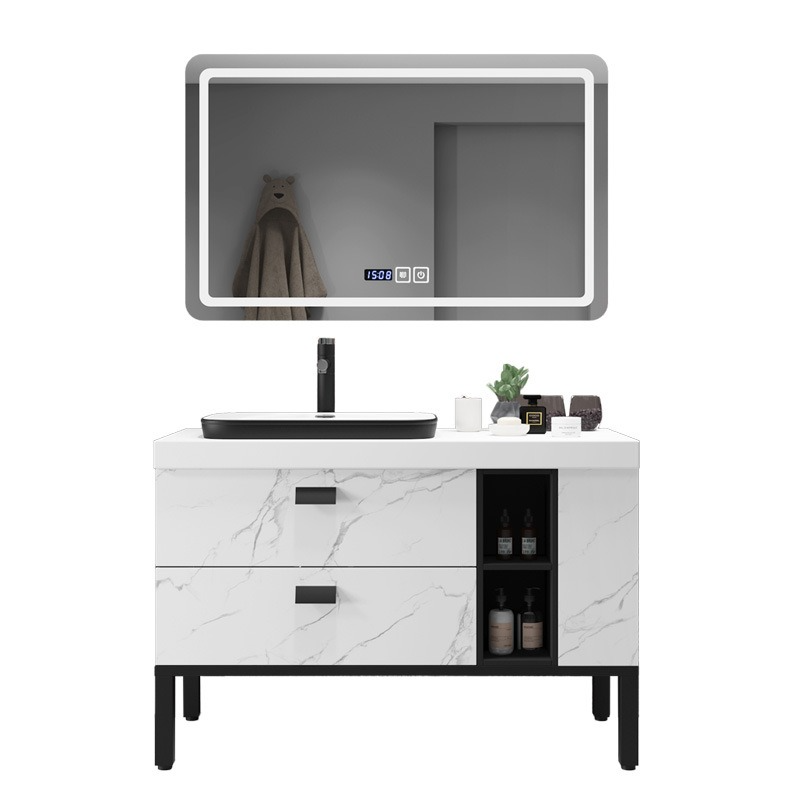
Climate sets the first requirement. Coastal humidity from Rio de Janeiro to Valparaíso punishes standard particleboard and thin MDF. Moisture-resistant construction is not a premium upgrade here; it is the entry ticket.
The second requirement is commercial. Importers in this market want small first orders, clean documentation, and suppliers who understand ocean freight. That combination is why the region rewards structured factories over ad-hoc trading companies. A buyer who arrives with a realistic container plan and a verified supplier gets answers faster than one who asks for prices on a wishlist.
Distribution channels matter more than borders. Retail bathroom chains, construction materials distributors, and project-driven importers each need different support: price tiers for dealers, documentation speed for distributors, and spec sheets for projects. A supplier that answers all three in one catalog shortens the buyer’s own sales cycle.
The practical change is the starting scale. A supplier that demands a full container before a first order pushes smaller buyers toward trading companies with thin after-sales support. The 15-set trial keeps the factory relationship direct from the start.
The buying calendar is real, too. Regional buyers time orders around construction seasons, and suppliers with steady capacity absorb those swings better than workshops running at the edge. A 5,000-set monthly line leaves room to slot a new distributor without displacing existing customers.
Brazil Entry Points: Duties and Documentation
Brazil is the region’s largest market and its most demanding customs environment. Every commercial import runs through the official single foreign-trade system, the Portal Único Siscomex, and clearance depends on the electronic records filed there.
The core filing is the Single Import Declaration (Duimp). It consolidates customs, tax, and control data in one record, replacing the older paper-based declaration flow. The official import subportal of the Federal Revenue Service explains the procedure and links the manuals, simulators, and filing systems you need: Brazilian import procedures on gov.br.
Duties are assessed at the border based on the Harmonized System (HS) classification of the goods. Brazil’s tax treatment is layered, so the effective cost depends on classification, origin, and program eligibility. The Federal Revenue Service publishes tax and administrative treatment simulators under its customs and foreign trade section on gov.br. Run your line through them before shipping; it is a working habit.
The document set is manageable: commercial invoice, packing list, bill of lading, the electronic import declaration, and additional licenses for certain categories. Wood packaging must carry ISPM 15 treatment marks, and your supplier should confirm this at packing time. A forwarder who handles furniture knows the routine; a generalist may not.
One compliance point deserves emphasis. Certain product categories may require certification from INMETRO, Brazil’s National Institute of Metrology, Quality and Technology, before they can be sold. Confirm the current requirement with a licensed customs broker, because rules change faster than annual catalogs do.
Choose the broker before you choose the ship. A Brazilian customs broker with furniture experience knows which classifications trigger extra licenses and which ports clear faster. Ask for their track record on wood products and engineered boards, because the material and packaging story matters as much as the HS line.
Budget for the full tax stack, not just the duty line. Customs duty plus state and federal taxes are each assessed at the border, and the mix depends on your product and origin. Model it with the official simulator before you quote a retail price.
A wrong HS code is not a paperwork slip. It is a clearance delay, a storage bill, and a missed launch date rolled into one.
Chile as a Distribution Gateway
Chile runs a leaner, more predictable system. The National Customs Service processes imports through the Declaración de Ingreso. Its portal publishes the procedures, tariff treatment, and trade statistics that importers actually need: Servicio Nacional de Aduanas de Chile.
Chile’s trade-agreement network gives importers preferential tariff options, depending on the origin of the goods and the certificates filed. Verify the current treatment on the official customs portal before quoting a landed price, because preferences require evidence on file.
The gateway role is real. Santiago anchors a stable logistics and retail hub, with developed port infrastructure and established distribution channels. Regional distributors use Chilean import flows to stock showrooms and serve a wider customer base than the local market alone would justify.
Ports reinforce the hub role. Valparaíso and San Antonio handle the bulk of containerized cargo, with inland connectivity toward Santiago and the central valley. Route choices made at origin, not at the border, decide how smooth that last leg runs.
Now the warning. Chilean clearance does not extend to Peru, Colombia, Argentina, or anywhere else. Each country runs its own customs territory with its own declaration. Treat Chile as a distribution hub, never as a shortcut around local filing.
For first-time buyers, the predictable process makes Chile a sensible pilot market. A single clean container into Chile teaches the import routine before you scale into more demanding neighbors.
Free-zone regimes add another layer for onward distribution. Bonded warehousing and re-export options exist under Chilean customs rules, which is useful when your plan involves serving neighboring markets from a regional stock. A customs agent familiar with those regimes can tell you whether the structure fits your volumes.
Freight Routes and Transit Math From Qingdao
Most South America-bound vanity volume from China loads at Qingdao, and MFBATH ships FOB from that port. The buyer controls freight, insurance, and the final delivery plan from the factory gate onward.
The ocean leg is measured in weeks, not days. Services from Qingdao reach South American ports on different rotations, with transshipment and congestion varying by season. Confirm transit time, port rotation, and cutoffs with your forwarder before you promise a sell-by date.
Peak season shifts the math. Year-end and mid-year cargo rushes push rates up and space down, so booking early locks terms that a last-minute shopper cannot touch. Ask your supplier for packed dimensions in advance and pre-book freight once the sample is approved.
For quantities below a container, consolidated shipments work but cost more per unit. The 15-set floor sits deliberately below a full container, so the economics stay sane whether you consolidate or fill a 20-foot box.

Transit math has four parts: ocean transit, customs clearance, inland delivery, and buffer. Buyers who delete the buffer usually pay for it with missed store openings. The same discipline applies to choosing your terms, so compare FOB versus DDP versus CIF before you sign.
Container math matters just as much. A 40-foot high-cube container (40HQ) holds more vanities than intuition suggests, but only when loading is planned by model dimensions. MFBATH supports mixed container loading, so a trial order can combine models and finishes in one box. That is where the container loading plan becomes a negotiation tool, not a logistics footnote.
Cost math is the last piece. FOB is not your landed cost. Add freight, marine insurance, duties, port charges, and clearance fees before you set a resale margin. A full landed cost calculation separates a viable first container from an expensive lesson.
Insure the cargo. Marine cargo insurance at a coverage level that matches a 40HQ of finished cabinets costs little compared with arguing over a damaged shipment. A policy is not paperwork; it is the difference between a recoverable loss and a season written off.
Vanities Built for Your Market
Browse this product, solution, or service page to explore relevant offerings.

Product Fit: What Moves in This Market
Moisture resistance leads the specification list. PVC vanities are 100% waterproof, available from 24 to 60 inches wide, with 1,000+ standard finishes. For coastal humidity, PVC removes the swelling risk that haunts MDF in year-round damp bathrooms.
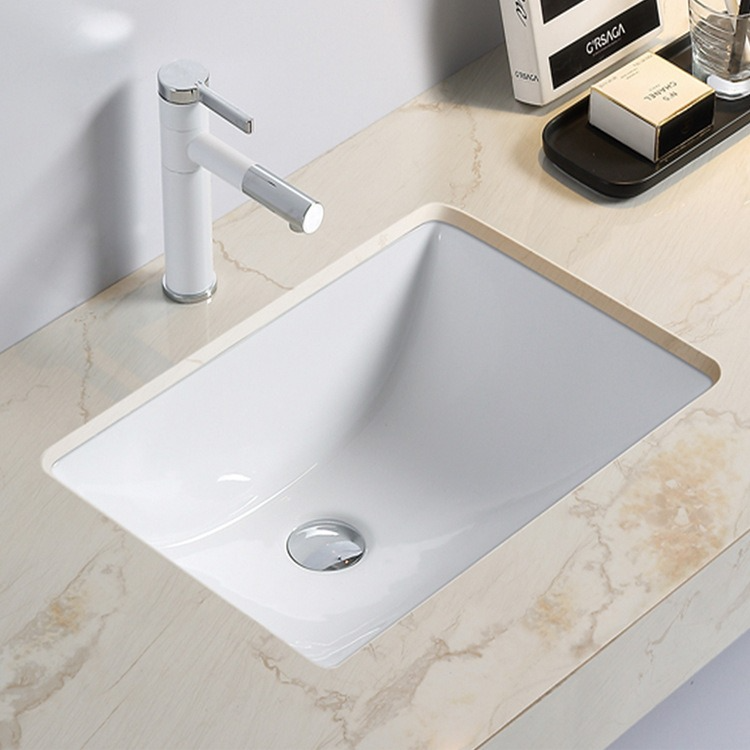
Compact dimensions follow. Dense-city apartments favor 24-30 inch units, while master baths take the wider end of the range. One supplier that runs 24-60 inches lets a distributor serve both segments without a second vendor.
Sintered stone basins are climbing the specification sheet in hotels and premium projects. They carry Mohs hardness of 7-8, resist heat up to 300°C, and their non-porous surface resists stains and bacteria. That combination matters in rental and hospitality bathrooms where cleaning cycles are short and expectations are high.
Plywood and solid wood still own the mid-premium segment. Grades run standard, BWR, and marine; formaldehyde stays at E1 ≤0.1ppm; and the factory offers CARB Phase 2, TSCA Title VI, and FSC options. Oak, walnut, maple, and ash come in 20 standard finishes, which keeps the catalog broad without stretching lead times.
Warranty terms close the sale. A 2-year warranty on the full cabinet, with a return rate below 1%, gives distributors a story to tell their own retail accounts. Put warranty language in the first quote, not the fourth email.
Mirrors lift order value. LED mirrors with adjustable brightness, color temperature, anti-fog heating, and touch controls bundle naturally with vanities. Browse the full product range to see how sets combine before you fix your first container mix.
Smart mirrors extend the basket further. Anti-fog heating, dimmable light, and touch controls turn a vanity into a set, and sets protect margins better than single units. Match the mirror width to the vanity and the bundle looks intentional rather than improvised.
Payment and Lead Time Reality for First Orders
The payment structure is deliberately simple: 30% deposit to start production, and the balance within one week after the draft BL is issued. Compare that against common import payment terms and you will see why it suits a first order.
The draft BL timing protects both sides. You see shipping evidence before the final payment, and the factory ships without waiting for the full balance to land. Neither side is left exposed for long.
Lead times are concrete. Samples take 10 working days with free sample support; bulk production runs 20-30 days after approval. Add the ocean leg and clearance when you set launch dates, and keep a buffer for port congestion.
The minimum order quantity (MOQ) is 15 sets per model, color, and size. That number exists so a buyer can test the south america vanity import market with a mixed container instead of committing to one identical model. The full 15-unit trial order strategy explains how to choose which models earn those slots.
Private label changes the payback math. A distributor that brands its own line keeps the margin that an unbranded box gives away. MFBATH runs white-label and private-label programs, with logo printing, laser engraving, and custom packaging on the same 15-set floor.
The second order is where the relationship earns its keep. Once a model sells through, a reorder skips the sample cycle and starts from approved production records. Ask about repeat-order lead times before you commit, because that number decides your restock rhythm.
Sample first, every time. A 10-working-day sample cycle is the least expensive insurance available in this buying process.
| Step | Number | What it means |
|---|---|---|
| Sample approval | 10 working days | Free sample support; approve finish and hardware before production |
| Deposit | 30% | Starts production on the approved sample |
| Production | 20-30 days | Bulk run after deposit and spec sign-off |
| Draft BL | 7 days | Balance due within a week of issue |
| Ocean transit | Several weeks | Confirm rotation and congestion with your forwarder |
| MOQ | 15 sets | Per model, color, and size; mix models in one container |
How to Vet a Supplier for South America
Vet the process, not the brochure. A factory that runs 5 inspection checks per unit will produce fewer surprises than one that promises perfection in a PDF. Run the same scrutiny you would apply to any long-distance buy, starting with an import quality control checklist.
Ask for third-party inspection. SGS or TÜV can inspect before loading when the visit is arranged ahead of time, and the report travels with your shipment record. A supplier that books these visits willingly is different from one that treats them as an obstacle.
Check certifications with a skeptical eye. MFBATH holds ISO 9001 and ISO 14001 certification, obtained in 2017 and confirmed valid in 2025, and also holds CE and UL certification. Regional marks such as INMETRO are confirmed per order, and units are designed to meet applicable requirements. Certificates without dates and issuing bodies are decoration.
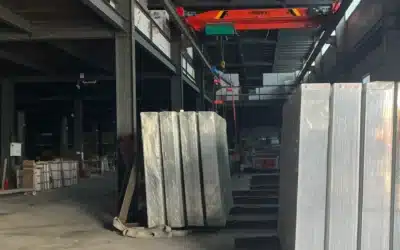
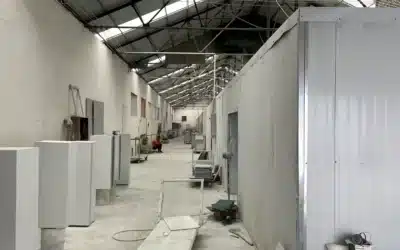
Check scale. A 10,000 sqm factory with 95 employees and 5,000 sets of monthly capacity answers consistency questions that small workshops cannot. Scale shows up in delivery discipline and in defect rates that stay below 1% on returns.
Check flexibility. The customization list runs to 40,000+ combinations. It covers Pantone color matching, eco materials, ceramic or resin or sintered stone basins, branded hardware, white-label and private-label programs, logo printing, laser engraving, and custom packaging. The 2025 catalog, over 100 pages, is free on request.
Ask for regional references. A supplier already serving South America answers questions about packaging in transit, humidity in warehouses, and documentation at the border. If the reference list is empty for your region, extend the sample phase and shorten the first production run.
Communication is a spec, too. Response time on questions, clarity on revisions, and honesty about capacity predict the next two years better than a showroom visit does. Ask how the factory handles a defect claim, because the answer reveals the process.
Frequently Asked Questions
What is the minimum order for a first South America trial?
15 sets per model, color, and size. Mixed container loading means one trial order can test several models, so your first container does not need 45 identical units.
How do payments work for an order from China?
30% deposit starts production. The balance is due within one week after the draft bill of lading (draft BL) is issued, which means you see shipping evidence before the final payment.
What documents do I need to clear a vanity shipment in Brazil or Chile?
Commercial invoice, packing list, bill of lading, and the electronic import declaration filed through each country’s official system. Brazil uses the Single Import Declaration (Duimp) in Portal Único Siscomex; Chile uses the Declaración de Ingreso. Confirm the current procedure with your broker or forwarder before the vessel sails.
How long does production and delivery take?
Samples take 10 working days, and bulk production runs 20-30 days after approval. Ocean transit from Qingdao to South America takes several weeks, so plan the full timeline with your forwarder and keep a buffer for clearance.
The Bottom Line
Start with samples, confirm your HS classification with a broker, and size a 15-set trial that mixes models into one container. That sequence has served buyers entering the south america vanity import market without gambling a warehouse on a first order. The route from Qingdao to São Paulo or Santiago is long. The entry door is deliberately narrow: 15 sets, 30% down, and a draft BL that keeps both sides honest.



0 Comments