
Two freight quotes sit side by side on your desk. One prices a share of a container, charged per cubic meter. The other prices the whole box, flat, with an unspoken question attached: will your vanities actually fill it? Most importers hit the same wall on their first lcl vs fcl bathroom vanity shipment — the rate is quoted in dollars, but the number that decides which mode works is the loading math, measured carton by carton in cubic meters. This guide covers that math: container capacities, units per container, the LCL break-even, and the 2027 calendar. The site’s earlier guide on LCL versus FCL shipping costs handles the dollar-side comparison; this one stays on volume and loading.
The Two Modes, Defined Precisely
FCL (full container load) means your cargo occupies an entire container, moving door to door in one sealed box. You book the container, your factory or your forwarder stuffs it under your instructions, the seal is applied at origin, and your trucker strips it at the destination. The container is the load unit that standardized world trade — containerization turned a steel box into the default measure of freight — and FCL is the closest thing shipping offers to a private shipment.

LCL (less than container load) means your freight shares the box. A consolidator groups cargo from several shippers into one container, stuffs it at a CFS (container freight station), and strips it at a destination CFS before your cartons reach your forwarder. You buy volume, not a container, and the consolidator decides how your cartons are placed among everyone else’s.
The control difference matters more than the price difference. With FCL you own the stuffing and stripping: the load plan, the bracing, the seal, the order of discharge at your door. With LCL the consolidator controls both ends; your cartons sit co-loaded with unrelated cargo, and every transfer — origin CFS, container, destination CFS — is another hand that can misplace or damage a box.
These shipments move FOB (free on board) Qingdao Port. Your freight cost and your risk begin when the cargo crosses the vessel’s rail in Qingdao; the factory’s responsibility ends there. If FOB versus DDP versus CIF is not second nature yet, the Incoterms guide on this site sorts out where each side’s obligations start and stop.
Container sizes are quoted in TEU (twenty-foot equivalent unit) — a 40-foot container equals two TEU — but TEU is a count, not a volume. The number you actually need is cubic meters.
One practical note before the math: the mode choice gets made twice. The first time is at quotation, when you estimate the volume. The second is at packing, when the real cartons stand on the factory floor. Buyers who skip the second pass end up paying LCL rates on a container-sized order, or FCL rates on a half-empty box.
Container Loading Math: CBM First, Weight Second
CBM (cubic meter) is the volume of a carton: length × width × height, measured in meters. For a vanity, that single figure — not the freight rate, not the unit price — decides how many pieces fit in a box and which shipping mode makes sense. Every loading decision in this article starts from it.

Industry-standard nominal capacities look like this:
| Container | Nominal capacity | Typical role |
|---|---|---|
| 20GP | ~33 CBM | Small first loads, tight schedules |
| 40GP | ~67 CBM | Standard full loads |
| 40HQ | ~76 CBM | The workhorse for bulky furniture |
These are standard nominal figures used across the industry; the usable figure always runs lower once carton gaps, bracing, and air pockets are counted. Treat nominal capacity as the ceiling, not the plan. A floor-loaded container packs tighter than a palletized one, and the factory’s load plan decides which applies to your order.
Weight comes second for a reason. A typical 40-foot container has a payload in the range of 26–28 metric tons depending on the carrier and the box, but bathroom vanities are bulky: a load of vanities hits the volume ceiling long before it approaches the weight limit. Volume, not weight, is the binding constraint, so packing dimensions drive every loading decision.
Two packing questions settle the real volume before anything else: whether the cartons are measured at outer dimensions rather than product dimensions, and whether the load is floor-loaded or palletized. A pallet adds height per layer and eats floor space; a floor-loaded plan packs cartons directly against the container walls. The difference between the two changes the units-per-container math enough to matter, so ask which one your quote assumes before you compare rates.
Worked example: units per 40HQ
The numbers below are a worked example, not a quote. Assume a mid-size vanity ships in a carton of 100 × 55 × 75 cm. Volume: 1.00 × 0.55 × 0.75 = 0.41 CBM per carton. Assume 90 percent usable space in a 40HQ — about 68 CBM of the 76 CBM nominal. Divide: 68 ÷ 0.41 ≈ 166. This example lands at roughly 165 units per 40HQ.
Run the same example on the other boxes: a 20GP at 90 percent usable space lands near 72 units, a 40GP near 146. The packing list is the variable that moves all three numbers — a compact 24-inch model can double the count, a 60-inch pre-assembled unit can cut it by more than half. The example’s 90 percent is itself an assumption; a well-planned mixed load can do better, and a palletized load will do worse.
RTA versus pre-assembled: the packing trade-off
RTA (ready-to-assemble) vanities ship with the cabinet knocked down in flat cartons. The cartons are lower and denser, so units per container climb and the CBM per unit drops. The buyer trades that volume for field assembly labor at the destination. Pre-assembled units arrive install-ready, but the assembled box carries air: bigger cartons, fewer units per container, higher CBM per unit. Neither is wrong — the trade-off is volume in the container versus labor at the job site.
Before any freight quote, request the factory’s packing list with the per-carton CBM for each model. The 40HQ container loading guide on this site walks through how load plans turn those numbers into actual placements, and it is the same document the factory uses to build your load.
The LCL Break-Even: When Shared Space Costs More
LCL pricing looks simple: a rate per CBM, plus destination charges. The freight quote covers the ocean leg; the destination charges — CFS handling, customs clearance, and delivery from the destination CFS to your door — land separately, often after the shipment is already in motion. Forwarders also bill on the greater of volume or chargeable weight, so a dense carton can be charged for weight it does not physically hit on a scale.
For any lcl vs fcl bathroom vanity shipment, the break-even question is where shared space stops paying. As a rule of thumb — a heuristic, not a law — the band sits around 10–15 CBM:
Below roughly 10–15 CBM, LCL usually prices out cheaper than booking a whole container. Above that band, the per-CBM rate plus destination charges starts to exceed the flat FCL price. Your forwarder’s quote on your exact cartons replaces this heuristic with a number.
LCL rates look cheap per CBM because the consolidator spreads fixed costs across many shippers. The arithmetic changes at your door: every leg that touches your freight — origin CFS, vessel, destination CFS, local delivery — is priced separately, and the minimums in the fine print add up faster than the headline rate suggests. A rate that wins on paper can lose once the destination invoice arrives.
The hidden costs of shared space
Three costs sit outside the headline LCL rate. CFS handling is charged at both ends, often per CBM with a minimum, and it appears on invoices after the fact. Schedule fragility: an LCL container sails when the consolidation is full, not when you are ready, and transshipment can stretch a two-week ocean leg into four. Damage exposure: your cartons share the box with heavier cargo that can shift against them, and each handling step at the origin CFS, the container, and the destination CFS is another chance for a forklift or a dropped carton. The vanity packaging standards page on this site explains the zero-breakage packaging program the factory runs precisely because handoffs in shared space are rough.
Worked example: a 15-unit trial order in CBM
A 15-unit trial order is the standard starting point at MFBATH — the MOQ is 15 units per model, per color, per size. Using the same worked-example carton as before (0.41 CBM per unit), 15 units come to about 6.2 CBM. That sits well below the 10–15 CBM break-even band, which is where LCL belongs: one consolidation, one container share, no commitment to a full box. The trial order guide covers the step-by-step process of running that first order, from sample to sailing.
Plan Your Vanity Container with Factory-Direct Support
Browse this product, solution, or service page to explore relevant offerings.
The FCL Case at 100-500 Units
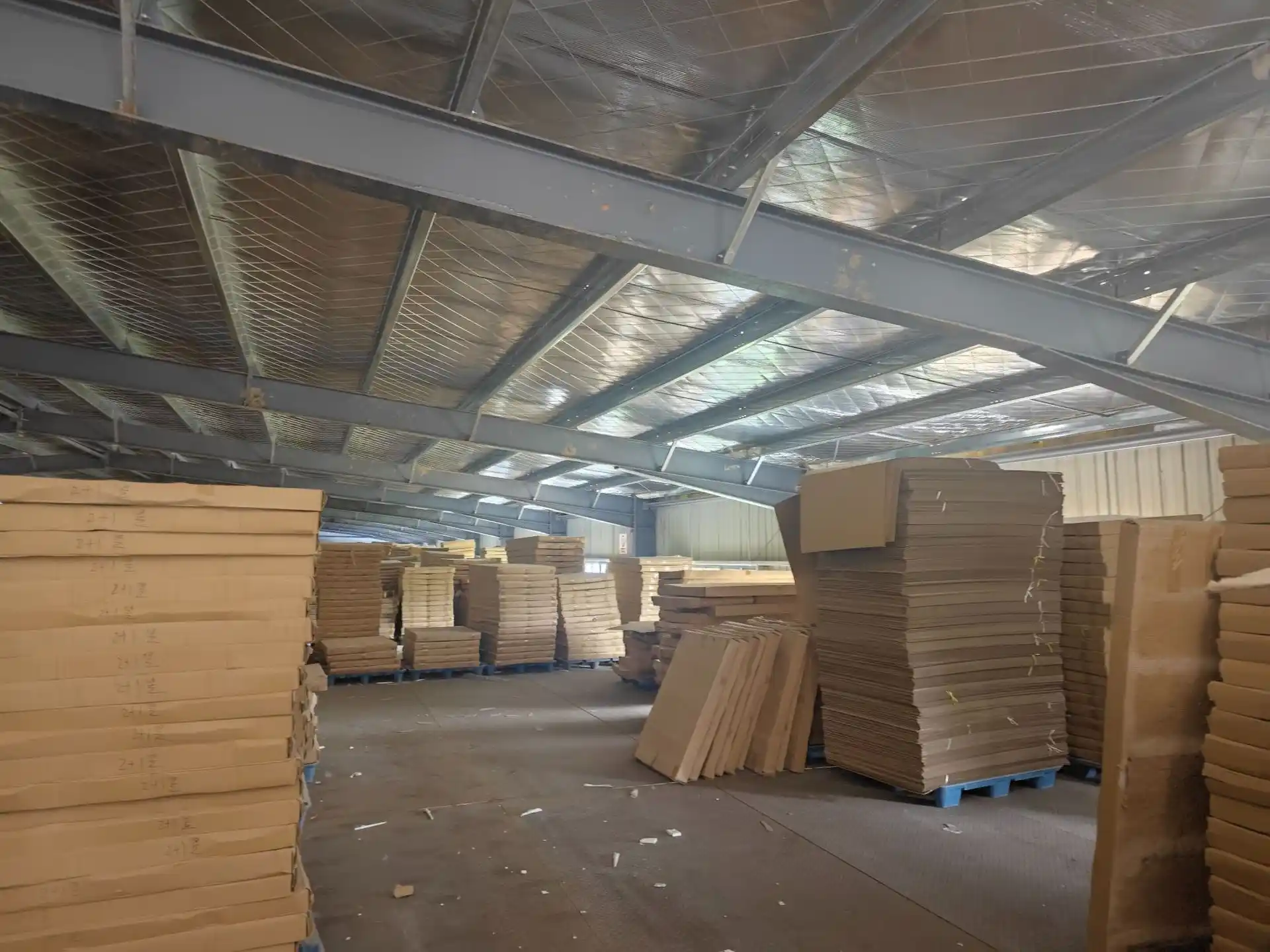
Somewhere between the trial order and a steady reorder rhythm, the math flips. At 100–500 units per order, the question stops being “which mode” and becomes “how do I fill the box.” A single-model load almost always leaves voids — cartons are rectangular, and a row of identical boxes leaves geometry you cannot pack around.

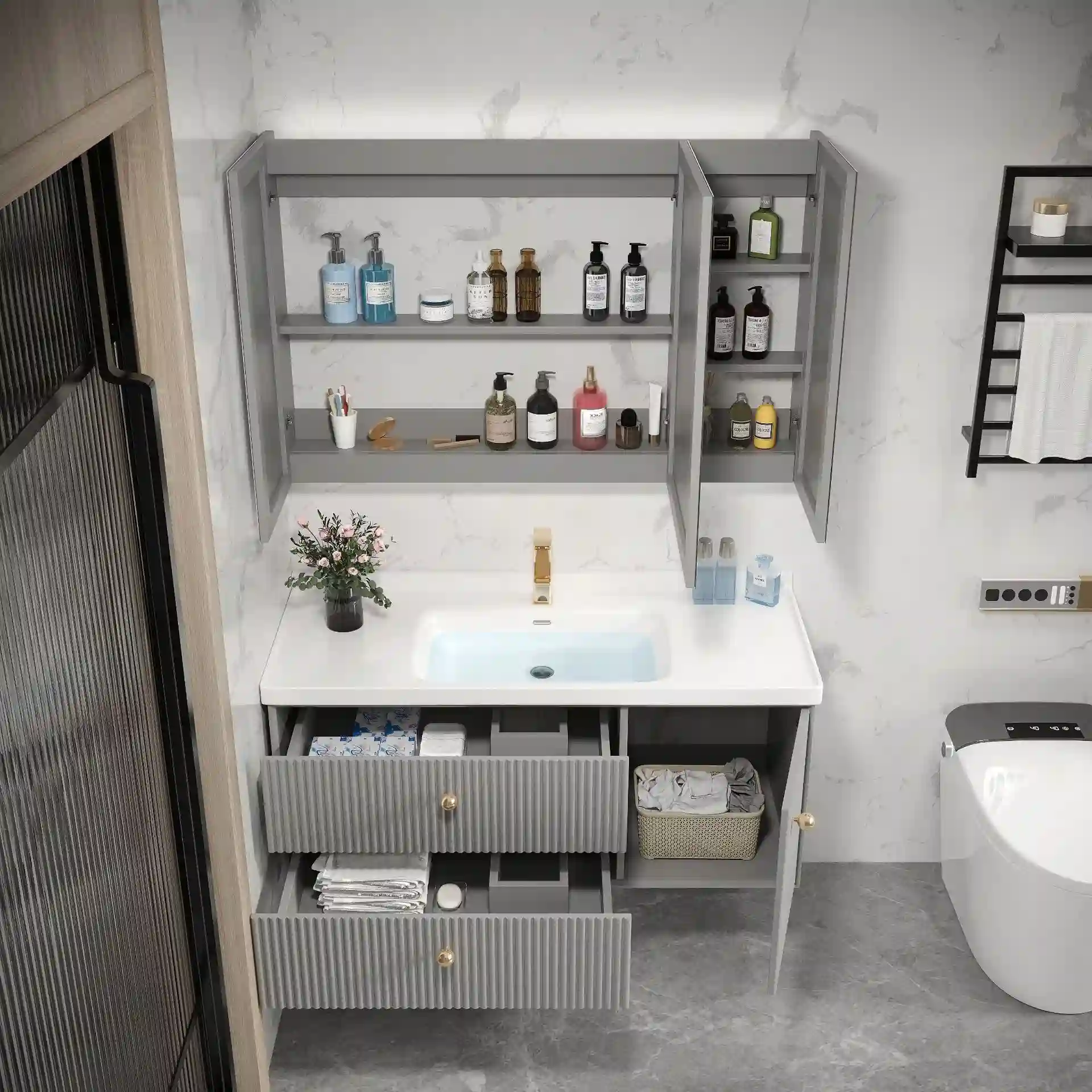
Mixed SKU loading closes the gap. The factory supports mixed container loading: different models and sizes combine in one container, and the load plan fits smaller cartons into the voids larger ones leave. The range matters here — PVC and plywood vanities run 24–60 inches wide with 18–24 inch depths, and sintered stone units run 600–2000 mm — so a 24-inch cabinet can nest around a 60-inch double vanity in the same plan. Browsing the product page gives a sense of how many models can share one loading plan.
Utilization math: at the worked-example packing of 0.41 CBM per unit, 100 units occupy about 41 CBM — a 40GP at 90 percent usable space (about 60 CBM) takes it with room to spare; 500 units work out to about 205 CBM, roughly three 40HQ loads. One mixed worked example: 60 cartons of a 24-inch model, 60 of a 36-inch, and 40 of a 60-inch — 160 cartons at 0.41 CBM each equals about 66 CBM, inside the usable space of one 40HQ. These are directional figures, not a quote: the unit count per container swings with packaging, which is why the packing list precedes the freight quote.
Ask for the load plan in writing. A factory that names the models, the carton count, and the CBM total for your specific mix has done the math; a factory that quotes a container without a load plan has not. The same discipline applies to the 40HQ versus two-20GP choice: run both load plans before you pick the mode, not after.
Packaging standards that survive the box
FCL gives you control of the stuffing, and control is only worth something if the packaging holds. MFBATH ships under a zero-breakage packaging program — load-bearing cartons, corner protection, blocking and bracing inside the container — with a return rate below 1 percent and a 2-year warranty behind the product. Every unit passes a 5-stage QC check at the factory, and third-party SGS or TÜV inspection is supported before stuffing if your contract calls for it.
Compliance details matter at order size too: the factory has held ISO 9001 and ISO 14001 certification since 2017, and CE and UL certifications are in hand. CSA, NOM, and ADA compliance is designed to meet those standards — not certified — so confirm the current certificate list for your market before you order, and get it in writing with the packing list.
40HQ versus two 20-footers
At larger order sizes the choice is usually one 40HQ versus two 20GP. The volume math favors the 40HQ: 76 CBM nominal against roughly 66 CBM combined for two 20-foot boxes, and the 40HQ typically prices better per CBM. The two-20GP route buys flexibility: two sailings, two arrival windows, and the option to stage delivery when your warehouse or your sell-through schedule cannot take everything at once. At 100–500 units the 40HQ is usually the workhorse; split shipments become the tool for rate risk and scheduling, covered next.
Capacity supports this scale: the factory, founded in 2015 in Changge, Henan, runs about 5,000 sets per month with 95 employees and ships to more than 1,000 dealers across 20-plus countries. A 500-unit order fits inside the bulk production window without straining the line.
Planning Around the 2027 Calendar
Work backward from the date stock must clear your door. Bulk production runs 20–30 days, and total lead time to the US, Canada, and Mexico runs 4–6 weeks including ocean transit, with real-time logistics tracking available through delivery. A May 1 target, counting back six weeks, puts production start around mid-March and the container booking before that. The calendar, not the quote, sets the real deadline.
Add the booking buffer on top of the production window: one to two weeks between order confirmation and container booking is workable in a normal window, and three is safer in a peak one. Once the deposit lands, the production calendar and the shipping calendar run in parallel, and the factory’s tracking covers the ocean leg so the next order can start while the current one is at sea.
Peak-season and booking lead time
Ocean freight has a rhythm. From late summer through fall, carriers historically announce peak-season surcharges and booking windows tighten — two to three weeks of buffer on top of normal lead time is a reasonable planning figure during those months. If 2027 lands your order in that window, book the container as soon as production confirms, and treat the surcharge as a line item in the budget rather than a surprise at sailing.
Rate volatility: lock early, split shipments
Freight rates move faster than factory prices. Two planning habits blunt the swings: lock rates early — confirm a fixed quote window with your forwarder at booking, not at sailing — and split large orders across multiple sailings so one rate spike does not price the whole season. Splitting pairs naturally with mixed loading: two half-loads with different SKU mixes arrive in sequence and keep inventory flowing through the season.
The factory’s logistics program
MFBATH operates a logistics program that claims roughly 15 percent freight savings for US, Canada, and Mexico customers. That is the factory’s claim, and it is worth verifying against your own forwarder’s quote before building it into a budget. Treat it as an input to compare, not a number to assume.
Payment terms against the sailing date
Terms run 30 percent deposit with the order and the balance due within one week of the draft bill of lading. The draft B/L is issued at origin once the cargo is loaded; your balance payment clears against that document, before the vessel arrives. Keep the payment window on the calendar next to the sailing date — a late balance payment can hold the documents your customs broker needs for arrival clearance.
Frequently Asked Questions
How many vanities fit in a 40HQ?
The answer depends on packaging, not on the container. Using the worked example from earlier — a mid-size vanity at 0.41 CBM per carton and 90 percent usable space in a 40HQ — the math lands near 165 units; a compact 24-inch RTA model can push past 200, and a 60-inch pre-assembled unit with heavy packaging comes in well below that. The only reliable figure comes from the factory’s packing list, which states per-carton CBM for the exact models you order — request it before you book freight.
Can vanities, mirrors and basins share one container?
Yes. Mixed container loading is supported, so vanities, mirrors, and basins combine in a single container, and the factory’s load plan fits the smaller cartons into the voids the larger ones leave. It is the same mechanism that lets different models and sizes share a box, and the packing list tells you exactly how the mix computes in CBM.
Should a first-time buyer start with LCL?
Yes, at the 15-unit trial scale. The MOQ is 15 units per model, per color, per size, and a 15-unit order at the worked-example packing of 0.41 CBM per carton comes to about 6.2 CBM — below the 10–15 CBM break-even band where FCL starts to win. Order free samples first (they take about 10 working days, with the buyer covering shipping), run the trial on the exact SKUs you plan to scale, and graduate to FCL as your volume crosses the break-even band.
Your Loading-Decision Checklist
The loading decision comes down to four questions, and each has a working answer:
- Get the packing list before the quote. Per-carton CBM decides units per container; container capacities are nominal until your cartons are measured.
- Use the 10–15 CBM band as your heuristic. Below it, LCL; above it, FCL — and replace the heuristic with your forwarder’s quote on the real cartons as soon as you have them.
- Fill the box with mixed SKUs. Single-model loads leave voids; mixed loading across models, sizes, mirrors, and basins pushes utilization toward the usable ceiling.
- Count backward from the calendar. Twenty to thirty days of production plus transit means 4–6 weeks to the US, Canada, and Mexico; book early in peak windows and lock rates at booking.
The next step takes ten minutes: send MFBATH your SKU list, ask for the packing list with per-carton CBM on each model, and request a FOB Qingdao quote for both modes. The loading math will do the rest.




0 Comments