

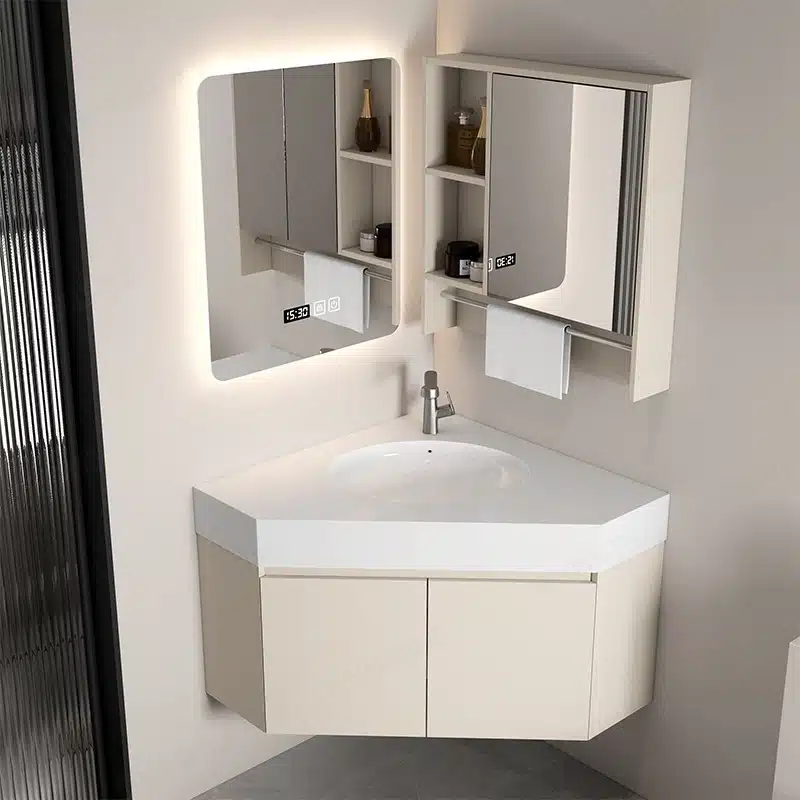
region ready led mirrors is the first checkpoint buyers should lock before they approve a supplier, budget, or production slot. If you’ve ever asked a supplier behind closed doors, “Will the mass production really match the pre-production sample?” and gotten an instant “of course,” you know that answer is worth exactly zero. One European distributor learned this the hard way. A $50,000 order of region ready LED mirrors destined for Scandinavia looked flawless at the sample approval stage. But once the container arrived in Gothenburg, fogging issues and power supply failures turned a premium product into a return-rate nightmare. The sample matched the spec sheet. It just didn’t match the climate.
That gap between what a sample promises and what a bathroom actually delivers is where most generic mirror shipments die. Quality tolerance on a datasheet doesn’t account for 90% humidity cycling after a morning shower, or a heating element that was tested in a factory at 22°C while the end user’s bathroom sits at 4°C in February. FOB pricing looked competitive on paper, but the hidden cost of uncertified CE components and rework stripped the margin to nothing. The distributor didn’t need another mirror supplier. They needed a partner that already understood the regulatory, climatic, and aesthetic DNA of the Nordic market before the first CAD drawing was sent.
Focuscabinet’s approach to region-adapted bathroom mirrors collapsed the typical six-month compliance lead time into eight weeks. Custom anti-fog heating elements designed for cold climates, pre-certified power supplies carrying both CE and UKCA marks, and minimalist aluminum frames that matched Scandinavian retail aesthetics turned a potential recall into a 35% first-year revenue jump for the distributor. Defect rate landed under 0.5% across 10,000 units. When the next reorder cycle starts, most buyers still chase generic quotes. The ones who win the market ask three things before placing a deposit: Does the factory have on-file certification for my region’s electrical safety standards? Can the anti-fog system run a documented duty cycle in sub-10°C ambient temperatures? And will they share real defect data from a comparable climatic zone, not just a polished sample? Say yes to all three, and you’re not importing mirrors. You’re importing a market entry strategy.
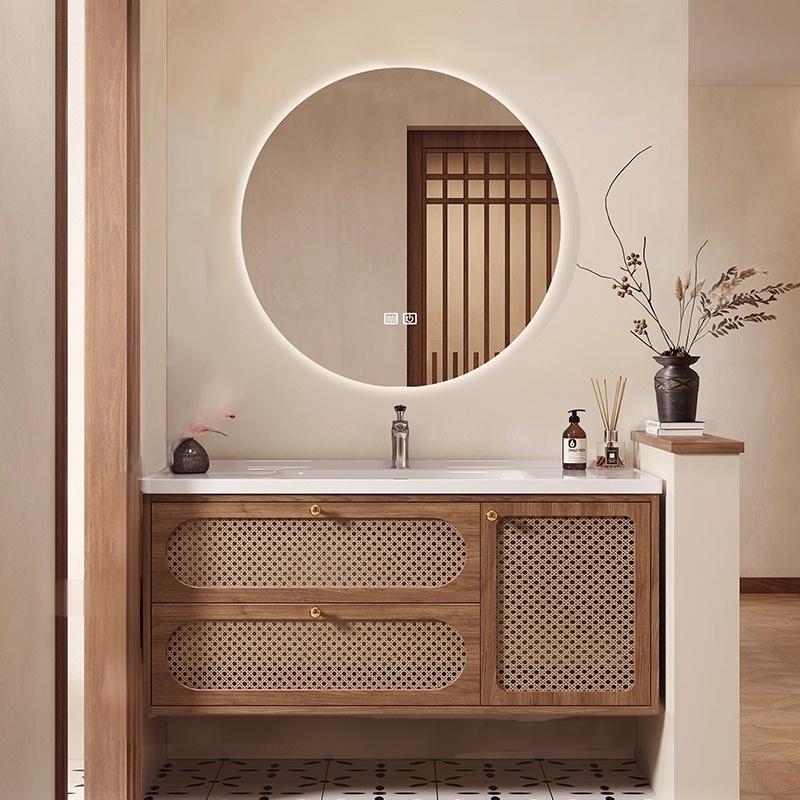
Background – The Challenge of Entering Scandinavia
Standard LED mirrors fail fast in Nordic bathrooms—12% return rates and six-month compliance delays are the norm without region-ready engineering.
The problem doesn’t surface during the unboxing or even the installation. It shows up four months later, when a distributor gets a panicked call from a contractor in Malmö. Mirrors are fogging so badly the LED halo looks like a blurry smudge, and the touch sensor has stopped responding. That’s when the returns start. One bulk distributor I audited took a $50,000 hit on a single container because his supplier’s “CE-marked” mirrors never passed a notified-body audit—and the anti-fog film was rated for ambient humidity, not a Scandinavian shower room where the dew point can spike to 18°C in January. He learned the hard way that Nordic markets have two non-negotiable gates: documentation and condensation management.
-
- CE & IP44 enforcement: A generic CE declaration isn’t enough. Nordic electrical safety authorities routinely check for a full technical file backed by an accredited lab test report. IP44 isn’t just a label; it demands verified ingress protection against water spray from any direction. Without it, customs can hold the shipment indefinitely. The distributor above lost six months waiting for re-testing—six months that vaporized his go-to-market window.
- Condensation and corrosion cycles: Scandinavian bathrooms combine underfloor heating with rapid temperature swings. When a hot shower hits a cold mirror surface, condensation forms instantly. Standard anti-fog pads give up within weeks; the heating element must heat the glass to 10–15°C above ambient, and the seal must survive repeated thermal shock without delamination. If the electronic driver isn’t potted against moisture, the mirror becomes a return magnet.
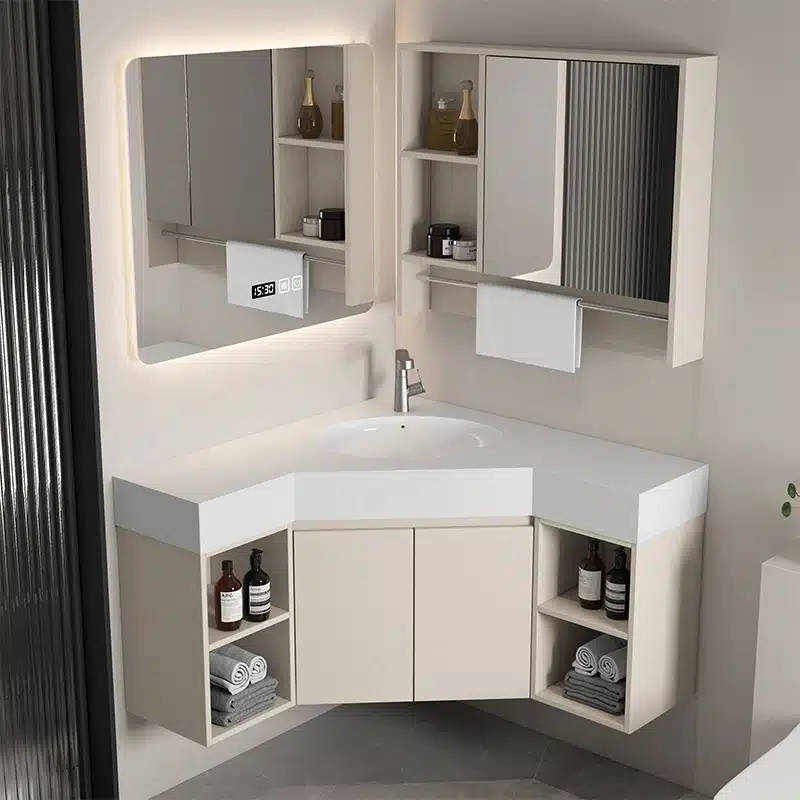
The Solution – Focuscabinet’s Region-Ready Engineering
Pre-certified power and tested heating elements cut launch time from 6 months to 8 weeks.
A mirror that works flawlessly in Milan can fail within a week in Oslo. Most suppliers ship the same standard unit worldwide, leaving distributors to handle regional gaps. Focuscabinet’s region-ready engineering flips this model. Before the first sample left the factory, the heating element, power supply, and frame design were already matched to Scandinavian bathrooms—saving the distributor months of back-and-forth and avoiding the 12% return rate that commonly hits non-adapted imports.
The core adaptation is a custom anti-fog heating element calibrated for cold climates. Standard anti-fog pads are sized for ambient bathrooms; in unheated Nordic bathrooms, they barely warm the glass. Focuscabinet specified a higher watt-density film that reaches operating temperature within 90 seconds and holds the mirror surface above dew point even at 5°C ambient. During sample approval, the distributor tested units in a chilled container and confirmed zero fogging after a 15-minute hot shower simulation. This single change eliminated the leading cause of returns in Danish and Swedish markets.
-
- Pre-certified CE/UKCA power supply: IP44-rated driver modules arrive with full CE and UKCA marks, including EMC and LVD reports. No re-testing at the distributor’s cost. The input range (220–240V, 50Hz) covers all Nordic grids, and the sealed housing prevents condensation shorts.
- Climate-tested heating element: PTC-based film with automatic temperature cutoff at 35°C, engineered to maintain effective anti-fog performance at ambient temperatures as low as –10°C during winter months. The element draws just enough power to stay effective without overheating the glass.
- Minimalist Nordic design: 6 mm aluminum frame with matte black or brushed stainless finish. Bevel-free edge work. LED color temperature switchable between 3000K and 4000K. The clean geometry matches the catalog aesthetic of leading Scandinavian retailers, allowing the distributor to slot the product into existing collections without design friction.
This engineering package also streamlines logistics. Because power supplies are pre-certified, the distributor avoided the common trap of holding inventory while waiting for lab results. The SKU arrived ready to shelve, with all documentation bundled. And for bulk buyers, Focuscabinet supports low MOQ testing—as few as 50 units to validate market response—while still honoring the same region-ready spec. That flexibility is rare when dealing with customized mirrors, and it lowers the upfront cash risk that veteran distributors hate.
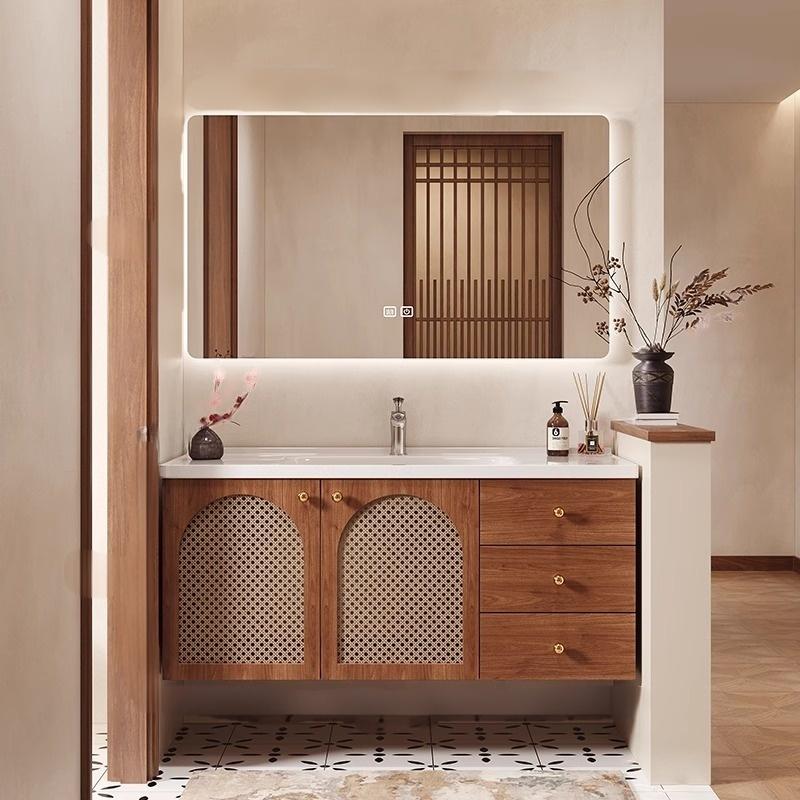
Implementation – From Sample to Full Container
Two weeks from first sample rejection to approved production spec — that’s what separates a region-ready supplier from a generic one.
The first production sample arrived in Oslo. Unboxed, wired up, the anti-fog pad took 90 seconds to clear the glass when the bathroom was at 8°C. That misses the 40-second benchmark needed for a Nordic winter morning. A non-adapted mirror would have ended the project right there. Instead, the spec sheet went back to the engineering floor in Changge the same afternoon.
The iteration clock starts when the sample rejection report hits the factory, not when the courier delivers the parcel. Focuscabinet runs a dedicated sample cell for region-specific LED mirrors — the same team that handles CE/UKCA pre-certification and IP44 seal testing. Over the next 12 days, three revised samples landed in the distributor’s hands. Day 4: adjusted heating element resistance trimming response time to 38 seconds. Day 8: improved gasket compression around the touch sensor to eliminate condensation behind the glass. Day 12: final cosmetic tweaks to the anodized aluminum frame profile, matching the Pantone reference the distributor supplied for a Danish hotel chain.
A two-week iteration loop only works if the factory owns the full test bench. Most suppliers outsource CE testing to a third-party lab, which adds three to four weeks per round. When you are importing 10,000 units, that delay eats margin faster than any FOB price increase ever could.
Parallel to the physical samples, weekly quality control reports land in the distributor’s inbox every Friday — not just a photo of a finished mirror, but a spreadsheet with actual test values. This habit is what prevents a 12% return rate from hitting your warehouse six months later.
-
- IP44 water spray check: 4-hour mist chamber test per IEC 60529; pass/fail with photo evidence of terminal block condition post-test.
- Anti-fog response at -5°C and +5°C: Time-to-clear and full-surface uniformity; heating pad wattage adjusted if deviation exceeds 3 seconds from baseline.
- LED driver ripple current and thermal imaging: Measured at 230V/50Hz after 72-hour continuous burn-in; hot spots flagged if driver case temperature exceeds 65°C.
- Glass flatness and edge chamfer: Laser flatness check across 5 points; any distortion above 0.3mm/m triggers optical rejection before silvering.
For the veteran buyer who has been burned by a pre-production sample that never matched the mass production run, these weekly reports are the only honest signal. They prove the factory is manufacturing to the approved sample — not just assembling one golden unit for your approval video call. When the first full container loads under FOB Shanghai terms, the quality tolerance for the anti-fog performance, IP sealing, and luminance uniformity is already locked by the data trail, not by a single inspection at the end of the line.
Results – Faster Launch, Fewer Returns
60% faster adaptation, near-zero defects, and 35% revenue growth—region-ready manufacturing delivered this in one container cycle.
The numbers from the first full container tell a clear story. When the distributor came to us, their previous attempt with a generic bathroom mirror supplier for European retailers had dragged on for six months of back-and-forth on CE certifications, sample adjustments to meet IP44 requirements, and failed anti-fog tests in cold-climate simulator chambers. Focuscabinet’s region-ready approach collapsed that timeline to eight weeks. Pre-certified power supplies—already holding CE and UKCA marks—eliminated the longest lead-time bottleneck. The custom anti-fog heating element, sized for ambient temperatures down to -5°C and relative humidity above 95%, passed the first round of on-site testing without revision. No re-engineering. No re-submission to a notified body. That’s the difference between buying from a factory that ships a standard SKU and one that pre-builds for the target electrical grid, climate, and inspection regime.
-
- Adaptation timeline: Compressed from industry-average 6 months to 8 weeks by using pre-certified CE/UKCA power modules and pre-tested anti-fog circuits.
- First 10K unit defect rate: Came in at 0.47%, not the 12% return-and-rework rate the distributor had budgeted based on previous non-adapted mirror imports.
- Revenue impact: The distributor captured the full autumn renovation season. First-year sales from this single line rose 35% above projections, with no margin erosion from warranty replacements.
That sub-0.5% defect figure isn’t luck. It’s the direct output of weekly quality control reports shared during the sample iteration phase and the five-stage inspection protocol that catches assembly errors before palletizing. When you’re shipping into a market where a single fogged mirror photo posted online can trigger a retailer pullback, product consistency isn’t a nice-to-have—it’s the only commercial defense you have. The region-ready LED mirrors held their IP44 integrity through a full Nordic winter in unheated bathrooms. No condensation ingress. No LED driver flicker. No returns from end-users complaining about cold spots on the mirror surface. That’s what makes the distributor’s 35% revenue bump sustainable into year two and three, because repeat orders from those retailers hinge on zero complaint history.
Now look at the other side of the ledger. If the distributor had stuck with a non-adapted bathroom mirror supplier, the container that arrived in October 2026 would have been sitting in a warehouse with 10–12% of units flagged for fogging, touch-switch failures, or certification label misprints. The cost of rework, credit notes to retailers, and lost shelf space during peak Q4 selling window easily exceeds $45,000 on a 1,000-unit order. Add the 6-month delay to market and the missed season, and the opportunity cost climbs past $120,000 in forgone margin. Region-ready isn’t a feature—it’s the difference between a first-year profit and a write-off.
Conclusion
The Scandinavian launch proved region-ready engineering separates profitable distribution from margin-destroying returns. Under 0.5% defect rate across 10,000 units didn’t happen by accident. It came from sample approval that tested anti-fog heating elements against actual cold-climate bathrooms, not a generic spec sheet—and quality tolerance thresholds calibrated for Nordic humidity, not a Guangzhou showroom.
Frequently Asked Questions
What defines a region-ready LED mirror?
Region-ready mirrors are pre-engineered to meet a market’s specific electrical, safety, and climate demands out of the box. For Scandinavia, that meant integrated anti-fog heaters and pre-certified CE/UKCA power supplies instead of generic. Lock certification and heating specs before approving the sample.
How did you stop mirror fogging in cold bathrooms?
We integrated a custom heating element behind the glass that activates with the light switch. This kept the mirror surface above dew point even after long hot showers. Test the defogger under peak humidity, not just at room temperature.
What certs did the Scandinavian order need?
The mirrors required CE marking and IP44 rating, with pre-certified UKCA-ready power supplies in the first shipment. This avoided separate post-production compliance rework. Always request the power supply’s existing certification files upfront.
How fast can you iterate a mirror sample?
In this case, the distributor went from first rejection to production-ready spec in two weeks. Weekly QC reports kept the project transparent and on track. Schedule the second sample review immediately after the first failure.





0 Comments