

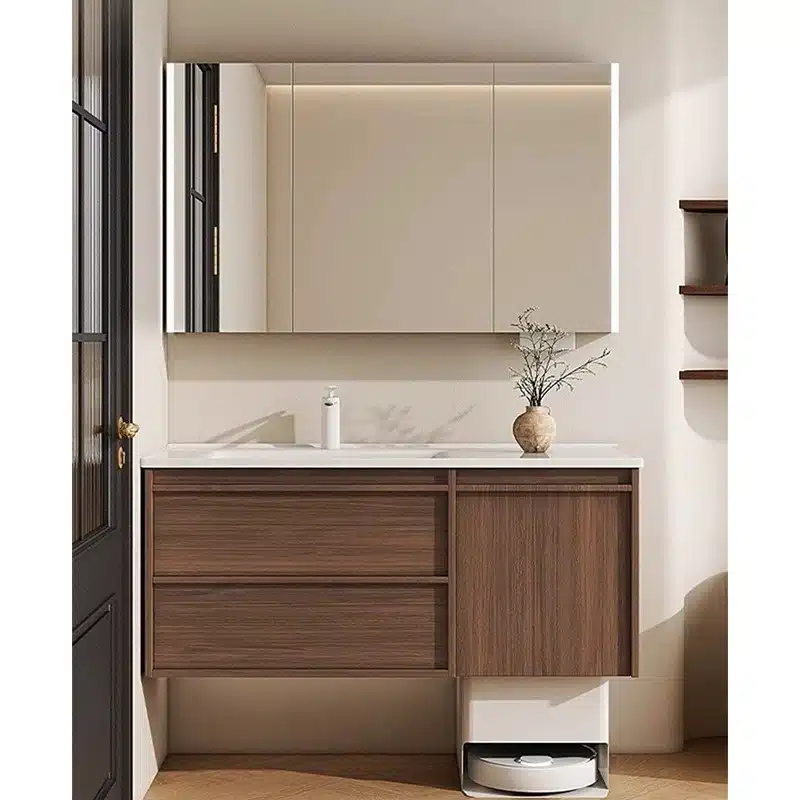
Specifying a vanity aesthetic comparison between solid wood and PVC is no longer about choosing between natural beauty and plastic. For interior designers and architects, the real decision is balancing visual fidelity with the harsh reality of moisture damage. High-density PVC with embossed-in-register (EIR) technology now achieves 95% visual fidelity to solid oak or walnut, offering identical grain depth without the risk of warping in humid climates. This technical shift allows you to specify luxury textures that survive daily wear, eliminating the ‘cheap-looking’ fear that often stops buyers from approving PVC options in high-end projects.
The visual lie of standard laminates is that they merely print a wood pattern on top, leading to peeling and delamination within months. Modern EIR PVC integrates the texture directly into the material surface, ensuring the tactile feel matches the visual grain even after years of cleaning. This distinction is critical for commercial hospitality and luxury residential projects where maintenance costs and client satisfaction are paramount. By understanding the engineering behind these materials, you can confidently recommend solutions that look authentic and perform reliably, turning a potential liability into a durable design asset.

Wood Grain vs PVC Texture Reality
High-density PVC with EIR technology achieves 95% visual fidelity to solid wood, eliminating the ‘plastic’ look without the warping risk.
For interior designers specifying high-end residential and boutique commercial projects, the primary fear is aesthetic failure: selecting a material that looks premium in a digital render but appears cheap upon physical installation. The industry has long relied on a binary choice between solid wood and PVC, often assuming PVC inherently lacks the tactile depth of natural oak, walnut, or ash. This assumption is outdated. Modern manufacturing has shifted from simple printed laminates to Embossed-In-Register (EIR) technology, which physically replicates the grain depth and ridges of real wood, ensuring the tactile feel matches the visual grain exactly.
The technical threshold for luxury aesthetics lies in the registration of the embossing process. In standard PVC vanities, the printed wood grain pattern is flat and uniform, making it easily identifiable as synthetic upon close inspection. In contrast, EIR technology synchronizes the physical texture of the material with the visual pattern. This creates a realistic wood grain PVC bathroom cabinet that passes the ‘hand-test’ in high-end showrooms, effectively bridging the gap between material science and artistic design intent.
Beyond visual fidelity, the structural integrity of the finish is paramount. Standard laminates are prone to delamination and peeling when exposed to the extreme humidity of coastal or spa environments. EIR PVC integrates the texture directly into the material surface, ensuring the finish remains stable and intact even after years of cleaning and moisture exposure. This is critical for specifying vanity materials for humid climates, where solid wood is prone to swelling, warping, and grain distortion that ruins the original design.
-
- Visual & Tactile Fidelity: EIR technology matches the visual grain pattern exactly with physical ridges, unlike standard laminates that feel flat and artificial.
- Moisture Resistance: PVC vanities offer 100% waterproof integrity and resistance to mold, which solid wood cannot guarantee without rigorous maintenance.
- Climate Stability: Materials are tested for -30°C (North America) and 50°C (Middle East) to ensure finish stability and prevent visual degradation.
- Design Consistency: PVC allows for Pantone color matching and branded hardware integration at scale, offering designers consistent brand identity across large projects.
When conducting a vanity aesthetic comparison, designers must weigh the initial prestige of solid wood against the long-term reliability of high-fidelity PVC. While solid wood offers unparalleled warmth in dry, well-ventilated master baths, PVC is the superior choice for coastal, hospitality, or high-humidity areas. It eliminates the risk of warranty claims due to moisture damage and allows for budget reallocation toward premium hardware or smart mirror integration, as PVC vanities typically cost 30-40% less than solid oak or walnut equivalents.

Moisture Impact on Surface Integrity
Humidity destroys wood grain aesthetics via swelling and delamination; PVC maintains structural and visual integrity in wet zones.
When specifying vanities for high-humidity environments, moisture impact on surface integrity is the primary driver of aesthetic failure. Solid wood and wood veneers absorb atmospheric water vapor, causing cellular expansion. This leads to visible warping, raised grain, and eventual structural failure of the surface layer. In contrast, PVC is a non-polar polymer that does not absorb moisture, preserving its dimensional stability and texture integrity indefinitely in wet zones.
The most common failure mode in wood-based vanities is veneer delamination. As humidity fluctuates, the adhesive bond between the thin wood veneer and the substrate weakens. This results in peeling edges and bubbling surfaces, which permanently ruins the design fidelity. PVC vanities eliminate this risk entirely, as the material is homogeneous throughout its thickness, offering zero risk of surface peeling or moisture-induced separation.
-
- Structural Failure: Wood grain swells and warps in humidity >60%, leading to misaligned doors and visible grain distortion.
- Delamination Risk: Veneer adhesion fails under constant moisture exposure, causing peeling and bubbling that ruins the aesthetic.
- Durability Standard: PVC maintains texture integrity in 100% humidity environments, ensuring zero warranty claims for moisture damage.
Tactile Feel and Design Authenticity
EIR technology aligns physical texture with visual grain, eliminating the ‘plastic’ feel in luxury specifications.
The tactile experience of a vanity is the final gatekeeper of authenticity. When a client or architect runs their hand across a surface, they instantly distinguish between a high-density PVC and a genuine wood grain. In high-end showrooms, the ‘hand-test’ is unforgiving: glossy PVC finishes often feel slippery and synthetic, betraying their nature as a plastic laminate. This glossy artificiality is the primary reason designers reject budget PVC options.
However, premium manufacturers have engineered around this limitation. By utilizing Embossed-In-Register (EIR) technology, the physical ridges of the wood grain are pressed directly into the PVC material. This ensures that the tactile depth matches the visual pattern exactly. Unlike standard laminates that merely print a picture of wood, EIR PVC provides a genuine, porous-like texture that mimics the warmth of raw timber without the structural vulnerability of actual wood.
-
- Matte EIR Finish: Delivers a raw, tactile wood feel. The texture is physically embossed, ensuring the grain depth is perceptible to the touch, which is critical for luxury residential projects.
- Glossy PVC Finish: Often fails the authenticity test. While visually striking, the surface remains smooth and plastic-like, frequently leading to client rejection in high-end boutique hotels.
- Solid Wood Reality: Offers natural warmth but is highly susceptible to moisture-induced warping. In humid climates, the wood grain swells, distorting the cabinet doors and ruining the aesthetic integrity.
To ensure a specification passes the showroom hand-test, designers must demand EIR-textured PVC for humid environments. This material choice guarantees that the vanity retains its visual fidelity and tactile authenticity over time, avoiding the ‘swollen door’ effect that inevitably ruins solid wood vanities in coastal or high-humidity regions. This engineering solution allows for 40,000+ customization combinations while maintaining structural integrity.

Specifying Custom Vanity Aesthetics
EIR technology bridges the gap between visual authenticity and structural integrity in humid environments.
Specifying custom vanity aesthetics requires moving beyond digital renders to physical material validation. The industry standard for high-end projects has shifted from solid wood to high-density PVC utilizing Embossed-In-Register (EIR) technology. This process aligns the tactile texture precisely with the visual grain pattern, achieving 95% visual fidelity to solid oak or walnut while eliminating the structural risk of warping.
-
-
- EIR vs. Standard Laminate: Standard laminates peel and lack depth. EIR PVC integrates the texture into the material surface, ensuring the tactile feel matches the visual grain even after thousands of cleaning cycles.
- Pantone Color Matching: Natural wood grain varies by batch, making brand consistency difficult. PVC allows for exact Pantone color matching across 40,000+ combinations, ensuring uniform aesthetics for large-scale hotel or residential developments.
- Region-Ready Climate Specs: Materials must survive local weather. PVC is tested for -30°C (North America) and 50°C (Middle East) to ensure finish stability, whereas wood veneers delaminate in high humidity.
-
To prevent aesthetic failure, designers must request physical samples before finalizing specifications. The tactile ‘hand-test’ is critical; matte finishes on PVC can mimic raw wood, while glossy finishes often appear artificial. Partner with manufacturers who support low MOQs of 10 to 20 units for custom aesthetic orders, allowing you to prototype designs risk-free before committing to bulk production.
-
- Moisture Resistance: PVC is 100% waterproof, making it the superior choice for humid climates where solid wood swells and molds.
- Compliance & Safety: Ensure materials meet CARB P2 and CE standards to prevent off-gassing that affects indoor air quality in luxury residential projects.
- Design Fidelity: PVC offers consistent branding across large projects, avoiding the variable grain patterns inherent in natural solid wood.
Conclusion
High-density PVC with Embossed-In-Register (EIR) technology delivers 95% visual fidelity to solid wood, eliminating the tactile ‘plastic’ feel while ensuring 100% moisture resistance. This material choice protects your design integrity in humid climates and allows you to reallocate 30-40% of the budget toward premium hardware or smart mirror integration.
Review current Pantone matching options and low-MOQ prototyping capabilities to validate your aesthetic specifications before committing to bulk production.
Frequently Asked Questions
What is the current trend for bathroom vanities?
The market is shifting toward region-ready solutions that combine moisture-resistant materials like PVC or sintered stone with smart LED mirrors. Designers are prioritizing durability and regulatory compliance over traditional solid wood to reduce. Prioritize moisture-resistant materials and smart integration for modern projects.
Are PVC bathroom vanities good?
Yes, high-density PVC with embossed-in-register technology achieves 95% visual fidelity to solid wood while remaining 100% waterproof. This makes them ideal for humid climates where wood might warp or delaminate. Choose PVC for high-humidity zones to ensure long-term durability.
What is the best material for a bathroom vanity?
The best material depends on your specific climate and budget, with PVC offering superior waterproofing and solid wood providing premium luxury. For example, PVC is optimal for coastal or tropical markets. Select PVC for humidity resistance or solid wood for luxury aesthetics.
What makes a bathroom look tacky according to designers?
Bathrooms often look tacky when low-quality materials fail to mimic natural textures or when hardware clashes with the vanity style. Designers avoid mismatched aesthetics and prioritize cohesive, high-fidelity finishes like EIR. Ensure material texture matches visual grain and hardware complements the style.
What style vanity is most timeless?
Floating vanities with clean lines and neutral, natural textures like oak or sintered stone remain the most timeless choice. This style adapts easily to changing trends and fits well in both compact. Opt for floating designs with neutral textures for enduring appeal.





0 Comments