
Stop treating plywood vanities as if they survive humidity. They don’t. Water destroys stock faster than you can restock. We’ve seen 80% of plywood returns fail within two years because the layers swell and the glue dissolves. It is structural rot, not a cosmetic stain.
Keeping plywood in your catalog kills margins. A “repair” sounds cheap—maybe $150 in filler and labor—but takes 4 to 8 hours. The unit fails within 12 months as rot spreads behind the veneer. Switch to 100% PVC. It costs $180 FOB. The material absorbs zero water and eliminates the warranty claims that drain your profits.100% PVC vanity
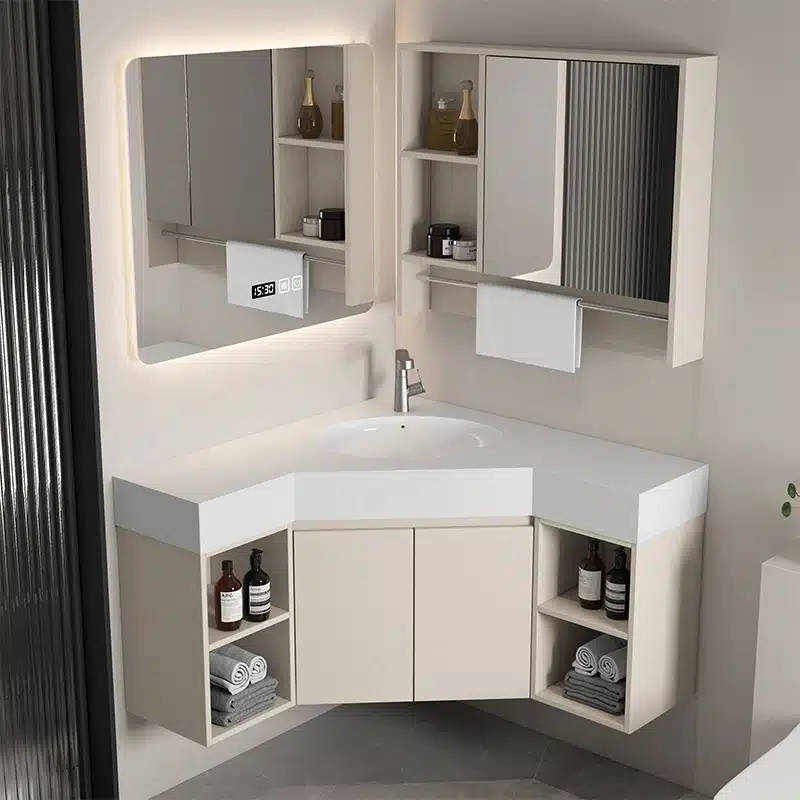
Why Every ‘Repair’ of Water-Damaged Vanity Fails
Plywood delamination is structural failure, not a cosmetic flaw.
You cannot fix water damage. Once moisture hits unsealed edges, the core layers swell and bonding fails. Cosmetic fixes like paint or filler do nothing to stop the rot spreading behind the surface.
The weak link is the adhesive. Standard plywood uses urea-formaldehyde, which breaks down in humidity within two to five years. Some suppliers claim “marine-grade” status with phenolic resin, but verification is rare. Only 100% PVC has zero moisture absorption because it contains no glue at all.
-
- **The Glue Lie.** Standard plywood uses urea-formaldehyde, which fails in two to five years. Marine-grade uses phenolic resin, but verification is rare. PVC has no glue. This eliminates the failure mode entirely.
- **The Hidden Labor Tax.** Repairing a 36″ vanity costs $300 to $600 in labor and materials. It takes 4 to 8 hours. The repair fails within a year. A PVC replacement costs $180 to $350 FOB. It provides true durability and cost-effectiveness for the long term.
- Internal logs tell a stark story: 80% of vanities returned within two years suffer from plywood delamination. In humid climates, that is not a simple defect. It is a structural failure waiting to happen.
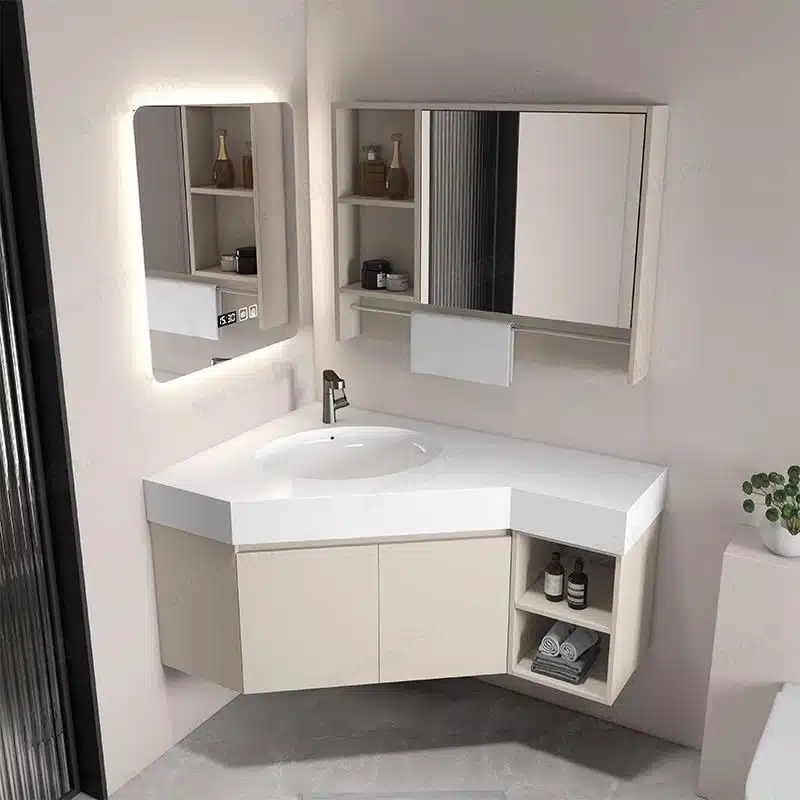
Real Cost Analysis: Repair vs. 100% PVC Replacement
Repairing a water-damaged plywood vanity is a total loss of working capital.
When plywood absorbs moisture, the core swells and loses structural integrity permanently. Local repair quotes might look cheap, but they ignore the hidden labor tax. Fixing a standard 36-inch unit costs $300–$600 in carpenter time, patching, and repainting. That fix is a temporary band-aid. It fails again within 12 months.
The real cost of repair is the opportunity cost. Every hour warehouse staff spends cutting out rotten particle board is an hour they are not processing new, high-margin inventory. Repairing old stock wastes working capital. A direct-from-factory 100% PVC replacement costs $180–$350 FOB. It arrives waterproof, ready to ship, and eliminates the risk of rot forever.
-
- Repair Economics: $300–$600 per unit in labor and materials. The fix is temporary, and the internal glue remains compromised.
- Replacement Economics: $180–350 FOB per unit for a 100% PVC vanity. The material is impervious to water, requiring zero future maintenance. Replacement EconomicsReplacement Economics
- Operational Impact: Repairs tie up warehouse staff and delay sales. Switching to PVC inventory allows you to ship immediately and stop warranty claims forever.
| Feature | Specification | Advantage |
|---|---|---|
| Material Composition | 100% PVC Cabinet Box (No MDF/Plywood) | Zero moisture absorption; eliminates swelling and delamination risks |
| Glue Dependency | Thermally Fused / Welded Joints | No urea-formaldehyde glue to degrade; prevents structural failure in humidity |
| Water Resistance | 100% Waterproof (Impervious) | Ideal for high-humidity climates, coastal hotels, and shower enclosures |
| Maintenance Cost | Zero Repair Required | Eliminates labor costs and warranty claims associated with rot or mold |
| MOQ Flexibility | Low MOQ (10-20 Units) | Allows risk-free market testing for new PVC designs without large capital lock-in |
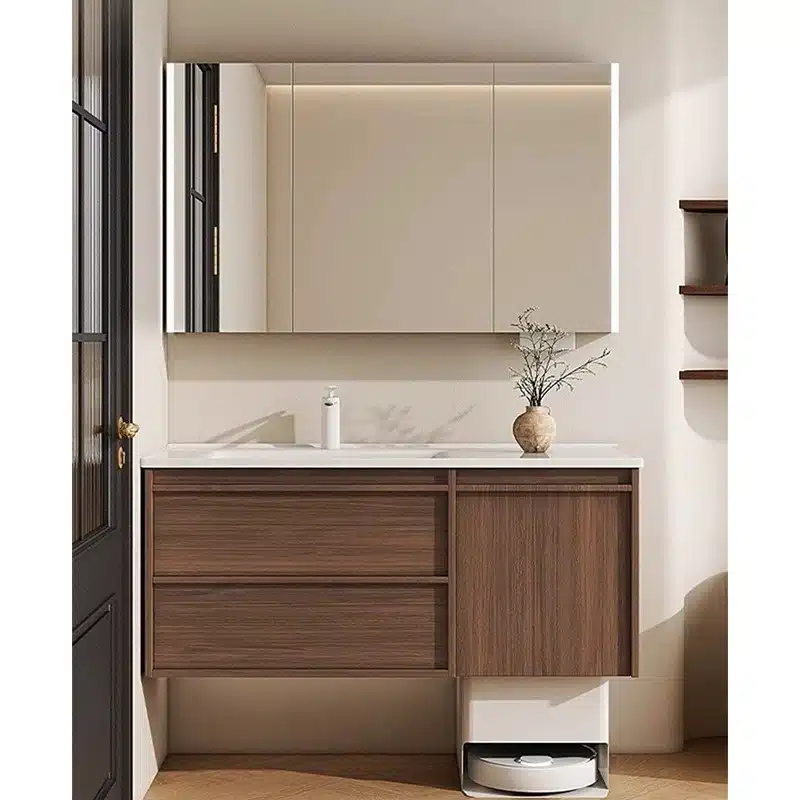
Plywood vs. PVC vs. Marine-Grade Plywood: The Engineering Truth
PVC is the only 100% waterproof material; plywood fails in 2-5 years regardless of grade.
Most plywood cabinets fail because of the glue, not the wood. Standard plywood relies on urea-formaldehyde adhesive. Humidity kills it fast. The layers separate — delamination. Once that starts, the cabinet is dead. Paint or sealants won’t save it.urea-formaldehyde adhesiveurea-formaldehyde adhesive
Marine-grade plywood uses phenolic resin. It resists water better, sure. But it’s not magic. Mold still grows if the seal isn’t perfect. Worse, many suppliers fake marine-grade certs to cut costs. The core might be solid, but the surface rots anyway in wet bathrooms.
-
- **Standard Plywood:** Uses urea-formaldehyde glue. Swells and delaminates in 2-5 years in humid climates. High risk of mold behind the cabinet.
- **Marine-Grade Plywood:** Uses phenolic resin for higher resistance. Still requires perfect surface sealing to prevent mold. Often subject to certification fraud.
- **100% PVC:** Thermally fused plastic with zero glue. Immune to water and mold. No swelling, no delamination, and zero warranty claims for rot.
For coastal hotel projects, the math favors PVC. A single water-damaged plywood vanity costs $300-$600 to repair. Replacing it with a 100% PVC unit costs $180-$350 FOB. PVC eliminates the hidden labor tax of repairs. It is the only way to stop warranty claims from destroying your profit margins.warranty claims
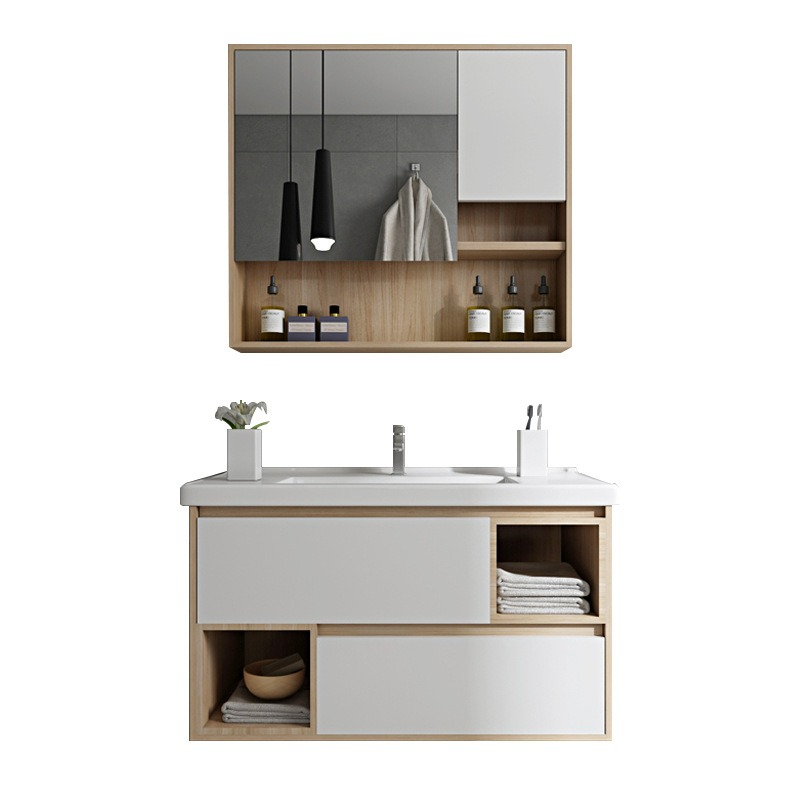
How to Source Waterproof Vanities for Bulk Import
Verify material specs, edge sealing, and compliance certificates before signing the PO.
Trust a supplier’s word on “waterproof,” and you will pay for replacements. The industry term usually hides a thin PVC face glued to moisture-sensitive MDF. You need full 100% PVC cabinet boxes to actually guarantee durability. This distinction is what separates a long-lasting installation from a mid-contract claim. That is how you protect your **quality** standards.moisture-sensitive MDFmaterial spec sheet
Water wicks into raw cut edges on standard plywood. The particle board core swells, glue delaminates, and the cabinet fails. High-end solutions use thermally fused edges or solid PVC dowels for a seamless barrier. You get a unit that resists humidity without breaking the bank. That is the only way to keep **durability** while staying cost-effective.thermally fused edges
-
- Ignore quotes that skip material specifics. You need “100% PVC Cabinet Box” or “Marine-Grade Plywood” clearly listed. Standard MDF cores rot in humid climates regardless of the finish. Locking in the right specs upfront is your only shield against **quality** failures. Do not leave this to chance.100% PVC Cabinet BoxMarine-Grade Plywood
- Check the raw edges of the cabinet box. Exposed wood grain means the vanity is not truly waterproof. You need fully sealed edges or solid PVC to stop moisture. It is a simple visual check that saves you from costly replacements. You keep **durability** without paying for unnecessary **quality** upgrades.
- Ask for UL or CSA certificates for North America. This covers fire safety and electrical compliance for smart mirrors. For Europe, you need E1 formaldehyde emission reports. Skipping these checks invites customs holds. It is the easiest way to lose **quality** control and revenue.Compliance Certificates
- Use the five-stage QC process to check batch consistency. The checklist covers raw materials, edge banding, assembly tolerances, surface finish, and packaging. Rigorous steps prevent defects from reaching your warehouse. You get consistent **quality** with every shipment. This keeps your **cost-effective** promises to end users.
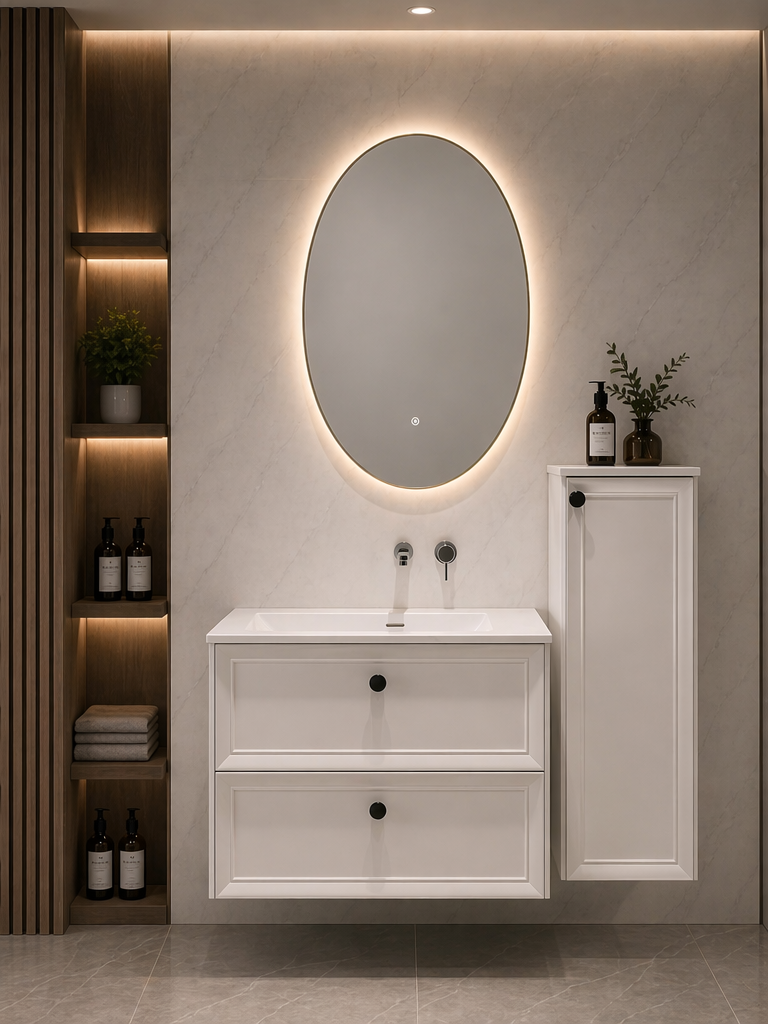
Why Focus Cabinet’s PVC Vanities End Water Damage Claims
PVC eliminates the urea-formaldehyde glue failure that destroys 80% of plywood vanities.
Plywood cabinets in wet bathrooms are a ticking time bomb. Humidity destroys the urea-formaldehyde glue. The core swells, delaminates, and turns into structural junk. Suppliers hide this flaw behind veneers, but the rot continues underneath. You won’t know until a customer complains.
Choose 100% PVC. 18mm waterproof boards with welded joints leave no gaps for moisture. Mechanical screws create entry points; welds seal the core. Glue failure becomes impossible. This is the highest **quality** material for humid zones like Florida or the Middle East.
-
- **Material Integrity: 100% PVC Cabinet Box** MDF is dead. Plywood is risky. 100% PVC is impervious to water. It stops the swelling that destroys standard vanities, ensuring **durability** in the most demanding environments.
- **Welded Construction** Thermally fused edges and dowels create a seamless seal. Plywood relies on glue that dissolves over time. Welded PVC stays solid. No glue to fail.
- **High-Margin Solution** Low maintenance. Zero water damage claims. Importers charge a premium because the product lasts. This drops your return rate and protects your brand reputation. It is **cost-effective** for the buyer and profitable for the seller.
While TONA Bath focuses on general trends, the manufacturer engineers specifically for **durability** in high-humidity environments. The factory produces 5,000 units monthly, ensuring consistent quality for bulk importers. Low MOQs of 10 to 20 units are supported to allow market testing risk-free.
Conclusion
Plywood cabinets usually don’t rot—the internal glue fails first. When that happens, you’re stuck pouring working capital into temporary fixes that collapse within a year. PVC construction removes the moisture variable completely. That protects your warranty margins.
Review the factory-direct PVC lineup to see how the waterproof construction handles high-humidity projects.
Frequently Asked Questions
How to fix a hole in a vanity?
Fill small holes with waterproof epoxy filler and sand smooth for a cosmetic fix. For structural damage or swelling, replace the unit with 100% waterproof PVC to prevent recurring issues. Use epoxy for minor cosmetic fixes, but replace for structural integrity.
What is the best plywood for a bathroom vanity?
Marine-grade plywood is the strongest option, but standard plywood remains vulnerable to moisture. For guaranteed longevity, switch to 100% waterproof PVC which absorbs zero water. Choose PVC for guaranteed waterproof performance in humid environments.
How to repair a water damaged wood countertop?
Sand down the damaged area and apply a new waterproof sealant to stop further absorption. If the wood has swollen or delaminated, the structural integrity is lost and replacement is required. Seal minor surface damage, but replace if swelling has occurred.
How to repair old plywood without replacing it?
You cannot permanently repair old plywood because moisture causes irreversible delamination of the core layers. The only viable long-term solution is full replacement with a waterproof material like PVC. Accept that plywood repairs are temporary; plan for full replacement.
Are plywood bathroom vanities good?
Plywood is cost-effective but prone to swelling and mold in high-humidity environments. For durable, zero-maintenance performance, 100% waterproof PVC is the superior choice. Select PVC over plywood for long-term durability in wet areas.




0 Comments