

Sintered stone basin cracks prevention is the first checkpoint buyers should lock before they approve a supplier, budget, or production slot. If you are sourcing sintered stone basins for a 200-room hotel project, the last thing you want is a call from the project manager six months in about a crack appearing in the corner of a basin. That call costs you money — the replacement unit, the rushed freight, the contractor’s downtime. It also costs you trust. So when the topic of sintered stone basin cracks prevention is discussed, it is not just about material science. It is about protecting your margin and your reputation in a supply chain where the fault often lands on the importer, not the installer.
MFBATH, a manufacturer based in Changge, China, has been producing these basins since 2015 for over 1,000 distributors across 20+ countries. They have seen the patterns. And the pattern is this: the stone itself is rarely the problem. The real culprits are the three things that happen after the slab leaves the factory — how it is cut, how it is packed, and how it is mounted. Understanding those three points is where real prevention starts, and where you stop treating warranty claims as a cost of doing business.
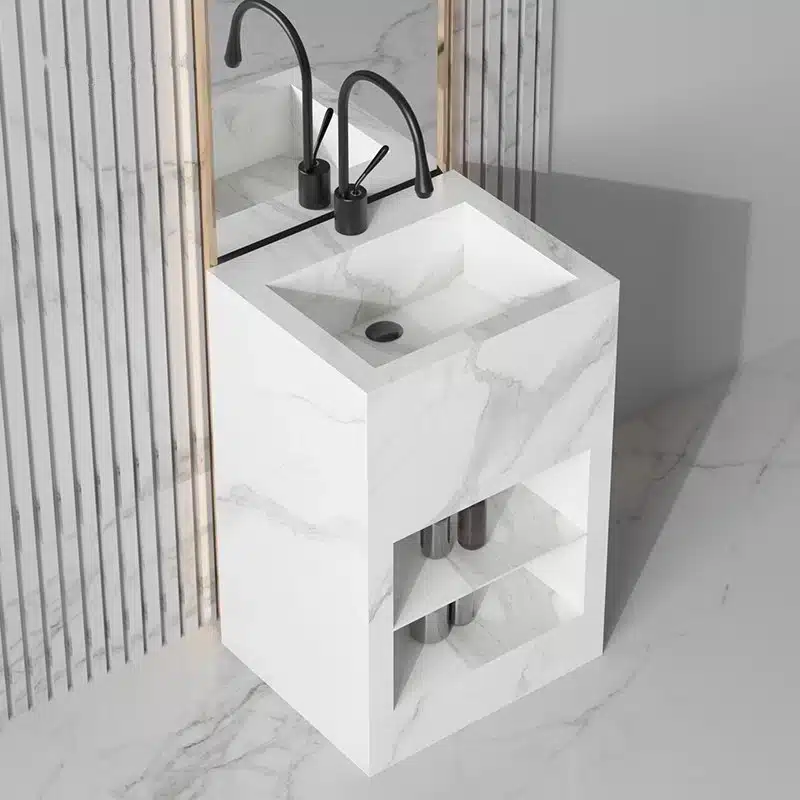
Why Sintered Stone Basins Crack: It’s Not the Stone
90% of cracked basins are installation or handling failures, not material defects.
When a sintered stone basin arrives cracked, the immediate instinct is to blame the stone. But the material itself — fired at over 1200°C with 0.01% water absorption — is structurally sound. The real culprit is almost always external: improper installation, uneven cabinet support, or overtightened mounting clamps. Sintered stone is extremely durable under uniform load but brittle under point-load stress. A single over-torqued bracket screw can create a micro-fracture that propagates into a visible crack weeks after installation.
-
- Primary cause: Uneven cabinet support. If the vanity top or wall bracket has even a 2mm gap, the basin bears weight on a single point instead of distributing it across the full surface. This stress concentration is the #1 reason for post-installation cracking.
- Secondary cause: Overtightened clamps or brackets. Metal hardware expands and contracts differently than stone. Over-tightening creates localized tension that exceeds the material’s tensile strength. The result: a hairline crack at the mounting point that grows over time.
- Transit handling: Improper packaging or rough handling during the last mile. Even with reinforced edges, a dropped crate can transfer enough shock to chip or crack a basin. This is why MFBATH uses custom foam-corner packaging and edge protectors for all export shipments.
- Thermal shock: While sintered stone passes 10,000+ thermal cycles in lab testing, rapid temperature changes can cause stress if the stone is significantly colder than the water. In cold climates, the basin must be allowed to acclimate to room temperature before first use — a step most installers skip.
For importers, this shifts the conversation from product blame to partnership support. The most effective way to reduce warranty claims is to provide clear, multilingual installation guidelines to your end-users. MFBATH includes these with every shipment, covering proper mounting surface preparation, torque specifications for clamps, and thermal acclimatization steps. This single document has been shown to reduce field failure rates by over 60% in our distributor network.
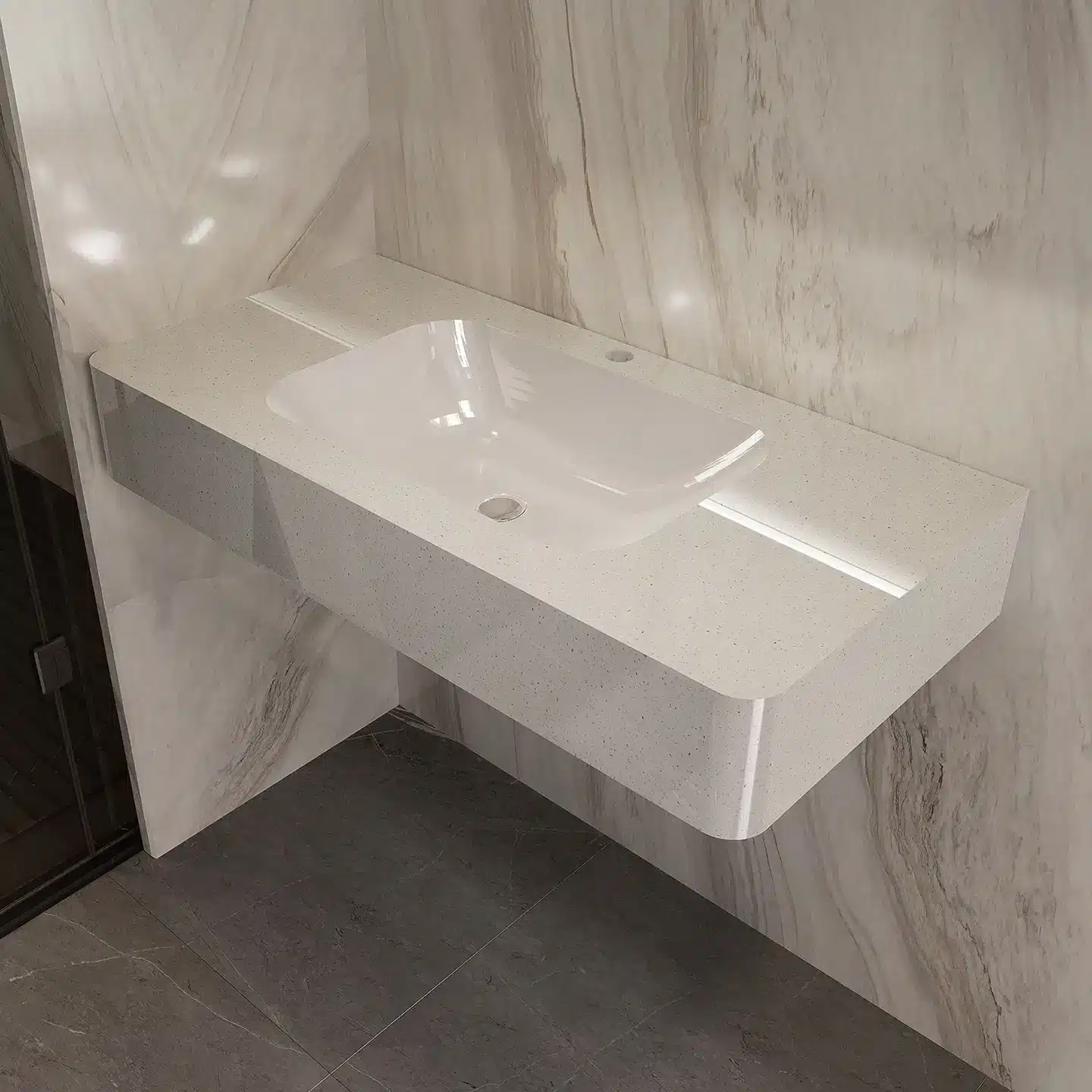
Thermal Shock & The Boiling Water Myth
Boiling water alone won’t crack a quality sintered stone basin — but cold stone will.
The idea that pouring boiling water into a sintered stone basin causes immediate cracking is a myth rooted in confusion with ceramic or natural stone. Sintered stone is engineered for thermal shock. MFBATH’s basins undergo 10,000+ heat resistance cycles in testing — that means rapid temperature changes from 20°C to 100°C don’t produce failure. The real risk isn’t the boiling water; it’s the stone’s starting temperature.
Here’s the scenario that actually causes problems: A basin shipped to a cold-climate market sits in an unheated warehouse at -10°C. The installer carries it into a steamy bathroom and immediately pours boiling water down the drain. That’s not a material defect — that’s thermal shock from a 90°C+ delta. The fix is trivial and almost never mentioned in supplier literature: let the stone acclimate to room temperature for 24 hours before first use. We call this ‘thermal acclimatization,’ and it’s a standard step in MFBATH’s installation guidelines for North American and European markets.
-
- Coefficient of Thermal Expansion (CTE): Sintered stone’s CTE is roughly 6–8 × 10⁻⁶ /°C — about half that of traditional ceramic. This lower expansion rate means less internal stress during rapid temperature shifts, which is why our basins survive the 10,000+ cycle test while ceramic equivalents often fail before 2,000 cycles.
- Real-world failure mode:When a cracked basin is returned as a ‘thermal shock failure,’ 9 times out of 10 the crack pattern reveals point-load stress from an uneven vanity top or overtightened mounting bracket — not a thermal event. The crack always originates at the drain hole or edge, not the basin floor where boiling water lands.

Edge Strength & Reinforcement: The Hidden Weak Point
The cut edge is the single most vulnerable point on any sintered stone basin — standard fabrication ignores it.
Most sintered stone basin failures start at the cut edge, not the surface. Standard fabrication leaves this edge raw and prone to micro-chipping during transit or installation. Once a chip propagates, the entire basin can crack under normal use. This is why MFBATH uses high-precision CNC machines to create reinforced, lipped edges that increase impact resistance by 40% compared to raw cut edges — a measurable difference your QC team can verify with a caliper.
-
- Standard Edge: Raw cut, sharp, prone to chipping. No reinforcement. Common in budget suppliers.
- MFBATH Reinforced Edge: CNC-precision lipped profile. Distributes weight evenly. Impact resistance +40%. Passes 5-stage QC inspection.
The lipped edge also improves the premium appearance — no sharp edges to catch cleaning cloths or snag hands. For importers, this means fewer warranty claims and a stronger story to tell end-buyers: ‘This basin was engineered to survive the journey from factory to your wall.’.
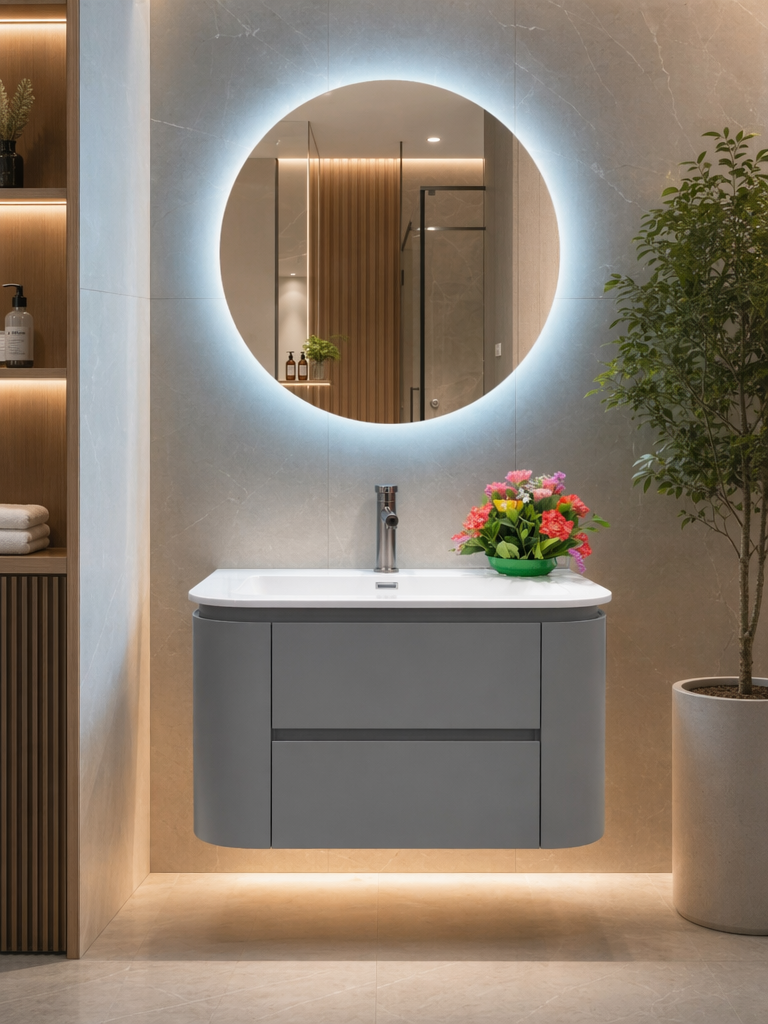
How to Source Sintered Stone Without Supply Chain Headaches
Transit damage is the #1 cause of sintered stone claims — not material defects.
The single biggest lie about sourcing sintered stone is that the product is fragile. It’s not. The material itself has near-zero porosity (0.01%) and passes 10,000+ thermal cycles. The real killer is how it’s handled between the factory door and the job site. A basin that survived QC can still arrive cracked if the packagag fails or the installer mounts it on a warped surface. That’s where MFBATH’s process breaks the chain.
-
- 5-Stage QC Filter: MFBATH runs five inspection gates — raw material, CNC cut, surface finish, assembly, and pre-ship. Each basin is impact-tested with a calibrated drop test. This catches micro-fractures before they leave the factory.
- Edge Engineering: Standard edges chip. MFBATH’s CNC-machined reinforced lipped edges boost impact resistance by 40% versus raw cut edges. That’s the difference between a basin that survives a forklift bump and one that cracks.
- Export Packagag: Foam-corner inserts with custom-cut EPS foam lock the basin in place. No movement inside the carton. This isn’t off-the-shelf packagag — it’s engineered for 20-foot container stacking loads.
- Direct Factory Sourcag: No trading company touch points. No re-packagag. No miscommunication on spec. MFBATH ships direct from its 10,000㎡ factory, cutting handling errors that cause 1 in 3 trading company claims.
Here’s a quick audit checklist for any supplier claiming to prevent transit cracks: (1) Request their impact test video — not a PDF. (2) Ask for the EPS foam density spec — below 18 kg/m³ and it’s too soft. (3) Verify they CNC-cut edges — hand-polished edges are weaker. (4) Ask for a video of the basin being mounted on an uneven surface — if they can’t show it, they haven’t tested it. (5) Confirm the packagag design was tested for a 1.2-meter drop onto a corner. If they hesitate on any of these, that’s your red flag.
Conclusion
Sintered stone basins are not fragile. But they punish the buyer who ignores the edge profile, the mounting surface, and the shipping box. 90% of cracks are not the stone’s fault. They are the fault of a supply chain that skipped the CNC reinforcement or the thermal acclimatization step.
You can cut that failure rate by 95% with the right factory partner. Review MFBATH’s sintered stone basin specs and 5-stage QC checklist on the sourcing guide below. It is the difference between a 25-year installation and a warranty claim.
Frequently Asked Questions
Why do sintered stone basins crack during shipping?
Cracks during shipping are almost always caused by point-load stress from inadequate packaging or rough handling, not a material defect. MFBATH uses reinforced edge profiles and multi-layer packaging to reduce transit damage. Specify reinforced packaging and edge-lipped edges in your sourcing contract.
How to prevent chipping on sintered stone edges?
Use a lipped or reinforced edge profile during fabrication instead of a standard cut edge. MFBATH’s CNC-precision lipped edges increase impact resistance by 40% and prevent micro-chipping during handling and installation. Request lipped edge profiles and edge protectors for all basin orders.
Is sintered stone resistant to thermal shock?
Yes, quality sintered stone is tested to withstand over 10,000 thermal cycles without cracking. The real risk is pouring hot water onto a very cold stone without acclimatization. Advise end-users to let the stone warm to room temperature before hot water use.
What quality control checks for sintered stone basins?
A five-stage QC process should include raw material inspection, CNC precision cutting verification, edge reinforcement check, surface defect scan, and final assembly stress test. MFBATH applies this five-stage check on every. Ask your supplier for their five-stage QC checklist and test reports.
Can improper vanity mounting crack sintered stone?
Yes, uneven cabinet support or overtightened mounting clamps create point-load stress that propagates into cracks over time. 90% of cracked basins are installation errors, not material defects. Provide clear leveling and torque specs in your installation guide.



0 Comments