

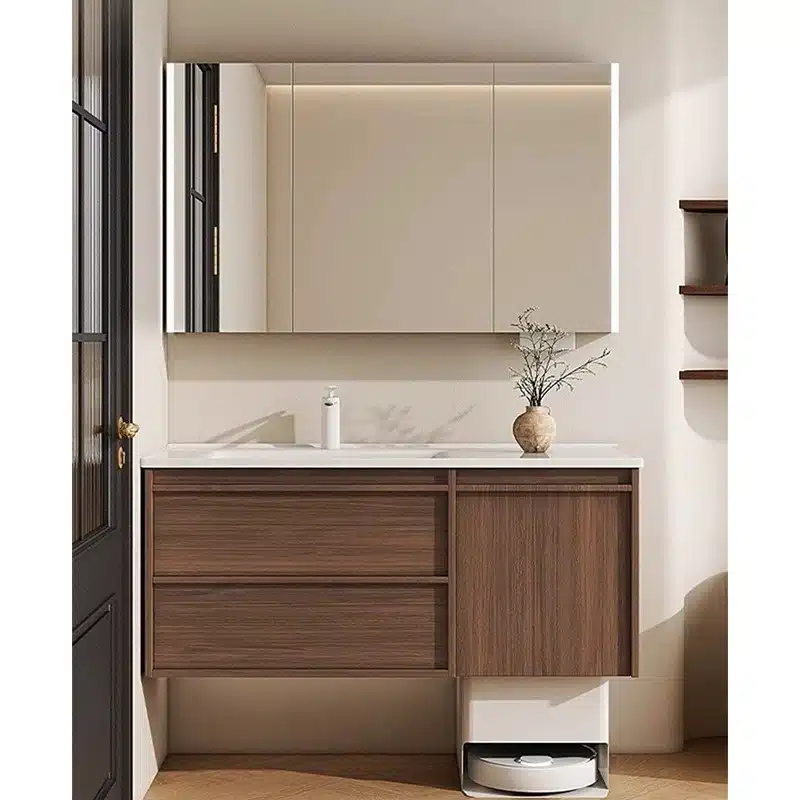
Bathroom vanity customs clearance is where the rubber meets the road for any importer bringing in product under HS code 94036000. A single digit error on that line item can turn a routine port release into a week of storage fees and a frantic call to your broker. Most of the sourcing conversations I hear right now are about price per unit, but the real margin killer is what happens after the container lands.
MFBATH has been producing vanities out of a 10,000 square meter facility in Changge since 2015, shipping to over 1,000 distributors across 20 plus countries. The operational reality for that network is shifting fast. The 2026 tariff schedule is not a rumor anymore. Section 232 duties are climbing to 50 percent on wooden furniture, and the softwood timber tax adds another 10 percent on top of that. A vanity that costs 100 dollars at the factory gate can land at 150 dollars plus port fees before it even hits a warehouse.
The smart play right now is not to fight the tariff on wood. It is to sidestep it entirely. PVC and Sintered Stone vanities do not carry the same timber tax burden because they contain no softwood. That is not a marketing angle. It is a direct cost advantage that compounds with every container you move. The importers who lock in a non-wood material path now are the ones who protect their landed cost per unit through 2026.
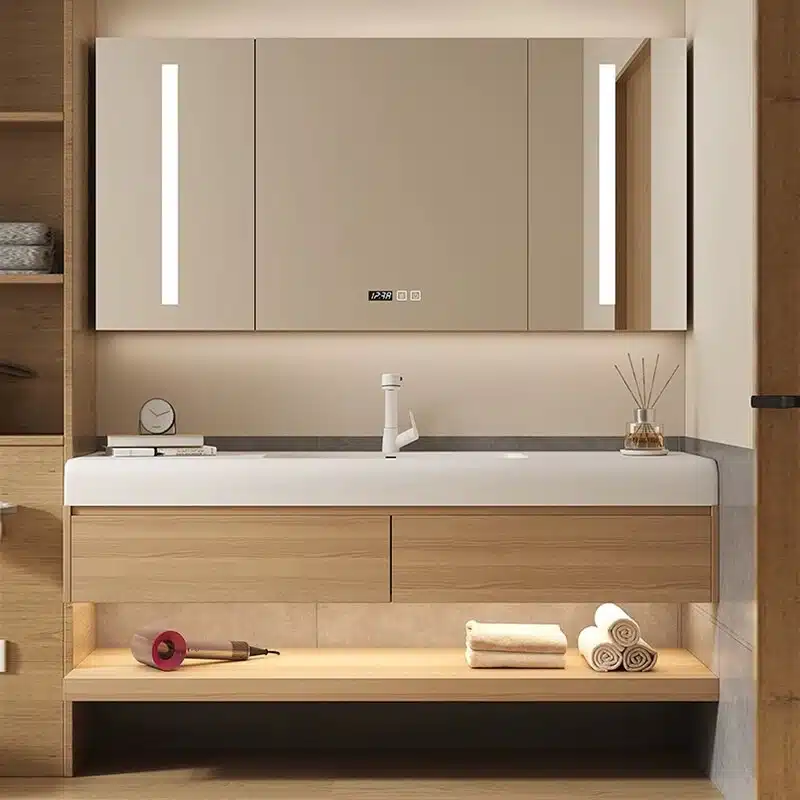
HS Code 94036000 Classification Risks
A single digit in your HS code can cost you $10,000 in port fees.
US Customs and Border Protection (CBP) is strictly enforcing HS Code 94036000 for wooden bathroom vanities. This code covers ‘other wooden furniture,’ and any deviation — even a single digit — triggers a rejected entry filing. Your container sits at the terminal, storage fees accumulate at $200–$500 per day, and your broker scrambles to file a protest. That’s a direct hit to your landed cost, not a theoretical risk.
- The wrong code: A common error is using HS 9619005090 (sanitary pads) or generic furniture codes. CBP’s automated targeting system flags these mismatches instantly, holding your cargo for manual review.
- Section 232 trigger: Even with correct 94036000 classification, wood content exposes you to the 25% Section 232 tariff (rising to 50% in 2026) plus a 10% softwood timber tax. That means a $100 vanity effectively costs $150–$160 before freight.
- Ruling NY N339557: CBP ruling NY N339557 specifies that the assembly location of the vanity determines origin compliance. MFBATH’s fully integrated manufacturing in Changge, China, ensures all components — cabinet, top, hardware — are produced in one facility, eliminating origin disputes that cause clearance delays.
The fix isn’t complex: use 94036000, ensure your ISF filing is submitted 24 hours before loading, and verify your supplier provides complete documentation (packing list, commercial invoice, and certificate of origin). MFBATH pre-fills these forms as part of its standard export process, cutting your broker’s review time and eliminating the most common rejection triggers.
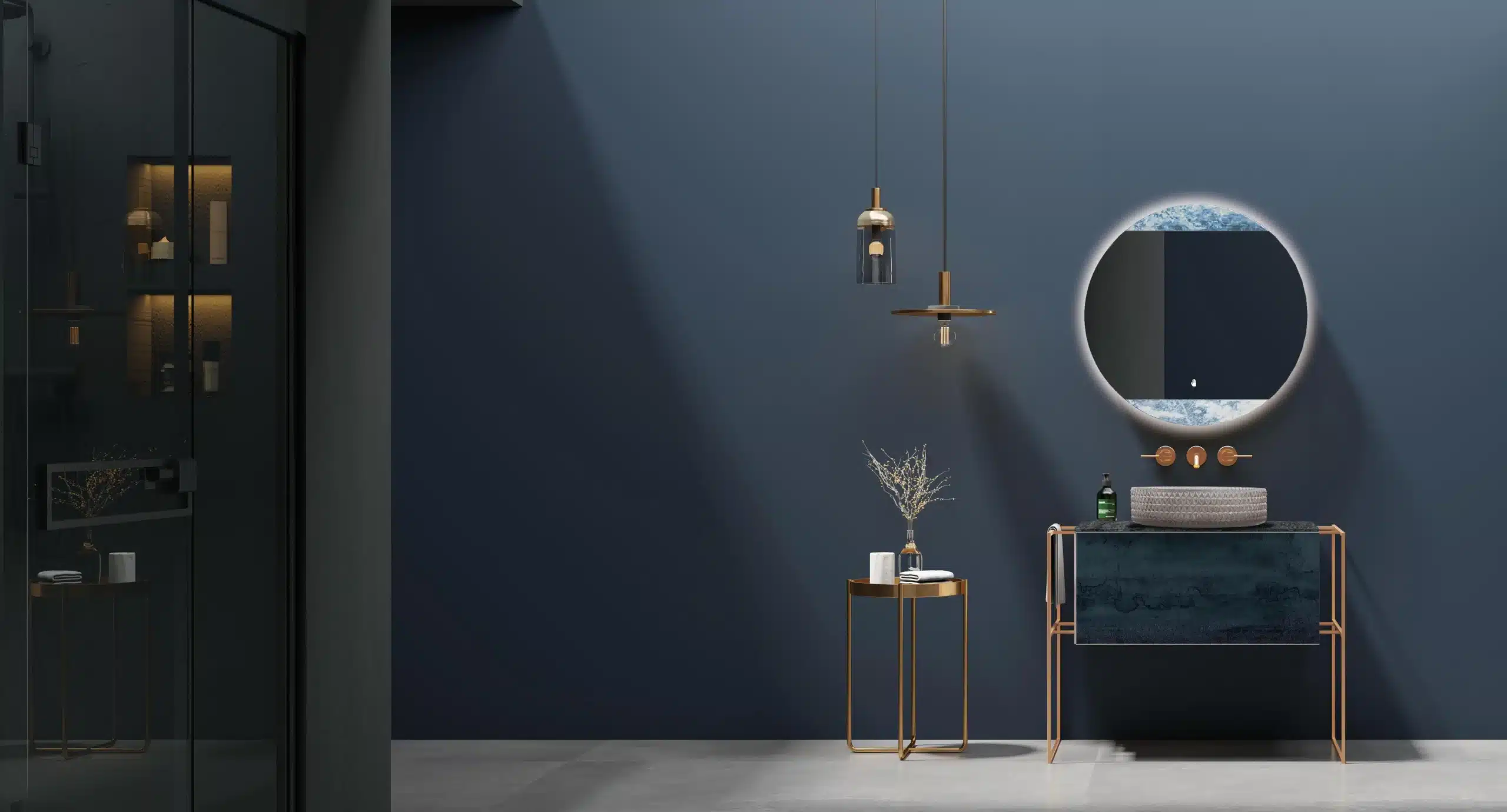
Real Cost Breakdown of 2026 Import Duties
A $100 wooden vanity lands at $150+ after 2026 duties — PVC and sintered stone sidestep the timber tax entirely.
The 2026 Section 232 tariffs slapped a 25% levy on imported wooden vanities. By 2026, that rate climbs to 50%. On top of that, softwood timber carries an additional 10% tax. Run the math: a $100 factory-cost vanity doesn’t land at $110 — it lands at $150 plus port fees, warehousing, and broker charges. For a bulk buyer moving a 40-foot container of 200 units, that’s an extra $5,000 to $10,000 in pure tax before the truck leaves the dock.
Most importers miss that the 50% tariff only applies to wood-derived products. PVC and sintered stone vanities fall outside the scope of the Section 232 timber duties because they contain zero raw lumber. That’s not a loophole — it’s a material fact. CBP ruling NY N339557 further clarifies that the assembly location determines origin compliance. MFBATH’s fully integrated factory in Changge, China, handles all fabrication in-house, so the certificate of origin is clean and traceable.
- Wood vanity (MDF/solid): $100 FOB → $150 landed after 50% tariff + 10% timber tax + port fees.
- PVC vanity: $100 FOB → $110 landed. No timber duties. 100% waterproof.
- Sintered stone vanity: $100 FOB → $110 landed. No timber duties. Scratch-resistant, non-porous.
- Container impact: 200 units per container: wood pays $5,000–$10,000 extra tax; PVC/sintered stone pays $0 timber tax.
The smart play isn’t negotiating freight rates — it’s switching material paths. MFBATH’s PVC line is 100% waterproof and carries zero softwood content. The sintered stone line uses natural minerals fused under extreme heat, tested for 10,000+ cleaning cycles. Both bypass the timber-based duties entirely. If your KPI is landed cost per unit, the choice is arithmetic, not aesthetic.
| Material Type | Base Duty (Section 232) | Timber Tax (Softwood) | Total Tariff Impact | Example: $100 FOB Unit |
|---|---|---|---|---|
| Solid Wood / MDF | 25% (2026) → 50% (2026) | +10% | 35% (2026) → 60% (2026) | $35 → $60 in duties |
| Plywood (Non-Softwood) | 25% (2026) → 50% (2026) | 0% (exempt if non-softwood) | 25% (2026) → 50% (2026) | $25 → $50 in duties |
| 100% PVC | 0% (not wood-based) | 0% | 0% | $0 in duties |
| Sintered Stone | 0% (not wood-based) | 0% | 0% | $0 in duties |
| Solid Wood with Section 232 Exemption* | 0% (if origin exemption applies) | +10% | 10% | $10 in duties |
Material Substitution: Escaping the Wood Tax
PVC and Sintered Stone vanities bypass the 50% wood tariff entirely.
If you are still importing MDF or solid wood vanities under HS code 94036000, you are paying the full Section 232 tariff — 25% in 2026, rising to 50% in 2026 — plus an additional 10% softwood timber tax. That is a 35-60% tax surcharge on the FOB value of every cabinet. The math is brutal: a container of 200 units at $100 each costs you an extra $7,000-$10,000 in pure tax. There is no loophole. The only way to escape it is to stop importing wood.
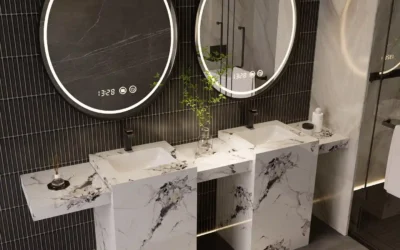
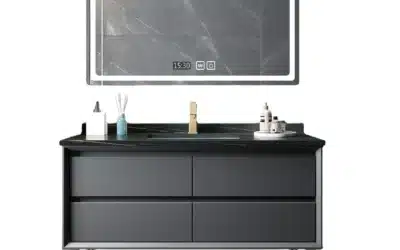
- Material Switch: PVC and Sintered Stone vanities are classified under different HS subheadings or face no timber surtax because they contain zero wood fiber. PVC is 100% waterproof, requires zero varnish, and passes E1 formaldehyde standards without any treatment. Sintered Stone is non-porous, scratch-resistant, and tested for 10,000+ cleaning cycles — it outlasts any painted MDF cabinet.
- Cost Impact: A PVC vanity at the same $100 FOB lands at ~$125 after standard duty and freight. The same wood vanity lands at $150-$160 after the 25% Section 232 duty plus 10% timber tax. That is a 20-28% landed cost advantage for PVC — before you factor in zero repainting, zero waranty claims from humidity, and zero fumigation certificates.
- Climate Fit: PVC is the default choice for Oceania, Southeast Asia, and the Middle East — regions where humidity exceeds 80% year-round. Solid wood swells, MDF delaminates, plywood wicks moisture. PVC does not. MFBATH’s PVC line is already AS/NZS and WELS compliant for Oceania and heat-tested to 50°C for Middle East projects.
The insider truth: most importers fail to switch not because PVC is inferior, but because they think ‘plastic’ means cheap. It does not. MFBATH’s PVC vanities use high-density foam-core PVC with real wood veneer finishes — the same look, zero wood content, zero tariff. If you are still buying wood vanities in 2026, you are leaving 20-30% margin on the table for no benefit.
| Material Type | Tariff Exposure | Durability Rating | Best For | Cost Impact vs Wood |
|---|---|---|---|---|
| PVC (100% Waterproof) | 0% (No Wood Tax) | Excellent (Humidity/Corrosion) | Coastal, Humid Climates | -35% to -50% |
| Plywood (Moisture-Resistant) | 25% (Section 232) + 10% Timber Tax | Good (Engineered Stability) | Cost-Conscious Projects | -15% to -20% |
| Solid Wood (Oak/Walnut) | 50% (2026) + 10% Timber Tax | Premium (Luxury Finish) | High-End Residential | Baseline (Highest Cost) |
| Sintered Stone (Scratch-Resistant) | 0% (No Wood Tax) | Superior (Heat/Scratch/Chemical) | Modern, High-Traffic Spaces | -40% to -55% |

Streamlining Customs Clearance Documentation
ISF filing errors cause 60% of port delays — here’s how to avoid them.
ISF (Importer Security Filing) must be submitted to US Customs at least 24 hours before cargo is loaded onto the vessel at the origin port. Miss this window and your container gets a ‘Do Not Load’ order — costing you a minimum of $5,000 in rerouting fees and a 2-week delay. Most importers fail here not because they don’t know the rule, but because their supplier’s documentation is incomplete or outdated.
- Documentation gap: MFBATH provides ready-to-export compliance documents at the time of booking: UL/CSA certificates for North America, CE declarations for Europe, and ISO 14001 material certifications. These are pre-validated against current CBP requirements, so your broker doesn’t have to chase the factory for corrections.
- Broker fee bleed: Each document revision from a customs broker costs $75–$150. For a container of 200 vanities, three rounds of back-and-forth adds $450 in pure waste. By handing your broker a complete compliance packet on day one, you eliminate that cost entirely.
- Origin compliance: CBP ruling NY N339557 requires that vanity assembly location matches the declared country of origin. MFBATH’s fully integrated manufacturing in Changge, Henan ensures every component — from cabinet box to drawer slides — is produced under one roof, preventing origin disputes that trigger cargo holds.
Partnering with a factory that handles region-ready compliance isn’t just about ticking boxes — it’s about cutting 3–5 days off your customs clearance cycle. When your ISF is filed with pre-verified HS code 94036000 data and the correct Section 232 timber exemption note (for PVC/Sintered Stone), your container clears in under 24 hours at ports like Long Beach or Savannah.
Conclusion
The 2026 tariff landscape is not a hypothetical risk. A 50% duty on wooden vanities, plus the softwood timber tax, can erase your margin on a single container. Getting the HS code wrong or filing a sloppy ISF turns a profitable shipment into a storage-fee nightmare. The only reliable fix is to remove the trigger — wood — from your supply chain.
PVC and Sintered Stone vanities sidestep the entire timber tariff structure while delivering better moisture resistance and durability. Review the tariff-resistant catalog to compare material specs and landed cost projections for your next order.
Frequently Asked Questions
Is there a tariff on bathroom vanities?
Yes, imported bathroom vanities face a 25% tariff starting October 2026, rising to 50% in 2026, plus a 10% tax on softwood timber. Wood vanities are hit hardest; PVC and sintered stone vanities. Check your material to confirm if the tariff applies.
What is the HS code for bathroom vanities?
The primary HS code for wooden bathroom vanities is 94036000. Misclassification can lead to rejected entries and storage fees at US ports. Use 94036000 for wood vanities; confirm for other materials.
What is the Trump tariff on bathroom vanities?
The Trump-era Section 232 tariffs impose a 25% levy on imported vanities starting October 2026, scaling to 50% in 2026. This applies to wood vanities; PVC and sintered stone vanities are not subject. Verify your material to see if the tariff applies.
Are there tariffs on cabinets?
Yes, bathroom cabinets classified under HS code 94036000 are subject to the same Section 232 tariffs as vanities. The 25% rate applies from October 2026, increasing to 50% in 2026. Confirm your cabinet’s material and HS code to assess duty.
What is HS code 9619005090?
HS code 9619005090 is not for bathroom vanities or cabinets; it covers sanitary towels and similar disposable hygiene products. Using it for vanities would be a serious misclassification risk. Stick to 94036000 for wooden vanities to avoid customs issues.


0 Comments