

A vanity sample isn’t a mood board—it’s the production blueprint that determines if a 500-room project moves forward or stalls for weeks. When vetting suppliers, the sample stage is where hidden dimension errors and material gaps surface, turning a simple aesthetic check into a critical timeline risk assessment.
Contractors often approve samples based on finish alone, ignoring the engineering gaps that cause installation nightmares. A 10mm width error or a hinge rated for home use instead of commercial cycles won’t show in a photo, but it will cost 20% of the project budget in rework once the bulk order arrives. Verify basin fit, drain position, and edge sealing against the drawing—not just the paint.engineering gapsengineering gaps
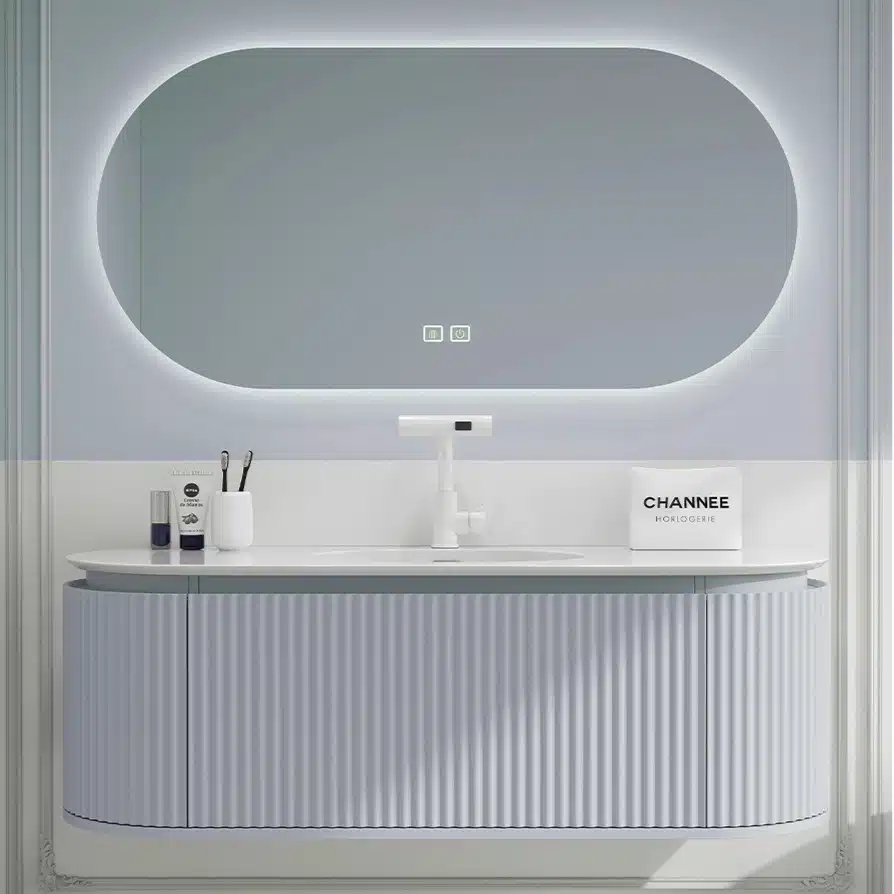
Why Most Commercial Vanity Samples Fail
A 10mm dimension error in a vanity sample can trigger a 3-week installation delay and 20% rework cost on a 500-room hotel.
The biggest failure in commercial procurement is the disconnect between visual appeal and actual buildability. A sample may look pristine, but if it doesn’t meet the dimensional tolerances of the rough opening, it’s useless. Suppliers often rely on high-resolution photos that hide critical misalignments. Relying on these visuals without physical verification is a primary cause of project delays.dimensional tolerances
Drainage misalignment is a hidden trap that destroys installation timelines. If the P-trap cutout on the vanity cabinet isn’t perfectly aligned with the floor drain, plumbers cannot connect the unit. This forces on-site modifications that compromise the cabinet’s structural integrity and delay the project by weeks.
-
- Standard commercial modules come in 600mm, 800mm, 1000mm, and 1200mm sizes. A deviation of just 10mm prevents the vanity from fitting the bathroom rough opening. Use a laser measure to verify width, depth, and height against the approved drawing.
- Confirm the center of the P-trap cutout is within 5mm of the floor drain drawing. Misalignment here is the most frequent cause of plumbing rework and delayed handover.
- Check the hinge cycle rating. Residential hinges usually last 20,000 cycles. Hotels need 100,000. Lock Blum, Hettich, or Tenu into the contract. Reject unbranded parts with low cycle counts immediately.
- Test edge seals with an ABS-L reading. Peel the edge with a knife. If it lifts, the cabinet delaminates. High-humidity hotel rooms expose this flaw within six months. Failed seals destroy both quality and durability.high-humidity hotel environment
- Match material consistency between samples and bulk. Never accept a pre-production sample made from higher-grade wood or lower-moisture MDF than the final batch. A cost-effective solution collapses when the production run deviates from the approved standard.
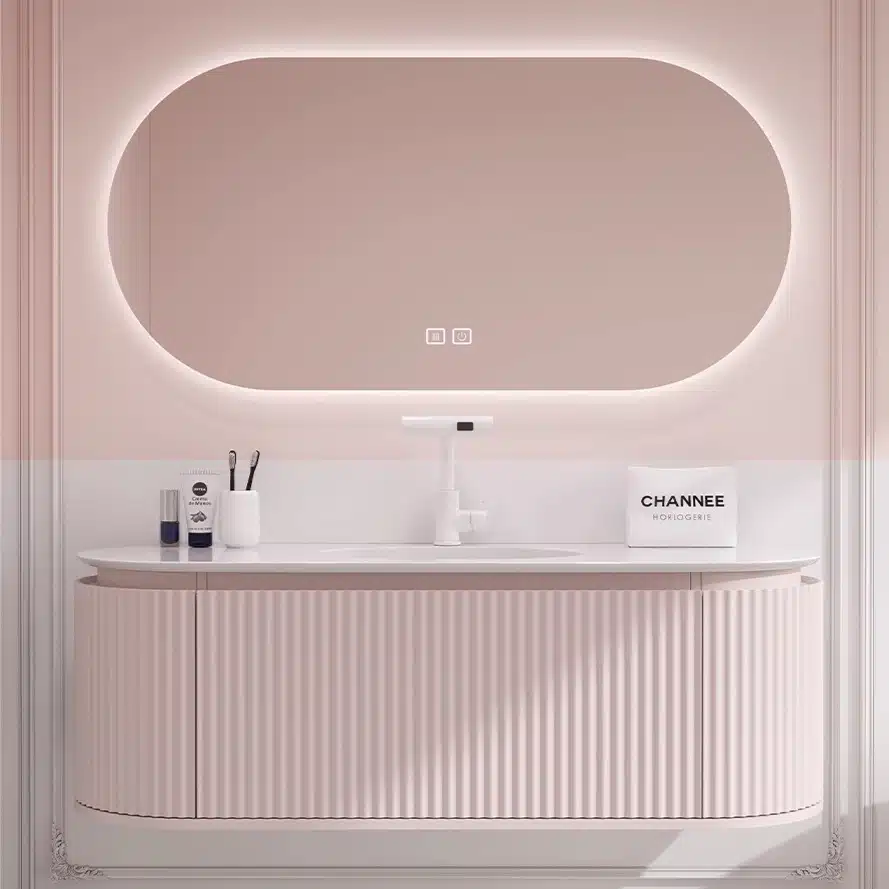
The 3-Point Dimension and Drain Test
A 10mm dimension error or misaligned drain causes 3-week installation delays and 20% rework costs.
In commercial projects, a vanity sample is a production blueprint. It is not just a visual reference. Standard widths are 600mm, 800mm, 1000mm, and 1200mm. A 10mm deviation blocks the rough opening. This stops the entire hotel installation.
The biggest hidden trap is P-trap cutout alignment. Verify that the drain opening center matches the floor drain on your architectural drawings. An offset over 5mm forces costly on-site plumbing fixes. Installation timelines and long-term durability rely on this precision.
-
- Measure width, depth, and height against the approved technical drawing. A 10mm width error prevents the unit from fitting the rough opening. This causes immediate installation failure. Accuracy is everything.
- Check the floor plan against the drain position. Center that cutout within 5mm. Miss it, and you’re reworking plumbing on-site. That delays the job. You eat the labor cost.
- Forget tape measures. Use a laser level. Visual estimates fail inspection. Digital verification guarantees spec compliance. Do not risk it.
| Feature | Specification | Advantage |
|---|---|---|
| Dimensional Tolerance | Width modules: 600/800/1000/1200mm; ±2mm tolerance | Ensures perfect fit in rough openings; prevents 3-week installation delays |
| Drain Position Accuracy | P-trap cutout center aligned within 5mm of floor drain drawing | Eliminates costly plumbing rework and hidden structural conflicts |
| Hardware Durability | Commercial-grade hinges rated for 100,000 cycles (vs. 20k home use) | Prevents soft-close failure in high-traffic hotel environments |
| Edge Sealing Integrity | ABS/PVC edge banding passes knife-peel test; no lifting | Prevents delamination and moisture swelling within 6 months |
| Material Compliance | MDF moisture content ≤8%; E1 grade or lower formaldehyde emission | Meets CE/CARB standards; ensures safety and durability in humid climates |
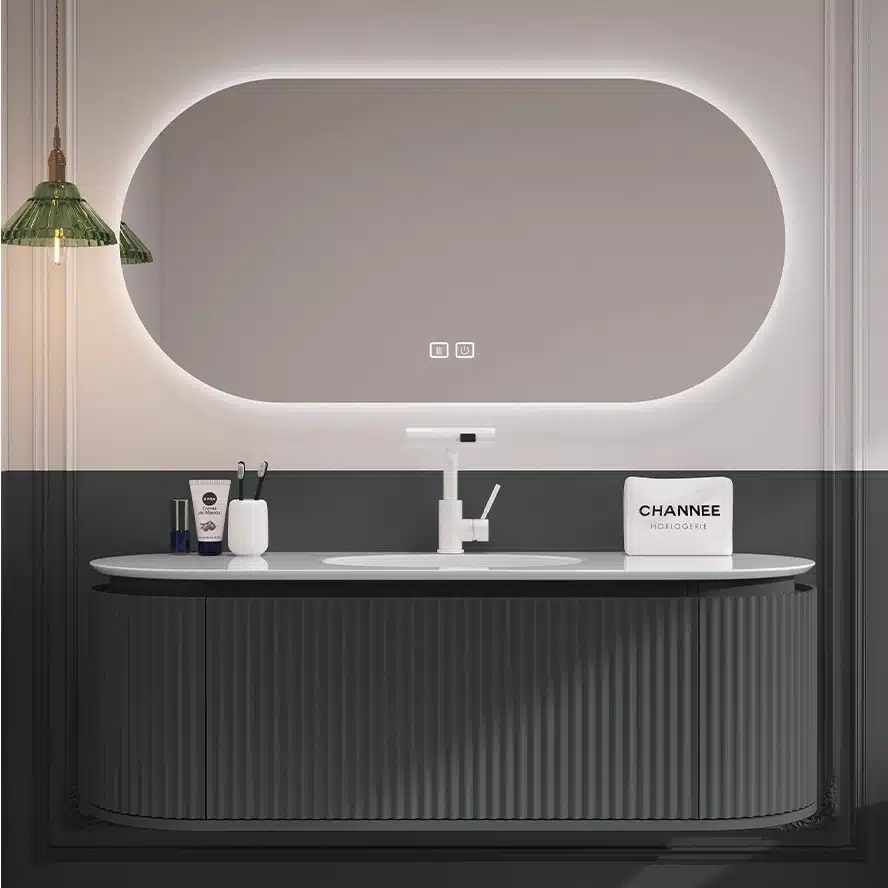
Basin, Countertop & Faucet Alignment Check
A 5-degree misalignment on a double-sink vanity creates a visual disaster across 200 identical hotel units.
Fit and finish are not aesthetic luxuries. They are installation liabilities. A 3mm variance in countertop levelness prevents proper caulking. Moisture gets in. Cabinets delaminate. You eat that cost within six months.
Integrated basins beat drop-in designs every time. Drop-in rims trap grime. You can’t sanitize them in high-traffic hotels. Bacteria thrives. Grout fails. Integrated basins have no seams. They survive 10,000+ cleaning cycles. They offer superior durability.
-
- Use a spirit level on the diagonal. Reject any sample exceeding 1.5mm variance. Asymmetry in double-sink layouts ruins the architectural look. Do not let that slide.
- Run a gloved hand along every polished edge. Sharp spots mean rushed CNC work. That causes chipping during transport. You lose product value before it even leaves the factory. Quality control saves money.
- Here is the trick. Shine a high-lumen light under the basin rim where it meets the countertop. Light bleeding through the seam means the adhesive bond is weak. That gap traps water. Mold grows. The cabinet fails—especially in humid climates.
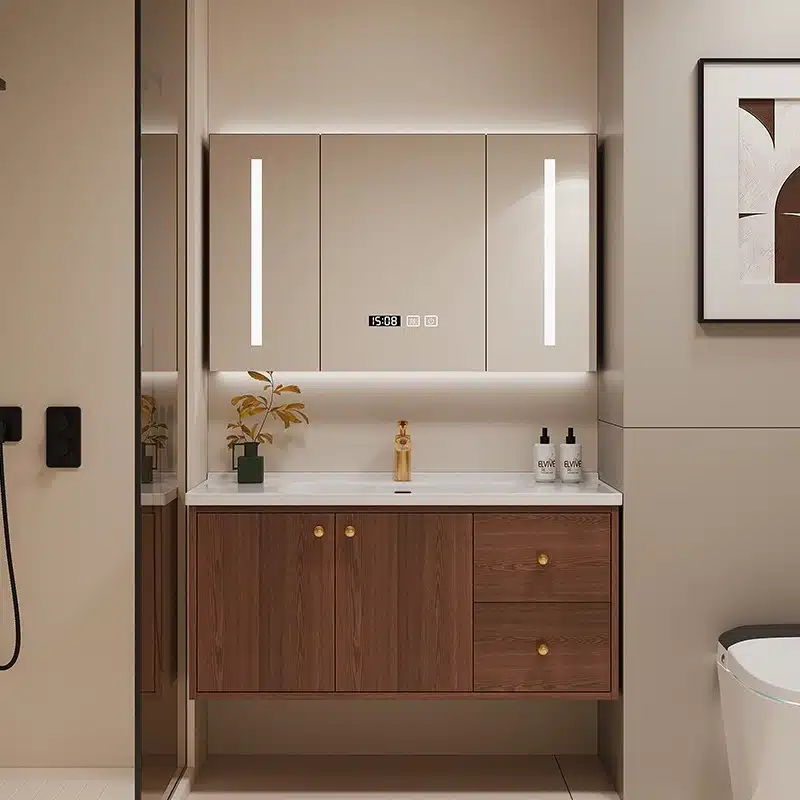
Hardware: The 100,000-Cycle vs. 20,000-Cycle Trap
A 20,000-cycle hinge is a liability in commercial projects; demand 100,000-cycle commercial grade.
Hardware longevity is the silent killer in commercial vanity approvals. Suppliers typically install standard residential soft-close hinges rated for just 20,000 cycles. That sounds fine until you see the math. In a 500-room hotel, those hinges will mechanically fail within 18 months. The result? Costly warranty claims and destroyed project reputations.
-
- If a sample hinge is rated for 20,000 cycles, reject it immediately. Your contract must explicitly mandate commercial-grade hardware rated for 100,000 cycles. Brands like Blum, Hettich, or Tenu exist for a reason: they withstand high-traffic abuse without breaking.
- Use a luggage scale to measure drawer runner pull-out force. A genuine commercial runner demands significant, consistent resistance. If the force drops or feels ‘slushy’ during the test, the internal damping mechanism is low-grade. That is the first sign of **durability** problems.
- Perform a speed variation test to verify damping reliability. Open and close the drawer 10 times rapidly. If the closing speed varies or the soft-close mechanism fails on the 3rd or 4th attempt, the hydraulic piston is defective. Reject the sample immediately.
Finish Match & Edge Sealing Against Moisture
Reject samples with inconsistent grain direction or weak edge seals; they will fail in commercial humidity.
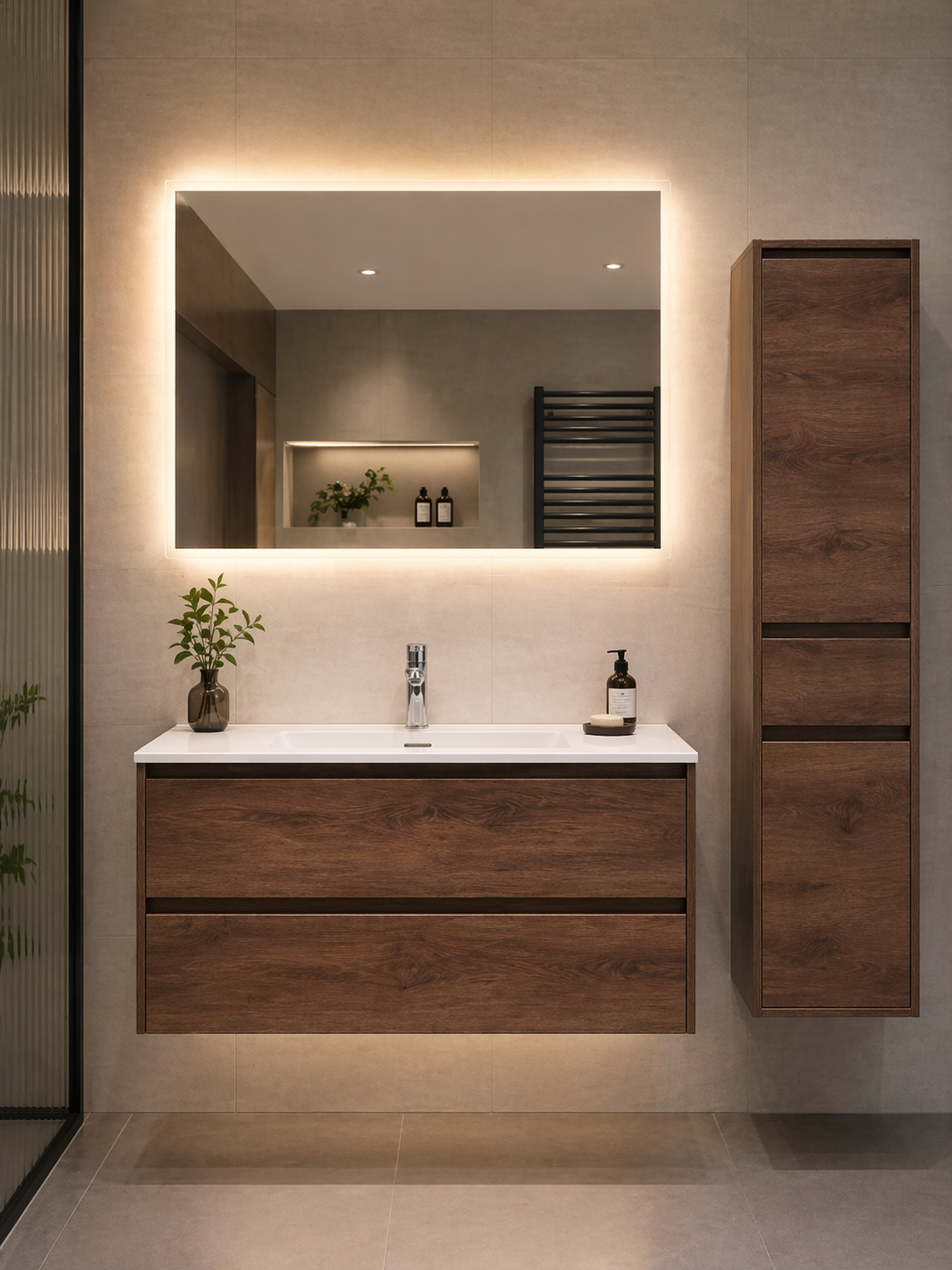
Finish consistency is the first point of failure in batch production. A sample looks perfect under showroom lighting, but commercial projects demand uniformity across hundreds of units. Evaluate the finish under natural daylight AND incandescent light. That is where you catch color shifts or grain mismatches that disappear under artificial light.
Grain alignment is a manufacturing red flag. If a supplier randomizes orientation to save material, they’ll cut corners elsewhere. You’ll face visual chaos in installed rooms. Consistent directional alignment proves they actually care about batch consistency.Wood grain
-
- Stick to PVC or ABS edge banding for wet areas. Standard PP fails in coastal humidity. PVC bonds tighter and flexes without cracking. It’s the only way to prevent delamination in tropical resorts.
- Grab a knife. Try to peel back the edge banding. If it lifts, the adhesive bond is weak. The vanity will delaminate within six months. You will eat the warranty claims. Skip it.warranty claims
- Edge sealing is the primary defense against humidity. Plywood swells instantly if moisture gets in. Verify the banding fully encapsulates the edges without gaps. Even a tiny opening destroys the structural integrity.plywood
The ‘Fire Drill’ Packaging Test
The sample is hand-packed; the bulk order is machine-packed.
Samples arrive wrapped in bubble wrap. Bulk orders ship in standard cartons. That difference causes hidden damage. Don’t let the pristine sample fool you. Real sourcing means expecting standard, not protective, packaging.
Demand the bulk packaging specs before approval. If the factory hides this, they’re cutting costs. You’ll see the results in damaged goods. Quality and durability depend on seeing the real package, not the sample’s presentation.
-
- **Corner Protectors:** Demand 1-inch high-density foam or corrugated cardboard. Thin cardboard collapses during stacking, causing a 10% damage rate on APAC projects. This is a known cost trap.
- **Foam Density:** For sintered stone basins, specify at least 30kg/m³ EPE foam. Low-density material shatters in transit, transferring shock directly to the cabinet. Durability starts with the packing.sintered stone
- **Carton Wall Thickness:** Mandate 5-ply double-wall corrugated cartons for vanities wider than 800mm. Single-wall boxes buckle under a 20ft container stack. This protects your cost-effective investment.
- **Production Unit Photo:** Ask for a photo of bulk packing, not the sample. Verify internal bracing matches the bulk order. Samples are often over-engineered; bulk units are the real deal.
**Reject** any supplier who refuses bulk packaging photos. This is non-negotiable. Protect your timeline by verifying the logistics chain, not just the product. Quality assurance must be visual and undeniable.
Conclusion
**A project-grade vanity sample is a production blueprint, not a visual reference.** Measuring dimensions, verifying drain positions, and testing hardware cycles prevents costly rework. Installation delays kill margins.
Frequently Asked Questions
What is included in a bathroom vanity?
A standard bathroom vanity includes the cabinet body, countertop, integrated or undermount basin, and hardware such as hinges and drawer slides. For project-grade units, it should also feature pre-drilled faucet holes and compliant. Verify all components match the technical drawing before approval.
What should a bathroom vanity be made of?
Material choice depends on your target market’s climate and budget, with options ranging from 100% waterproof PVC for humid regions to solid wood for luxury projects. Plywood offers a cost-effective moisture-resistant balance. Select material based on specific regional humidity and aesthetic requirements.
What is the HS code for bathroom vanities?
Bathroom vanities are typically classified under HS code 9403.30 for wooden furniture or 9403.20 for metal furniture, depending on the primary material. Always verify the specific code with your. Confirm the exact HS code with your customs broker based on material composition.
What are the components of a vanity?
Key components include the cabinet carcass, countertop, basin, drawer boxes, and soft-close hardware. High-quality units also feature moisture-resistant finishes and precise CNC-cut joinery for durability. Inspect hardware and joinery quality during sample approval.
What is the trend in bathroom vanities in 2026?
2026 trends emphasize region-ready customization, smart LED mirrors with voice activation, and sustainable materials like low-formaldehyde plywood and sintered stone. Floating designs for compact spaces and heat-resistant finishes for arid climates are. Focus on smart features and regional compliance for competitive advantage.



0 Comments